
The High Court (Commercial Division), sitting at Kampala, has today, 20th February 2026, ordered M/S Muwema & Co. Advocates to pay USD 372,300 in rent arrears and mesne profits, UGX 50 million in general damages, and to immediately vacate prime premises in Kololo following a protracted lease dispute with Downtown Investments Ltd.
In a strongly worded judgment delivered by Hon. Lady Justice Patricia Mutesi, the Court found that the law firm had breached its lease agreement, wrongfully remained in possession of the property, and failed to prove claims of a binding sale or entitlement to reimbursement for renovations.
The dispute revolved around Plot 50 Windsor Crescent Road, Kololo, which the firm had occupied under a lease executed on 15 December 2014. Under the agreement, rent was initially set at USD 5,000 plus VAT per month, subject to revision.
No Sale Occurred
A central argument by the Defendants was that the lease relationship had effectively transformed into a purchase arrangement after they exercised an option to buy the property in August 2021.
The Court firmly rejected that argument.
“It is simply false and misleading for the Defendants to insinuate that anything became of their 2nd August 2021 offer at law when it was not accepted in an absolute and unqualified manner,” the judge ruled.
Justice Mutesi clarified that the mere exercise of an option to purchase does not create a binding sale unless the offer is accepted.
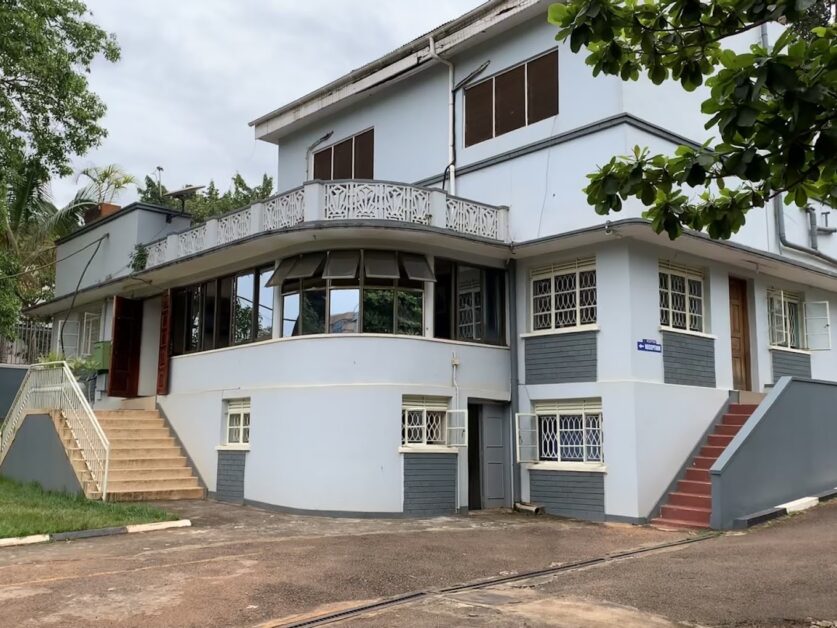
“The Plaintiff did not sell the leased premises to the 1st Defendant. At all times material to this dispute, the Plaintiff and the 1st Defendant remained lessor and lessee, respectively,” the Court held
The judgment further emphasised a foundational commercial principle: “An option to purchase does not bind the lessor to always accept the lessee’s offer at all costs”
And more pointedly: “An option to purchase, thus, proceeds on a ‘willing buyer, willing seller’ basis.”
Because the Plaintiff never accepted the Defendants’ USD 1,050,000 offer, the lease relationship remained in force.
Rent Arrears and Breach
The Plaintiff claimed that the firm had defaulted on rent payments beginning in late 2021 and that arrears had accumulated to USD 148,300 after partial payments.
After reviewing the evidence — including demand notices and WhatsApp exchanges — the Court found that rent had indeed gone unpaid.
In one of the most striking passages of the judgment, the Court remarked: “It is utterly absurd that a landlord can be brought to his knees begging for his rent from a tenant.”
Justice Mutesi further observed: “This conduct borders on impunity and must stop.”
The Court rejected arguments that rent revisions were invalid or not mutually agreed upon, holding that the lease clause requiring rent revision by 10% after the first 24 months was commercially sensible and enforceable.
It also found that the later informal revision to USD 10,000 per month had been effectively accepted through conduct, since payments were made at that rate without objection.
The Court concluded that USD 148,300 in arrears was properly due.
Renovation Claim Dismissed
The Defendants had also counterclaimed, alleging they had spent approximately USD 186,000 renovating the property and were entitled to reimbursement or set-off.
 OPINION: 623 Cases, UGX 2 Trillion at Stake: Why Uganda Must Rethink How Banking Disputes Are Resolved
The Court dismissed that claim.
“The Defendants dismally failed to show how they arrived at that sum…”
Justice Mutesi noted that no breakdown of the alleged expenditure had been provided, no receipts were produced, and no written consent — as required under the lease agreement — had been secured for structural alterations.
Ultimately, the Court found itself unconvinced: “The Court remains unconvinced about the need for the works, the scope of the works actually done and the expenditure on those works.”
Wrongful Possession and Eviction
Perhaps the most consequential aspect of the ruling relates to the firm’s continued occupation of the Kololo property.
The lease had expired in December 2019 and was later formally terminated in July 2023. Despite this, the 1st Defendant remained in occupation.
The Court held: “There is absolutely no reasonable justification for a lessee refusing to pay the rent for leased premises after the lapse of the lease while at the same time, insisting on his or her continued occupation of those premises.”
And further: “The continued occupation of the premises by the 1st Defendant is inconsistent with the lease agreement and unfair, and must be brought to an end.”
Accordingly, the Court issued a direct and enforceable order: “An order of vacant possession hereby issues requiring the 1st Defendant to vacate the leased premises comprised in Plot 50 Windsor Crescent Road, Kololo and yield them back to the Plaintiff forthwith.”
In addition: “An order of eviction hereby issues permitting the Plaintiff to evict the 1st Defendant… forthwith.”
Damages, Mesne Profits and Interest
Beyond the USD 148,300 arrears, the Court awarded mesne profits of USD 224,000, calculated at USD 7,000 per month for wrongful occupation from June 2023 to January 2026.
General damages of UGX 50,000,000 were also awarded for breach of contract.
The Court declined to enforce the lease’s contractual interest rate of 10% per month (120% per annum), describing it as: “Harsh and unconscionable…”
Instead, interest was awarded at 6% per annum on the USD sums and 13% per annum on the UGX damages.
A Commercial Lesson
The ruling serves as a pointed reminder of several commercial principles: an offer to purchase does not create a sale without acceptance; lease obligations remain binding unless formally extinguished; and claims for special damages must be specifically pleaded and strictly proved.
In closing the matter, Justice Mutesi entered judgment for the Plaintiff and awarded costs of the suit.
With the combined financial awards now totalling USD 372,300 plus UGX 50 million, alongside interest and costs, the case stands as one of the more closely watched commercial lease disputes involving a major law firm in recent years.
As of 20th February 2026, the High Court has made its position unmistakably clear: the lease remained valid, rent was due, and continued occupation without payment could not be sustained.