2026 finds Uganda at a rare convergence of economic catalysts and structural pressures. First oil is nearing. Gold is redefining export performance. Technology — particularly AI — is compressing the time between innovation and disruption. Meanwhile, the global trading system is becoming more uncertain, and Uganda’s demographic structure is raising the stakes for job creation and inclusive growth. The macro indicators point toward stability and acceleration. Yet the defining challenge is not optimism — it is translation: converting national opportunity into real household prosperity.
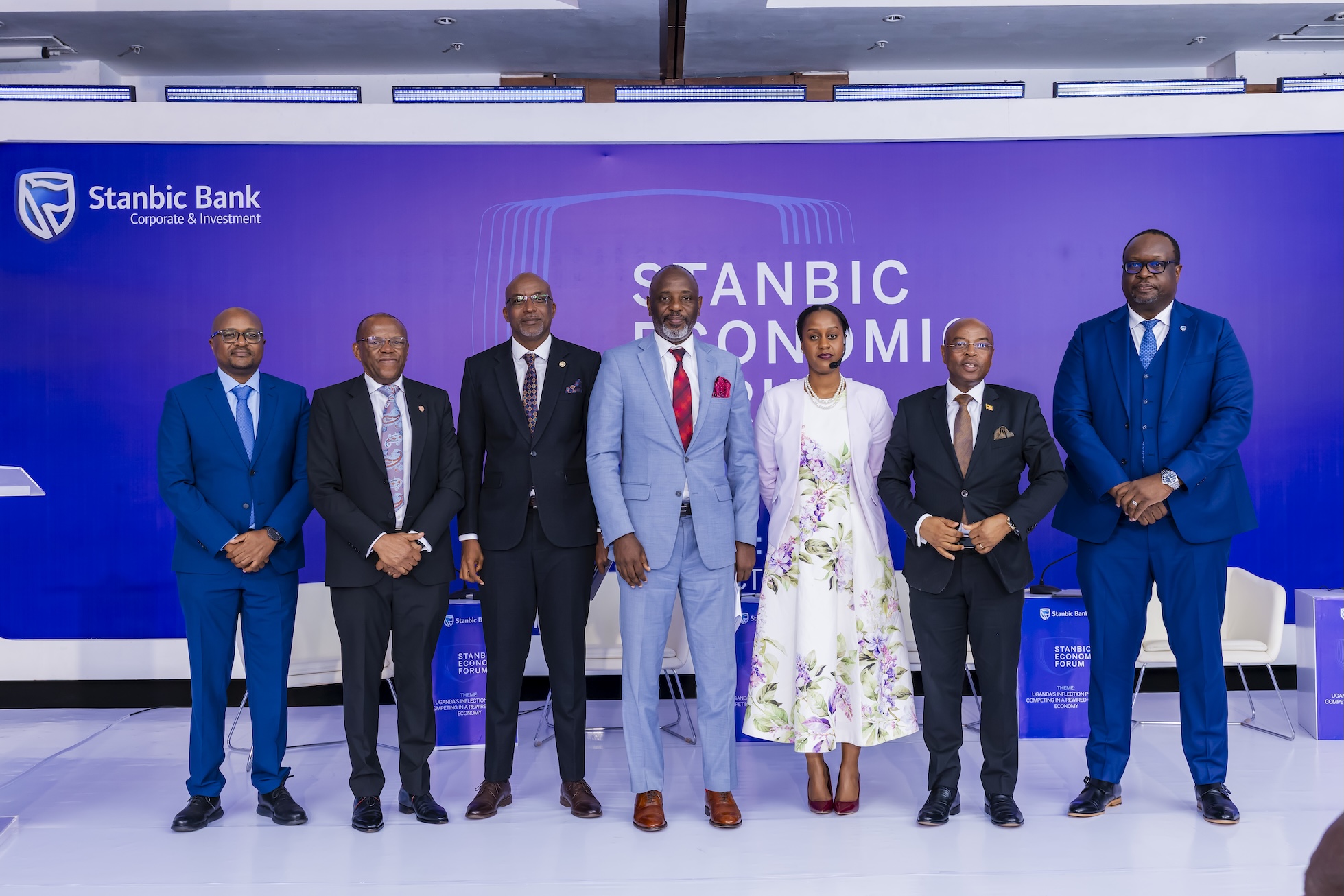
It is against this backdrop that Stanbic Bank Uganda convened the Stanbic Bank Economic Forum 2026, held on 12th February 2026 at the Kampala Sheraton Hotel — not as a ceremonial gathering, but as a strategic platform where capital, policy, enterprise and innovation could interrogate the future together.
If one wanted to be playful about it, Stanbic served its customers and stakeholders an early Valentine’s gift: a knowledge-packed breakfast. Except this one was not red. It was blue. A big blue breakfast — filled with macroeconomics, policy, oil, gold, agriculture, and a few hard truths about what it will take for Uganda to compete.
The theme was deliberately bold:
“Uganda’s Inflection Point: Competing in a Rewired Global Economy.”
And the choice of convenor mattered.
Stanbic Bank Uganda is not just another financial institution hosting a conference. It is Uganda’s largest bank, controlling roughly 20 per cent of industry deposits, 20 per cent of industry lending, and approximately 30 per cent of industry profitability. In practical terms, this means that one out of every five shillings deposited in Uganda’s banking system sits within Stanbic. One out of every five shillings lent to businesses flows through its balance sheet. Nearly a third of the industry’s profits are generated within its franchise.
When an institution of that scale convenes policymakers, economists, entrepreneurs and investors to discuss the future of the economy, it is not a passive exercise. It is a signal.
The purpose of the forum was clear: to move beyond headline macro optimism and interrogate what it actually takes to compete in a rewired global economy. It was framed as a macro-to-micro conversation — translating GDP growth into household outcomes. It was a private sector positioning forum — helping businesses understand where capital should be allocated. And it was a sober risk-and-opportunity briefing for 2026 and beyond.
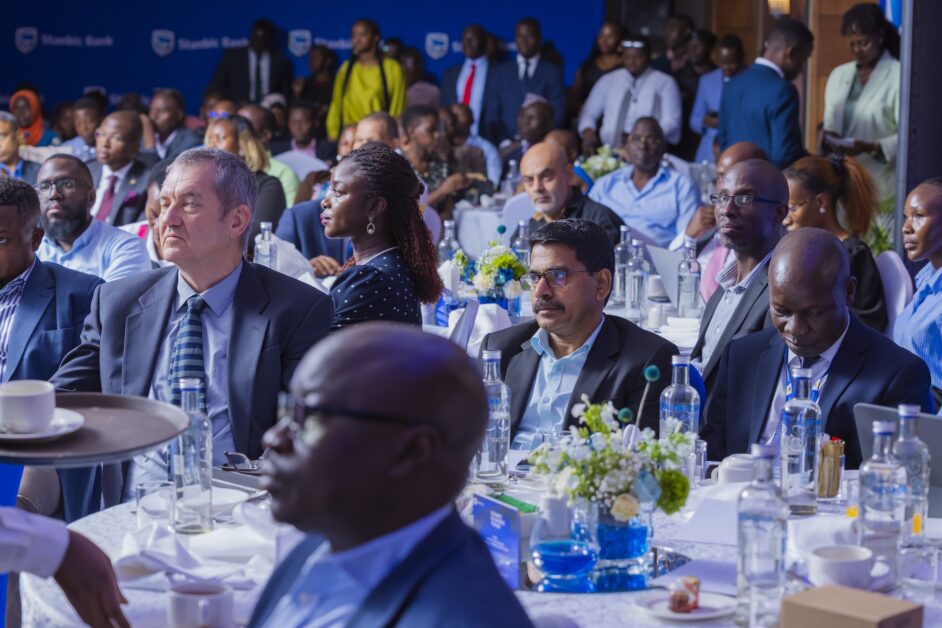
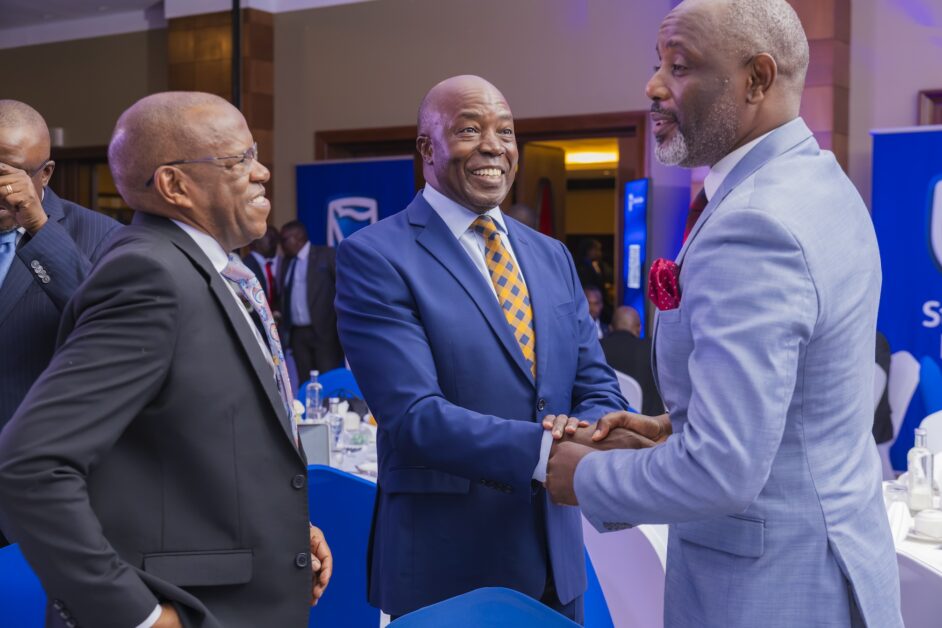
The room reflected that seriousness. Policymakers sat alongside private sector leaders. Investors engaged with innovators. Agriculture executives exchanged notes with oil and gas operators. Regional and international partners from the Standard Bank Group lent a continental perspective to a distinctly Ugandan conversation.
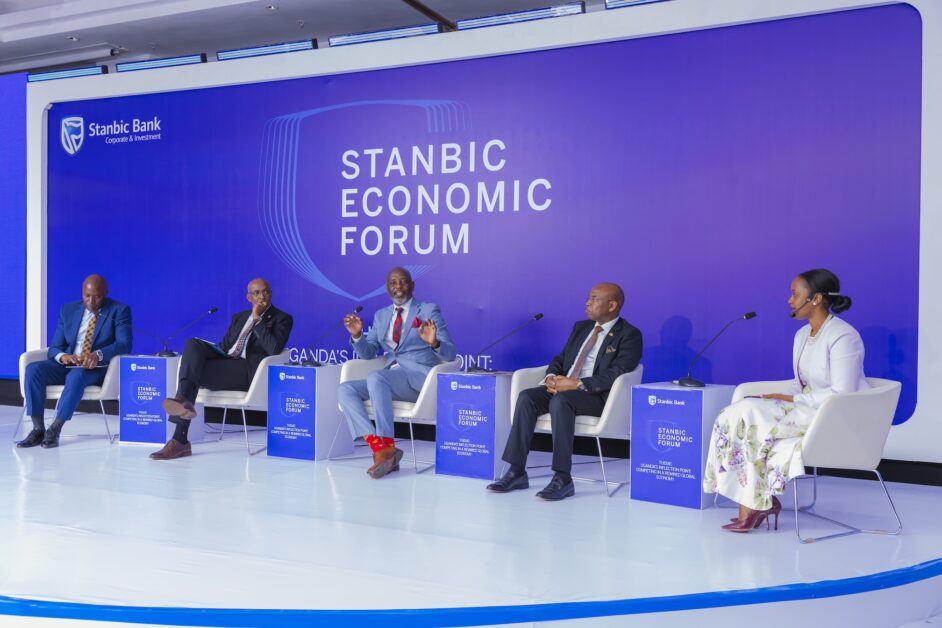
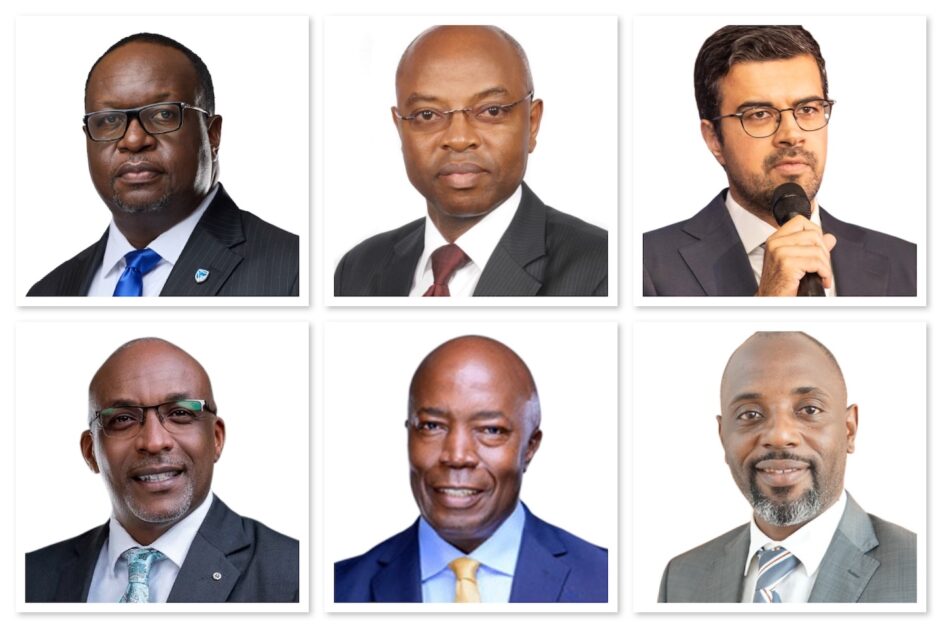
The speaker lineup underscored the seriousness of the moment — and it was clear early on that Jibran Qureishi, Chief Economist for Stanbic and Standard Bank Group, was the intellectual anchor of the day, delivering the main macroeconomic briefing that framed Uganda’s improving fundamentals and the disciplined execution required to convert them into durable growth. If Jibran provided the economic compass, Mumba Kalifungwa, Chief Executive of Stanbic Bank Uganda, and Damoni Kitabire, the Bank’s Board Chairman, reinforced the institutional message: Stanbic is not merely observing Uganda’s inflection point — it is ready to finance it, structure it, and convene it. From the policy front, Prof. Augustus Nuwagaba, Deputy Governor of the Bank of Uganda, addressed monetary stability and the evolving gold strategy, while Dr. Joseph Muvawala, Executive Director of the National Planning Authority, grounded the discussion in Uganda’s long-term development blueprint. The private sector and innovation voices sharpened the realism — Francis Kamulegeya through governance and enterprise insights, Michael Niyitegeka through a candid interrogation of Uganda’s AI and digital readiness, Gilbert Kamuntu with an execution update on oil and gas, and Karen Lilian N. Atamba ensuring agriculture was discussed not in theory, but in financing structures, value chains and the practical economics of scaling production.
Taken together, the forum was not simply about optimism. It was about preparation.
Because if Uganda truly stands at an inflection point, then the real test is not whether growth arrives, but whether the country is ready to structure it.
#1. Big Dreams Need a Big — and Committed —Bank
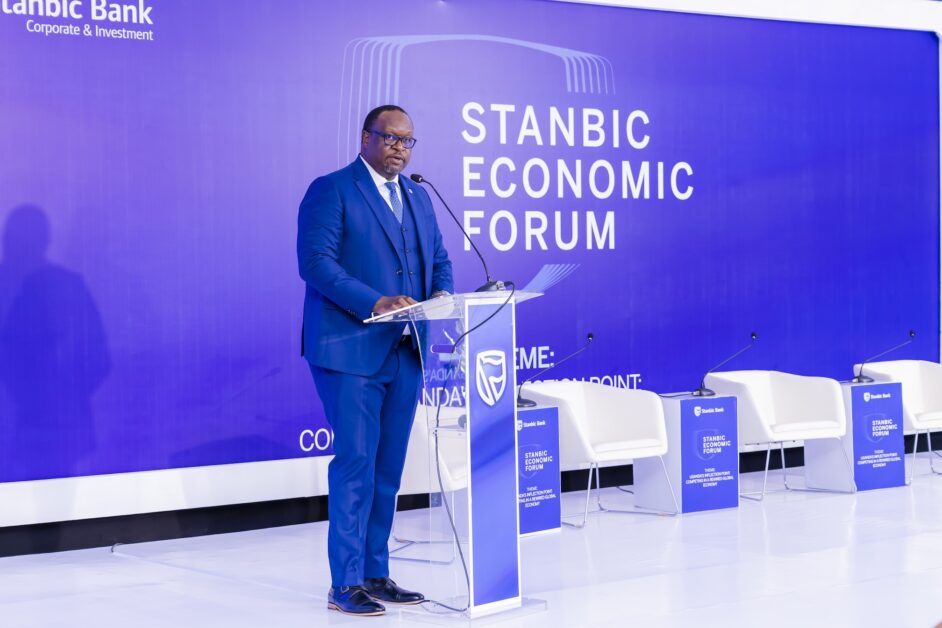
In his opening address, Mumba Kalifungwa, Chief Executive of Stanbic Bank Uganda, reminded the room that Uganda’s future “is not something to be observed from a distance, but something to be actively shaped.” He framed the Economic Forum as one of the platforms through which Stanbic seeks to live its purpose: “Uganda is our home. We drive her growth.” In Mumba’s view, convening leaders from government, business, finance, innovation and policy was not merely about analysis, but about moving ideas toward action — “where ideas meet action and analysis meets lived experience.” He stressed that the forum’s theme — Uganda’s Inflection Point: Competing in a Rewired Global Economy— was not abstract. “It reflects what many Ugandans are already feeling,” he said, “in their businesses, in their individual lives, their farms, workplaces and households.”
Mumba pointed to the convergence of forces reshaping Uganda’s economic trajectory: the East African Crude Oil Pipeline, shifting global tariffs and supply chains, the uncertainty around trade frameworks such as AGOA, the rapid acceleration of AI, and deepening East African integration. Yet his central message was not simply optimism — it was preparedness and positioning. He argued that while oil will reshape Uganda’s fiscal position and industrial capability, what matters most is what the transformation enables: “job creation along the value chain, new local suppliers, skills development and long-term national capability.” And he left no doubt about the role Stanbic intends to play in that transition: supporting ambitions across sectors, financing value chains, and structuring trade flows and investment in a way that allows Ugandan enterprise to compete.
That message was reinforced at the close by Damoni Kitabire, Stanbic’s Board Chairman, who returned the room to the question of execution. Reflecting on the forum’s discussions, Damoni noted that the day’s insights were not simply intellectual — they carried consequences. The “pace, direction, quality of decisions we make this year,” he said, “will shape outcomes well beyond it.” He commended the forum’s recurring emphasis that growth must be meaningful — that it must translate into “jobs, viable enterprises and improved livelihoods,” and that economic performance is only truly successful when “women, the youth, the farmers, the entrepreneurs and households across Uganda” can feel it.
But Damoni’s most important reinforcement was institutional: Stanbic does not seek to be “more than a financial institution” as a slogan — it seeks to be a bridge. “We aim to be a bridge connecting ambition to opportunity,” he said — connecting “vision to execution and strategy to sustainable outcomes.” In other words, the Economic Forum was not just a breakfast meeting. It was Stanbic’s way of saying that as Uganda approaches a new economic phase, big dreams will require more than hope — they will require structured capital, disciplined partnerships, and a bank prepared to finance the future.
#2. Uganda is at an inflection point — and the “7Ts” explain why
If Mumba Kalifungwa framed the Stanbic Bank Economic Forum 2026 as a call to action, it was Daisy Nitwe, Stanbic Bank Uganda’s Country Lead for Structured Solutions, who gave the room one of the day’s most useful conceptual frameworks for understanding why 2026 feels different. In introducing the theme — “Uganda’s Inflection Point: Competing in a Rewired Global Economy” — Daisy argued that Uganda’s moment is not defined by one single event, but by several forces converging at once. And to make that convergence easier to grasp, she offered what she called the “7Ts.”
The first is Technology — a force that is no longer optional, and certainly no longer theoretical. From AI to automation, the speed of innovation is compressing decision cycles for businesses, governments and banks alike. The second is Trade, and Daisy’s point here was especially striking: the global trading system is being rewired, not by efficiency, but by power and strategic competition.
“Trade is being very fragmented. And the fragmentation is really not coming out of pure efficiency. It’s mostly being driven by strategic competition.”
The third is Trust — trust in institutions, trust in rules, trust in systems — and the growing uncertainty about whether the global order will remain predictable enough for small economies to plan confidently. The fourth is Tensions, rising across regions and within societies, as inequality, unemployment and geopolitical friction reshape stability. The fifth is Trumpism, which Daisy used as shorthand for a new era of political disruption and policy unpredictability — where tariffs, protectionism and sudden shifts in global alliances are no longer rare events, but part of the operating environment. The sixth is Transformation, the deeper shift in how economies create value and compete. And finally, there is Transition — a particularly relevant theme for Uganda as it moves toward oil production, deeper industrialisation, and the economic and political transition signals that 2026 represents.
Taken together, the 7Ts captured what the forum spent the rest of the day unpacking: that Uganda is not simply preparing for first oil, or chasing higher GDP growth, or speaking about technology as a fashionable buzzword. It is entering a period where global shocks, domestic opportunity and structural constraints will collide — and where winners will be those who understand the moment early, position decisively, and execute with discipline.
#3. Opportunity Is Real — But Execution and Intentionality Will Decide Who Wins
When Daisy Nitwe, the moderator, asked the panel for a one-word temperature check on the economy, Francis Kamulegeya did not hesitate. “I feel good,” he said, reflecting the broadly positive macro sentiment in the room. But he immediately qualified it with a sharper warning:
“I feel good… having said that, it’s going to be execution, execution, execution.”
In three words, Kamulegeya captured the underlying thesis of the entire forum. Oil may be coming. Gold may be rising. Macroeconomic stability may be holding. But opportunity without discipline is wasted potential.
That same discipline was echoed by Jibran Qureishi, who had earlier grounded the optimism with caution. While Uganda’s fundamentals remain resilient, he reminded participants that “the environment ahead will increasingly reward those who are prepared, informed and decisive.”
In other words, stability does not automatically produce prosperity. It creates a platform — and platforms must be used strategically.
Damoni Kitabire, Stanbic’s Board Chairman, brought the message home in his closing reflections. He warned that the insights shared during the forum would only matter if they were acted upon. What truly matters, he said, is “how we interpret it, and, more importantly, how we act on it.”
And he went further, stressing that “the pace, direction, [and] quality of decisions we make this year will shape outcomes well beyond it.”
This was not abstract commentary. It was a direct challenge to business leaders, policymakers and investors alike.
The macro story may look encouraging — stable inflation, steady currency, oil nearing first production — but the micro story will depend on capital allocation, policy clarity, productivity improvements and institutional execution. Growth must be meaningful, Damoni emphasised. It must translate into “jobs, viable enterprises… and improved livelihoods.”
The takeaway was unmistakable: Uganda’s inflection point is real. But inflection points are not self-fulfilling. They reward those who prepare early, structure intelligently, collaborate deliberately and move with intent.
As Kamulegeya bluntly put it — the mood may be good.
But the mandate is execution.
#4. 2026 and Beyond: The Economists Are Bullish About Uganda
For all the caution about execution, the forum’s macro outlook was unmistakably optimistic — and it was delivered with the confidence of data, not sentiment.
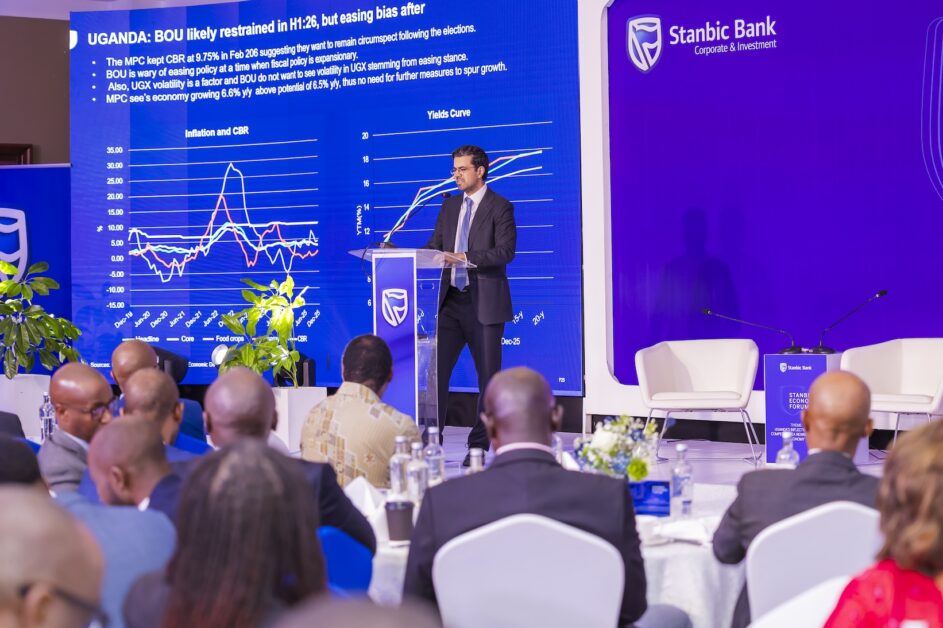
In his main address, Chief Economist Jibran Qureishi struck a constructive tone on Uganda’s trajectory, that he said grew about 6.3% in FY2024/25, and projected 6.5–6.7% in FY2025/26, and pushing toward 7% by FY2026/27.
It was a bullish outlook anchored in the belief that Uganda is moving into a higher-growth phase driven by oil-related inflows, infrastructure investment, and strengthening export performance.
On stability, Jibran’s forecasts were equally positive. He projected that inflation would remain “relatively benign” — staying below the 5% mark through 2026 — and that this would likely create room for the Bank of Uganda to become more accommodative. He was also constructive on the Uganda shilling, noting that Standard Bank’s baseline assumption was that the currency could strengthen further in the near term and remain supported into 2027, driven by oil inflows and the gold purchase programme.
That optimism was reinforced from the policy side. Prof. Augustus Nuwagaba, Deputy Governor of the Bank of Uganda, projected confidence in the central bank’s ability to sustain the three core macro fundamentals — growth, exchange rate stability, and inflation control.
“We will be in full control… sufficient capacity to sustain all three market economic fundamentals — growth rate, exchange rate, inflation rate — full control.”
The only major caveat he raised was external: geopolitical tensions and disruptions to global supply chains — risks Uganda cannot fully control, but must prepare for.
For investors and business leaders in the room, the message was clear: Uganda’s macro fundamentals are improving, the outlook is constructive, and the economy is entering a phase where the opportunity set is expanding. But — as the forum repeatedly emphasised — the rewards will go to those who position early, manage risk well, and execute with discipline.
#5. GDP Growth Is Rising — Oil, Infrastructure, and FDI Will Drive the Next Phase
If the economists were bullish about Uganda’s trajectory, they were equally clear about what would power the next phase of growth.
At the centre of that shift is oil and gas — not as a silver bullet, but as a structural accelerator. In his address, Mumba Kalifungwa described the East African Crude Oil Pipeline (EACOP) as one of the “powerful forces” converging in Uganda’s economy, moving “rapidly from ambition to reality,” with first oil expected later this year. He reminded the room that Uganda holds an estimated 1.6 billion barrels of recoverable reserves, with peak production projected at around 230,000 barrels per day — numbers that place the project among the most consequential infrastructure investments in the country’s history.
But beyond the headline figures, Mumba’s emphasis was deliberate: what matters most is what oil enables — “job creation along the value chain, new local suppliers, skills development and long-term national capability”.
Execution updates reinforced that this is no longer theoretical. Gilbert Kamuntu, Chief Commercial Officer of UNOC, reported that EACOP is approximately 80% complete, with about 600 kilometres of pipe already laid, and some sections already crossing the Uganda–Tanzania border. Upstream activity is advancing rapidly: roughly 200 wells have been drilled, Tilenga is around 75% complete, Kingfisher is around 80%, with commissioning expected to begin mid-year. The country, he noted, is firmly in the “execution phase” — racing toward first oil.
Yet the forum’s more seasoned voices were careful to anchor expectations. Dr Joseph Muvawala, Executive Director of the National Planning Authority, positioned oil within the broader National Development Plan framework, where agro-industrialisation, tourism, mineral development, and science and technology remain the core engines of long-term transformation. Oil, in that framework, is an enabler — a source of fiscal space and catalytic capital — not a substitute for productivity across other sectors.
Oil may accelerate momentum, but only disciplined investment, value addition and enterprise scaling will translate it into sustainable prosperity.
Infrastructure is the immediate transmission channel. Investments in pipelines, roads, energy, logistics hubs, and industrial facilities are already stimulating secondary economic activity—from Hoima to regional trade corridors.
This build-out, combined with stronger export performance and oil-related inflows, is expected to improve Uganda’s balance of payments position over time.
Foreign direct investment (FDI) will be the multiplier. As global supply chains shift and countries reassess trade relationships, Uganda’s ability to position itself as a stable, integrated East African hub becomes critical. Mumba highlighted how regional integration is no longer aspirational — it is operational — reflected in how Stanbic supports Ugandan businesses expanding across borders and structures trade flows within the region.
Taken together, the message was disciplined but confident: GDP growth is rising. Oil is coming online. Infrastructure is scaling. FDI is watching. Regional integration is deepening.
But oil is not the destination.
It is the catalyst — and what Uganda builds around it will determine whether this growth phase becomes transformational.
#6. Good Macros, Bad Micros — Uganda’s Biggest Policy Challenge
If there was one intellectually honest tension that ran through the Stanbic Bank Economic Forum 2026, it was this: Uganda’s macro story can look strong, even bullish, while the lived experience at the household and enterprise level remains pressured.
Chief Economist Jibran Qureishi framed that paradox sharply, describing the challenge of translating “great macro” into a manageable “micro side.” The message was subtle but powerful. GDP growth can rise. Inflation can stay below target. The shilling can stabilise. But if businesses still struggle with working capital, if households feel squeezed, and if young graduates cannot find meaningful employment, then the macro success feels abstract.
On paper, Uganda’s fundamentals are steady. The Bank of Uganda expressed confidence that it has “sufficient capacity to sustain all three market economic fundamentals — growth rate, exchange rate, inflation rate.” Stability, in that sense, is not in doubt.
But stability alone is not prosperity.
In his closing remarks, Damoni Kitabire, Stanbic’s Board Chairman, returned the conversation to its human dimension. “Growth must be meaningful,” he said. “It must translate into jobs, viable enterprises… and improved livelihoods.” He went further, stressing that economic performance is only truly successful when “the women, the youth, the farmers, the entrepreneurs and households across Uganda” can actually feel it.
That is the policy tension.
Uganda’s demographic reality intensifies it. With one of the youngest populations in the world, economic growth must be employment-intensive — not just capital-intensive. A rise from 6% to 7% GDP growth sounds impressive in policy briefs. But if that growth does not absorb the youth bulge into productive work, it risks widening frustration.
Dr. Joseph Muvawala was equally candid. When asked about the outlook, he said he felt “vindicated” about the country’s growth trajectory — but immediately cautioned that “the issue is going to be how we deal with the micros and equity (inclusive growth).”
In other words: distribution matters.
The tension shows up in three ways.
First, access to affordable credit. Even in a stable macro environment, SMEs often borrow at rates that strain margins. Second, productivity gaps — particularly in agriculture, which employs the majority of the labour force but still struggles with commercialisation and value addition. Third, skills mismatches occur as technology accelerates faster than education systems adapt.
Damoni distilled the lesson toward the end of the forum: “Information alone is not enough. What matters is how we interpret it, and, more importantly, how we act on it.”
Uganda’s inflection point, then, is not just about oil revenues or fiscal consolidation. It is about whether macro stability can be deliberately converted into inclusive micro prosperity.
Good macros are necessary.
But unless they produce good micro—jobs, incomes, and enterprise resilience, they will not sustain confidence for long.
#7. Agriculture Is Still Uganda’s Real Economy — and Financing Is the Missing Link
For all the talk of oil pipelines, AI and global trade rewiring, the most grounded conversation at the Stanbic Bank Economic Forum 2026 returned to a sector that still employs the majority of Ugandans: agriculture.
And the message was clear — agriculture is not subsistence. It is a strategy.
When Daisy Nitwe invited Francis Kamulegeya to speak to agro-industrialisation, he immediately reframed the debate. “Let me start by saying the obvious,” he began. “Government policy on agro-industrialisation is not about building factories. It’s about increasing production. It’s about increasing productivity at the farm. It’s about increasing, adding value across the chain.”
That distinction matters. Too often, agricultural transformation is imagined downstream — in processing plants and export terminals. But as Kamulegeya reminded the room, “Value chain is actually a chain from the farm to the table.”
Value addition, in his telling, begins long before branding and packaging. It begins with better inputs, irrigation, soil management, aggregation and quality control at the farm level. “As a farmer, I grow coffee,” he explained. “We add value at the farm — that means good quality inputs, fertilisers, irrigation… so that the produce that comes from the farm is premium quality that then demands a premium price from the market.”
Agro-industrialisation, then, is not an event. It is a process. It is productivity first, processing second.
But if agriculture is a strategy, then finance is the missing enabler.
That reality came into sharp focus through Karen Lilian N. Atamba, Chief Financial Officer of Biyinzika Poultry International Ltd — one of Uganda’s largest poultry value chain players. Her intervention was not theoretical. It was operational.
“We have to invest in assets. We have to expand,” she said plainly. “If we have to make it very cheap, we have to invest heavily in assets like maybe environmentally controlled houses… investing in agriculture is becoming very expensive.”
That single sentence captures the structural problem.
Agriculture requires upfront capital — housing, feed systems, irrigation, storage, and mechanisation. But many agricultural businesses operate in long and uneven cash cycles. Money goes out today for inputs and infrastructure. Revenue comes weeks or months later. And in between, working capital gaps can choke growth.
Atamba was direct about what the sector needs: “We need the bank to look at that area and be able to structure affordable financing options. It’s not only financing, but it should be affordable to us, for us to be able to make money.”
That is the heart of the financing dilemma.
Agriculture’s cash conversion cycle does not align neatly with short-term lending structures. Asset finance in agriculture cannot be priced like consumer credit. Supplier financing cannot be treated like generic trade finance. If value chains are to scale, financing must be structured around production realities — not imposed on them.
 Paul Mwesigwa’s First Year: UEDCL Hits UGX 1.71 Trillion in Revenue, Rolls Out $994m Grid Recovery Plan After Umeme’s Exit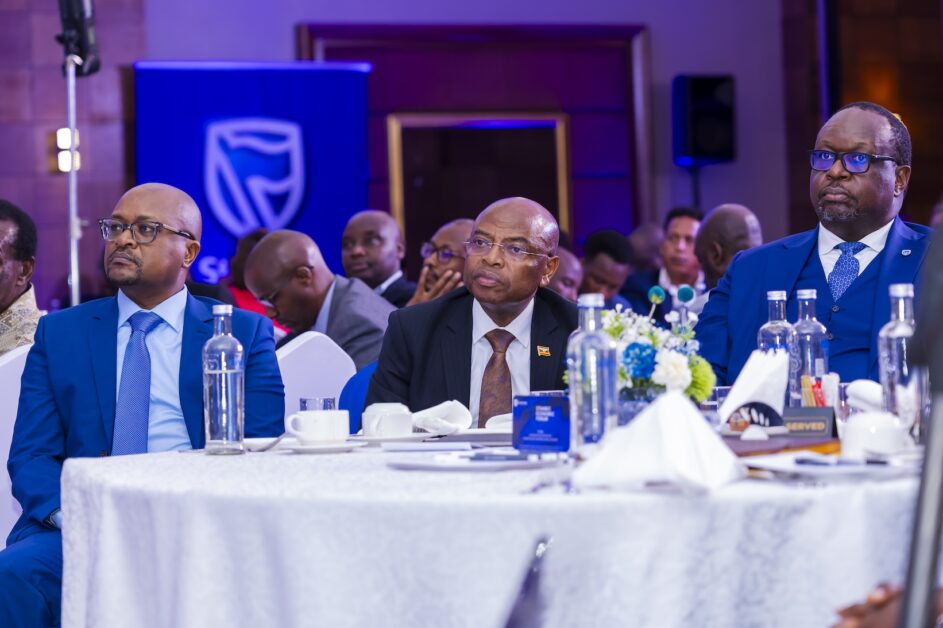
And this is where the forum subtly repositioned the role of the bank.
Stanbic is not just a lender to individual farmers. With its scale — roughly 20% of industry deposits and lending — it has the capacity to structure entire value chains: financing input suppliers, aggregators, processors and distributors in one coordinated framework. Structured agriculture value chain finance reduces risk, improves traceability, stabilises supply and strengthens repayment capacity across the ecosystem.
It also directly addresses the macro–micro tension discussed earlier.
Agriculture is where Uganda’s employment base sits. It is where household incomes are determined. It is where inclusive growth can move fastest if productivity rises and financing aligns.
Kamulegeya’s warning about execution applies here as much as anywhere else. Productivity must improve at the farm level. Value chains must be professionalised. Finance must be patient and structured.
Oil may catalyse growth.
But agriculture will determine whether that growth is felt.
And unless financing finally matches the reality of how agriculture works—seasonality, asset intensity, and long cash cycles—Uganda’s real economy will remain underleveraged.
Agriculture is not subsistence.
It is the foundation.
The question is whether capital will treat it that way.
#8. “Uganda’s Gold Is Not Ours” — and the Numbers Tell a Bigger Story
If oil was the emotional headline of Uganda’s future, gold was the uncomfortable headline of its present.
At the Stanbic Bank Economic Forum 2026, Deputy Governor of the Bank of Uganda, Prof. Augustus Nuwagaba, did not celebrate the gold boom. He dissected it.
“Gold is commodity number one,” he told the room. “We earned approximately USD 6.4 billion.”
That figure alone places gold at the centre of Uganda’s export narrative. But he immediately introduced what he called a paradox.
“Gold is the highest export receipt we get, but also it’s the highest import invoice… That’s the paradox.”
Then came the line that shifted the tone of the discussion entirely:
“When you look into the trade balance for gold only, it is about USD 200 million only… What does that imply? It means, actually… that gold most possibly is not ours.”
That was the forum moment.
The implication was not that gold is absent from Uganda. It was that the structure of the trade may not reflect purely domestic production. The value chain, in other words, may be more complex than the headline export number suggests.
The Bank of Uganda’s own export data provides the deeper statistical context.
According to the central bank’s 2025 export tables, gold exports reached USD 6.40 billion, accounting for 47.7% of Uganda’s total merchandise exports valued at USD 13.43 billion. By comparison, coffee earned USD 2.46 billion, cocoa USD 632 million, tea USD 54 million, and cotton just under USD 12 million.
Gold has become Uganda’s single largest export commodity by value.
The growth has been dramatic. In 2019, gold exports stood at USD 1.26 billion. By 2025, they had surged to USD 6.40 billion — a more than fivefold increase over six years. That translates into an estimated compound annual growth rate of roughly 31 per cent.
But the trajectory has not been smooth. Gold exports collapsed to USD 200.6 million in 2022 before rebounding sharply to USD 2.23 billion in 2023, rising further to USD 3.38 billion in 2024, and then surging again to USD 6.40 billion in 2025. Export volumes tell a similar story — falling sharply in 2022 before climbing to more than 62,000 kilograms in 2025.
At the same time, direction-of-trade data from the Bank of Uganda shows significant increases in imports from established gold-producing countries between 2023 and 2025. Imports from Tanzania rose sharply to USD 2.76 billion in 2025. Imports from Ghana, Mali and Cameroon — all major gold producers — also expanded markedly over the same period.
The central bank’s tables do not disaggregate these imports by commodity at the bilateral level. But the timing and scale of the shifts coincide closely with the acceleration in gold export receipts.
Which brings us back to the Deputy Governor’s point.
The issue is not whether gold exports are real. They are. The issue is how much of the gross export value represents net foreign exchange gain from domestic production, and how much reflects imported inputs, regional aggregation or re-export activity.
That distinction matters enormously for policy.
Gross exports can strengthen trade headlines. Net value strengthens sovereignty.
This is why the Bank of Uganda’s Gold Purchase Programme is more than a technical intervention. By purchasing gold domestically and building reserves, the central bank is attempting to convert trade flows into strategic assets — to formalise the ecosystem, strengthen foreign exchange buffers, and increase transparency.
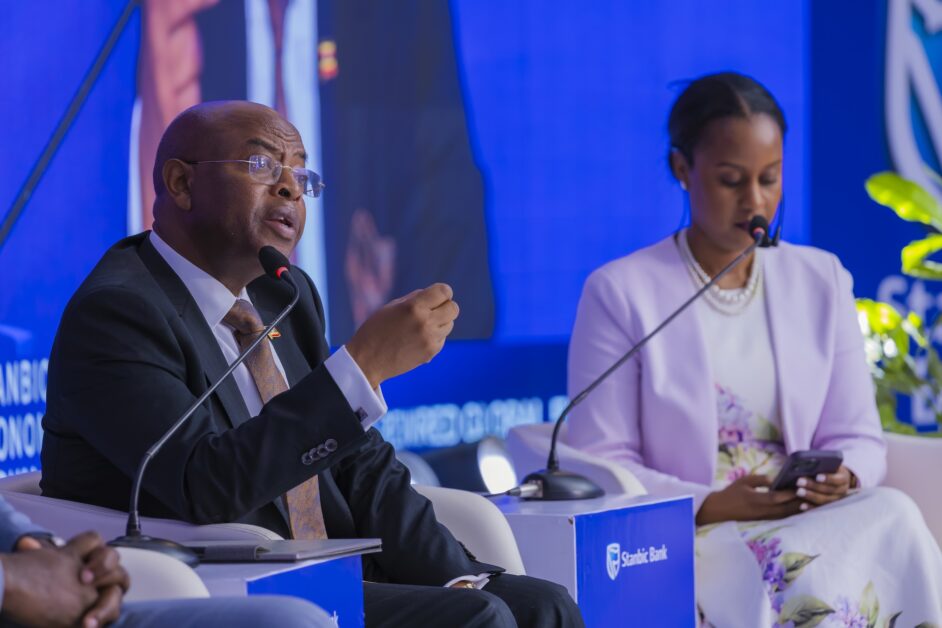
Prof. Augustus Nuwagaba made it clear that this is not a tentative policy experiment. “At the Bank of Uganda, we are ready. We are extremely ready for our gold purchase program,” he said.
That readiness is not merely about buying bullion. It is about restructuring the gold value chain. “We have introduced the concept of traceability,” he explained. “We want to be able to track where we are getting that gold from — Buliisa, Busia, Kasanda, Karamoja.”
Traceability, in this context, is an economic strategy. It formalises supply chains, improves compliance, and aligns Uganda’s gold trade with international standards at a time when global scrutiny over mineral sourcing is intensifying.
The macro logic was reinforced by Chief Economist Jibran Qureishi, who noted that the central bank “is imminently embarking on their own domestic gold purchase program,” adding that, “ultimately or eventually, it increases foreign exchange reserves.”
And that is the heart of the programme.
By converting domestically traded gold into reserve assets, the Bank of Uganda reduces dependence on volatile capital inflows and external borrowing. It strengthens its capacity to manage exchange rate stability. It diversifies reserve composition beyond traditional currency holdings into physical bullion — a hedge in an increasingly fragmented global economy.
Uganda’s gold boom is impressive.
But the deeper question — the one Prof. Nuwagaba forced the room to confront — is whether Uganda owns the full value of that boom.
“It means, actually… that gold most possibly is not ours,” he said bluntly.
The Gold Purchase Programme is an attempt to change that equation — to ensure that a greater share of the value chain is formalised, retained, and converted into sovereign strength.
The answer, at least for now, appears to be: not entirely.
And that may be the most important economic insight of the forum.
#9. AI Is Not Magic — It’s Data, Digitisation, and Leadership Readiness
If oil and gold defined Uganda’s resource moment, Michael Niyitegeka defined its technological reckoning.
The Business Technology Strategist and Executive Director of Refactory did not approach artificial intelligence with hype. He approached it with discipline.
“AI is not magic,” he told the forum. “It is data.”
That sentence cut through the noise.
In an environment where artificial intelligence is increasingly invoked as a shortcut to competitiveness, Niyitegeka reminded the room that AI systems are only as powerful as the data foundations beneath them. Without digitised processes, structured databases, interoperable systems and clean records, AI becomes little more than presentation slides.
“If you don’t have digitised processes, if you don’t have data, AI is just hype,” he said.
The warning was direct — and national in scope.
Uganda cannot compete in a rewired global economy if its institutions, enterprises and government systems remain analogue at the core. Artificial intelligence does not fix structural inefficiency. It amplifies whatever structure already exists.
Which means poor systems produce amplified inefficiency.
Good systems produce accelerated productivity.
Niyitegeka also pushed back against the idea that Africa’s AI future will be imported wholesale. “We need context-specific models,” he argued. Models trained on Western data sets may not solve Ugandan problems — from agricultural productivity to informal credit scoring to public health logistics and infrastructure.
AI competitiveness, in his framing, is not about buying software licenses. It is about building domestic capacity — data engineers, digital infrastructure, governance frameworks, and sector-specific applications that reflect local realities.
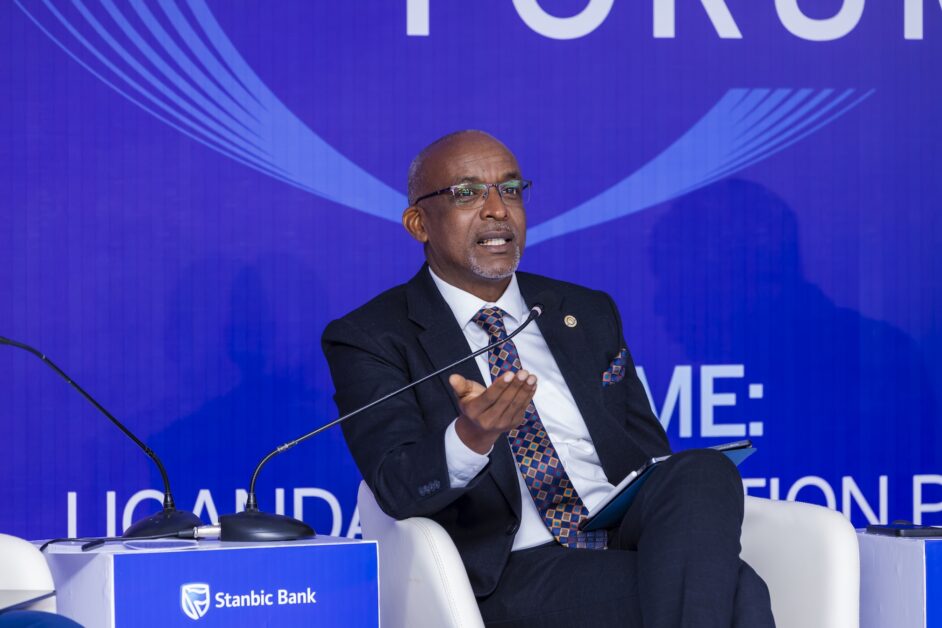
The competitiveness question, therefore, is strategic.
As global trade fragments and supply chains reposition, digital capability becomes a differentiator. Countries that can digitise trade documentation, automate customs, deploy AI in agriculture forecasting, modernise credit underwriting and optimise logistics will outpace those that cannot.
But perhaps his most uncomfortable point was directed at leadership.
“Leaders must understand this space,” he said bluntly.
AI literacy is no longer optional for CEOs, board members, regulators or policymakers. It is not enough to delegate “technology” to an IT department. Strategy now requires technological fluency. Decision-makers must understand the risks, the ethics, the productivity gains and the data governance implications.
Because in the absence of AI-literate leadership, two things happen:
Either institutions underinvest and fall behind.
Or they overinvest blindly and misallocate capital.
The forum’s technology takeaway was therefore not about robots or algorithms.
It was about readiness.
AI will not save Uganda.
But digitisation, data discipline and informed leadership could make it competitive.
And in a rewired global economy, that difference matters.
#10. When Trump Sneezes, Not Even Uganda Is Safe
For all the optimism about growth, oil, exports and macro stability, the Stanbic Bank Economic Forum closed with a sober reminder: Uganda does not compete in isolation.
In Daisy Nitwe’s “7Ts” framing, Trumpism was not a casual political reference. It was shorthand for a new global operating environment — one where trade rules can shift suddenly, tariffs can return overnight, and supply chains can be reconfigured not by efficiency, but by power. As she warned, “Trade is being very fragmented. And the fragmentation is really not coming out of pure efficiency. It’s mostly being driven by strategic competition.”
For a small open economy, that matters.
Uganda can do everything right domestically — stabilise inflation, strengthen reserves, attract investment — and still be hit by shocks it did not create. A sudden tightening in global financial conditions can trigger capital flight. A tariff war can suppress demand. A geopolitical crisis can raise shipping costs, disrupt commodity markets, and distort prices. And shifts in US or European policy can reshape market access in ways that no domestic reform can fully control.
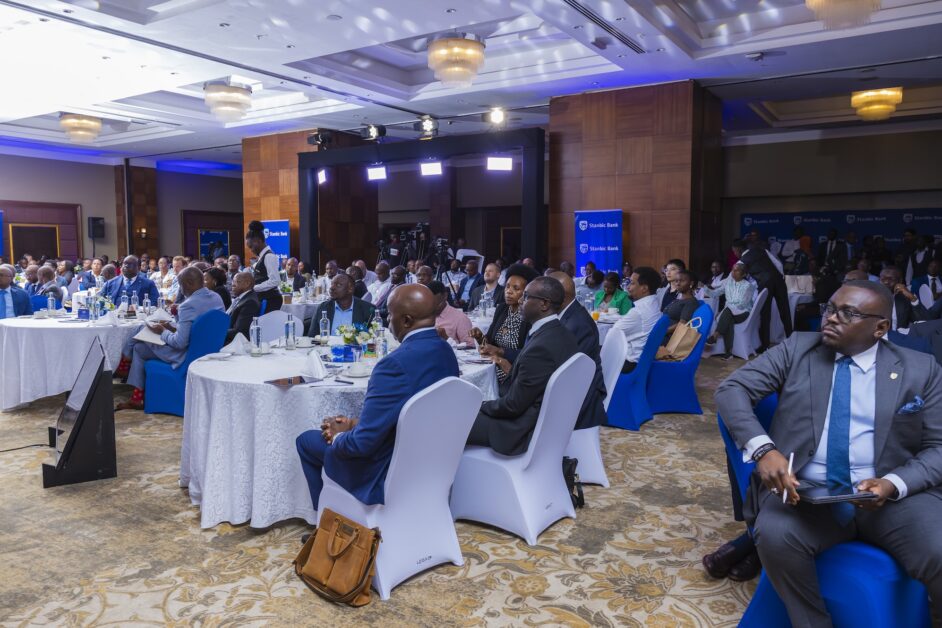
The Deputy Governor of the Bank of Uganda put the vulnerability plainly. For all the confidence in the country’s macro fundamentals, he said, “The only concern we have… is the geopolitics.”
That line captured the deeper truth: in a rewired global economy, external shocks are not rare events. They are part of the system.
This is why resilience and diversification emerged as the forum’s final strategic message. Uganda must diversify its exports beyond a narrow commodity basket. It must diversify sources of foreign exchange beyond a few dominant flows. It must diversify the economy beyond oil expectations. And it must diversify competitiveness — moving beyond raw materials into value-added production, services, and technology-enabled enterprise.
Chief Economist Jibran Qureishi framed the discipline required for that new era. “The environment ahead will increasingly reward those who are prepared, informed and decisive,” he said. And that, ultimately, is what the forum was trying to achieve: preparedness.
Because in a world where geopolitics can rewrite economics overnight, the question is not whether disruption will come.
It is whether Uganda — and Ugandan enterprise — will be ready when it does.
Conclusion: Opportunity Is Real. Execution Discipline Will Decide.
Uganda’s opportunity is real — and the numbers support that optimism. Growth is projected to rise from 6.3% in FY2024/25 to 6.5–6.7% in FY2025/26, edging toward 7% thereafter. Oil is nearing production, underpinned by an estimated 1.6 billion barrels of recoverable reserves and peak output of 230,000 barrels per day. Gold exports reached USD 6.4 billion in 2025 — nearly half of total merchandise exports — even as the Bank of Uganda cautions that the net retained value is far slimmer than the headline suggests. Meanwhile, the central bank remains confident in sustaining growth, exchange rate stability and inflation control despite geopolitical volatility.
But none of this guarantees prosperity.
The forum’s clearest message was that opportunity rewards discipline. The next phase will favour those who are prepared, structured and deliberate. As Francis Kamulegeya warned, the moment calls for execution. And as Damoni Kitabire reminded the room, insight alone is insufficient — outcomes depend on how leaders act.
Stanbic’s signal was equally clear. This was not a ceremonial gathering, but a strategic positioning by Uganda’s largest bank — a convenor of capital, policy and enterprise, and a financier of value chains and expansion. The institution is not observing the moment. It is structuring around it.
Because moments do not execute themselves.
And if Uganda is to convert resources into resilience and growth into durability, then the final truth of the forum stands:
Big dreams need appropriate financing and a disciplined country.