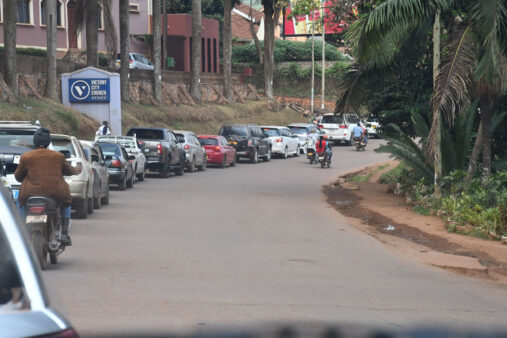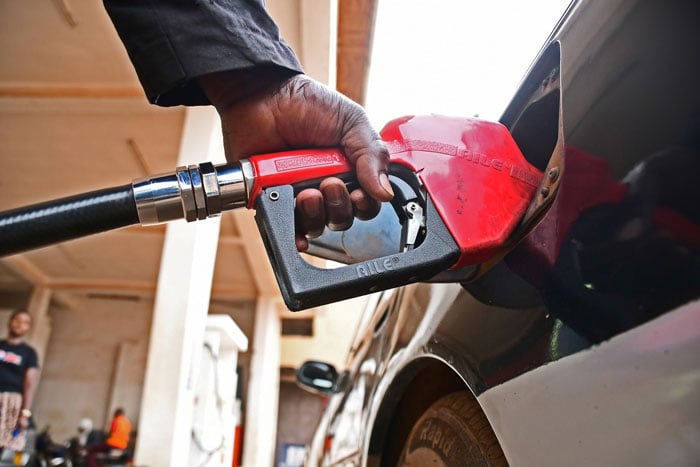
The International Monetary Fund (IMF) has urged government to introduce Value Added Tax (VAT) on fuel products as part of a broader strategy to strengthen domestic revenue mobilization and improve fiscal sustainability.
In its Uganda: Post-Financing Assessment Discussions report, the IMF highlights that Uganda continues to collect less tax revenue than its potential, largely due to a narrow tax base and numerous exemptions in the current tax regime, stressing that broadening the tax base is essential to close gaps in revenue relative to regional peers.
Under existing law, fuel and petroleum products are VAT exempt. But instead, government currently charges Excise Duty on fuel and petroleum products, with the tax on motor spirit (petrol ) at about UGX 1,650 per litre and on diesel at around UGX 1,380 per litre.
However, as part of its recommended tax policy reforms under the Domestic Revenue Mobilization Strategy II, IMF proposes applying VAT to fuel products, while offsetting the impact with reductions in Excise Duty.
“While acknowledging significant room for gains in administrative reforms, [IMF staff] recommended concurrent tax policy reforms to maximize gains. Tax policy priorities include applying VAT to fuel products (with offsetting reductions in excises, which is expected to produce net revenue gains),” the report reads in part.
IMF notes that this combination could produce net revenue gains for the government, helping to broaden the tax base without sharply increasing the overall tax burden.
However, government is yet to respond to the proposal.
 Tax on Used Clothes to Increase to 30%
The IMF has also advised government to narrow the list of raw foodstuffs exempted from VAT, eliminating tax holidays, and carefully costing existing tax expenditures to maximize revenue gains.
These reforms, the Fund noted, are critical to raising revenues towards targeted levels, even as strong political commitment will be needed to implement them successfully.
Government is seeking measures to increase tax to GDP ratio from the current 13% to above 18%.
However, IMF cautioned that any changes to fuel taxation need to be carefully phased and communicated, given the sensitivity of fuel prices for households and businesses.
Without careful sequencing and stakeholder engagement, IMF noted, introducing VAT on fuel could have significant economic and social implications.