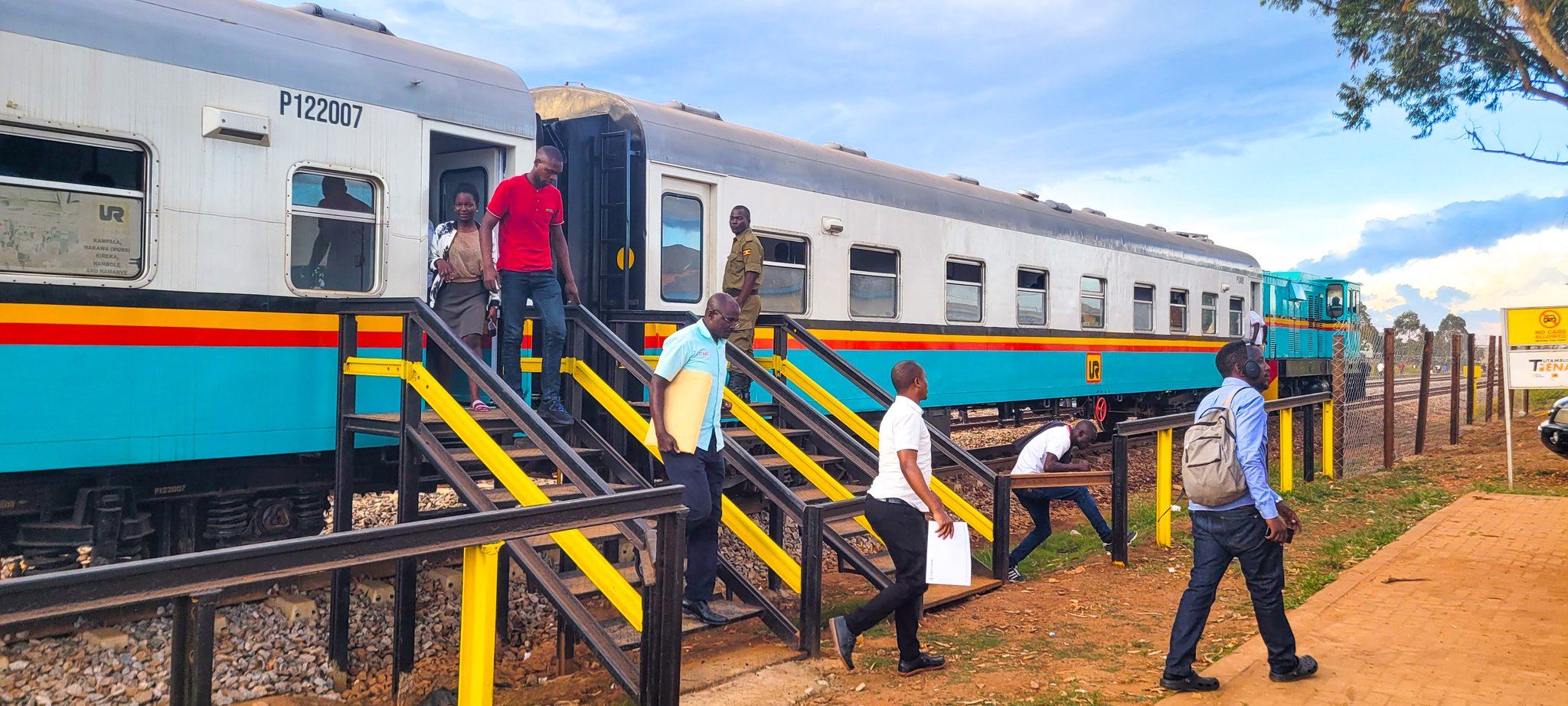
Uganda Railways Corporation (URC) closed the 2024/25 financial year with a net loss of UGX 32.810 billion, underscoring persistent structural and operational weaknesses in the railway sub-sector.
Although the loss narrowed from UGX 36.346 billion in the 2023/24 financial year, the Auditor General’s report for the year ended 31 December 2025 shows that URC continues to struggle with weak revenue performance, idle assets, unresolved liabilities, and stalled infrastructure rehabilitation.
Loss narrows, but risks remain
The reduction in losses was driven by higher funding and cost containment. Internally generated revenue rose by 26.12%, government grants increased by 14.67%, and operating expenses declined by 13.03%.
However, URC’s financial position remains fragile. Contingent liabilities of UGX 31.579 billion, linked to undocumented government loans dating back to 1987, remain unresolved, clouding the corporation’s true financial standing.
Asset risks are equally significant. The audit found that 62 land titles, covering 17.407 acres, have not been transferred to URC by the Privatisation Unit, exposing the corporation to encroachment and asset loss.
Strategic assets valued at UGX 3.438 trillion, including land, locomotives, railway lines, quarries, telecom masts, and uninsured property, remain inadequately safeguarded.
Weak investigations into asset losses were also cited, including theft of 46 rails at Jinja Goods Shed and 394 untraceable wagons linked to Nyahururu Virtual Station.
Idle assets and weak asset management
Assets worth UGX 4.583 billion were idle or underutilised during the year, with no utilisation reports prepared. URC lacks an Asset Management Policy, and internal audits did not adequately monitor asset use.
Non-current assets valued at UGX 77.037 billion had no maintenance schedules, accelerating deterioration.
These included non-functional marine equipment worth UGX 14.652 billion and an underutilised floating dry dock valued at UGX 18.728 billion.
Contract failures and revenue leakages
Contract management weaknesses were widespread. A UGX 12.418 billion contract for MV Pamba was not fully enforced after the contractor failed to provide performance security and submit annual financial statements.
Rental income remained uncollected, with five tenants occupying URC premises under expired agreements, contributing to UGX 2.365 billion in uncollected revenue.
The Internal Container Depot at Kampala Goods Shed also remained non-functional due to delayed rehabilitation and failure to secure a URA licence.
 Inside Ramathan Ggoobi’s Plan to Raise UGX 2.3 Trillion in New Taxes and UGX 2.54 Trillion Through Enforcement
Procurement performance was particularly weak. Of planned procurements worth UGX 213.467 billion, only UGX 18.834 billion (9%) were awarded. URC also failed to meet statutory requirements to reserve 15% of contracts for women, youth, and persons with disabilities.
Several contracts were delayed or terminated, including a passenger coach rehabilitation contract delayed by 133 days without approved extensions or enforcement of liquidated damages.
Planned asset disposals worth UGX 4.798 billion were not implemented, leading to the accumulation of obsolete assets.
Budget shortfalls and weak delivery
Out of an approved budget of UGX 285.690 billion, URC received only UGX 162.021 billion (56.7%). Internally generated revenue reached UGX 20.176 billion against a target of UGX 32.580 billion.
Freight services accounted for 89.2% of the UGX 12.412 billion revenue shortfall, reflecting capacity constraints in URC’s core business.
Of 25 planned outputs, only UGX 1.292 billion worth were fully implemented, while outputs worth UGX 46.358 billion were not implemented at all.
Donor-funded rehabilitation stalls
The East African Railway Rehabilitation Support Project suffered severe delays. By June 2025, only $75.859 million of the expected $412.863 million had been disbursed, leaving $337.003 million undisbursed.
Government incurred $1.528 million in commitment fees on undisbursed loans. In the 2024/25 financial year, only UGX 8.926 billion (4%) of the approved UGX 199.647 billion project budget was received, with just five of 53 activities partially implemented.
Mixed financial ratios
Liquidity improved to 145%, up from 72%, largely due to increased government and donor funding.
However, return on assets fell to 62.5% from 93.3%, and operating margins declined to 90.87%, reflecting underutilised infrastructure and weak revenue generation.
While URC has narrowed its losses, unresolved liabilities, idle assets, weak procurement execution, and stalled rehabilitation continue to threaten its financial sustainability and operational effectiveness.