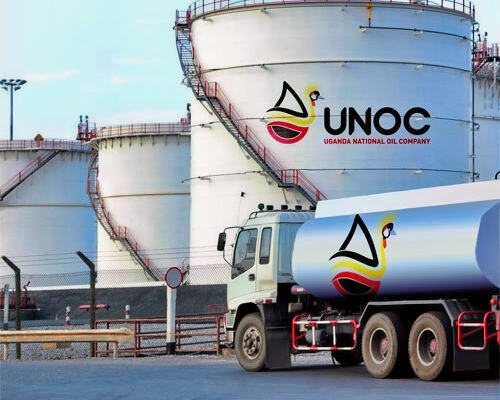
Uganda National Oil Company (UNOC) posted a strong profit of UGX 359.7 billion in the 2024/25 financial year, a sharp turnaround from the UGX 3.7 billion loss recorded the previous year.
The profits notwithstanding, Uganda remains without adequate strategic fuel buffer stocks.
According to the Auditor General’s Annual Report 2025, UNOC’s improved profitability following the acquisition of key fuel importation licences, enabling the company to operate more competitively across the petroleum supply chain.
However, the Auditor General highlights a growing contradiction: while UNOC has strengthened its commercial fuel import operations and exceeded key targets, critical gaps persist in storage infrastructure, strategic reserves, and implementation of planned investments essential for national energy security.
Import volumes rise, aviation fuels lag
UNOC exceeded planned import volumes for major fuel products. Imports surpassed targets by 84,232 cubic metres for Automotive Gas Oil (AGO) and 97,623 cubic metres for Premium Motor Spirit (PMS), signalling expanding capacity in its fuel import mandate.
Performance was weaker in aviation fuels. UNOC imported 154,432 cubic metres of BIK and Jet A1 against a target of 213,591 cubic metres, leaving a shortfall of 59,159 cubic metres due to delayed Jet A1 shipments, raising concerns over supply reliability for aviation and industrial users.
Limited storage leaves Uganda exposed
Despite higher imports, Uganda remains highly vulnerable due to limited in-country fuel storage.
UNOC’s capacity at the Jinja Storage Terminal (JST) stands at 30 million litres, while average daily national demand is approximately 6.5 million litres, meaning the country has only about four days’ cover in the event of a supply disruption.
The risk is compounded by the commercial use of JST, which now supplies other oil marketing companies.
Trade stocks average just 5.2–7.5 million litres per month, volumes that roughly equal daily national consumption. As a result, Uganda currently lacks meaningful strategic fuel buffer reserves.
The Auditor General warned that this situation poses a significant threat to national energy security.
Expansion plans face financing hurdles
UNOC plans to add a 10-million-litre tank at Jinja, raising capacity to 40 million litres, equivalent to just five days of national demand.
More significantly, the planned Kampala Storage Terminal (KST) is designed to hold 240 million litres.
Once completed, combined storage at JST and KST would total 280 million litres, providing up to 40 days of national fuel cover.
 Africa Takes The Stage: From Raw Supply To Brand Ownership
However, financing the fuel stockholding alone is estimated at UGX 1.3 trillion, presenting a major challenge.
The Auditor General urged UNOC to fast-track storage expansion and intensify stakeholder engagement to mobilise funding for strategic fuel reserves.
Strategic projects and funding gaps
The Auditor General also points to the underfunding of UNOC’s broader strategy. The 2019/20–2023/24 strategic plan was underfunded by UGX 358.65 billion (17.82%), affecting key projects such as the development of the Kabaale Industrial Park and the refurbishment of the Jinja Storage Terminal.
In the 2024/25 financial year, only 28 of 64 strategic initiatives (44%) were fully achieved, while 36% were partially implemented and 20% not achieved.
Funding constraints persisted, with only UGX 578.181 billion (77.8%) of the UGX 744.265 billion board-approved budget financed, leaving a funding gap of UGX 336.476 billion.
Internally generated revenue also underperformed. UNOC realised UGX 387.106 billion against a target of UGX 573.114 billion, a variance of UGX 186.008 billion (32.46%).
Of the UGX 139.033 billion available for spending, only UGX 87 billion was utilised, reflecting an absorption rate of 63%, attributed to recruitment delays and slower-than-expected business growth.
Regional supply constraints
Fuel supply challenges were compounded by regional shipping restrictions. Delivery vessels for PMS were capped at 58,000 metric tonnes, limiting UNOC’s ability to import larger, more cost-effective cargoes.
UNOC reported progress in negotiations, with approval granted in November 2025 for an additional 25,000-metric-tonne PMS vessel.
Regional discussions are ongoing, with Kenyan stakeholders considering preferred vessel sizes of up to 85,000 metric tonnes, supported by infrastructure upgrades.
Profitability without security
The Auditor General’s report underscores a central tension: UNOC is becoming commercially profitable, yet Uganda remains without adequate strategic fuel reserves.
As UNOC expands its role under the Petroleum Supplies Act, ensuring that profitability is matched by investments in storage capacity, operational resilience, and national buffer stocks will be critical to safeguarding Uganda’s energy security.