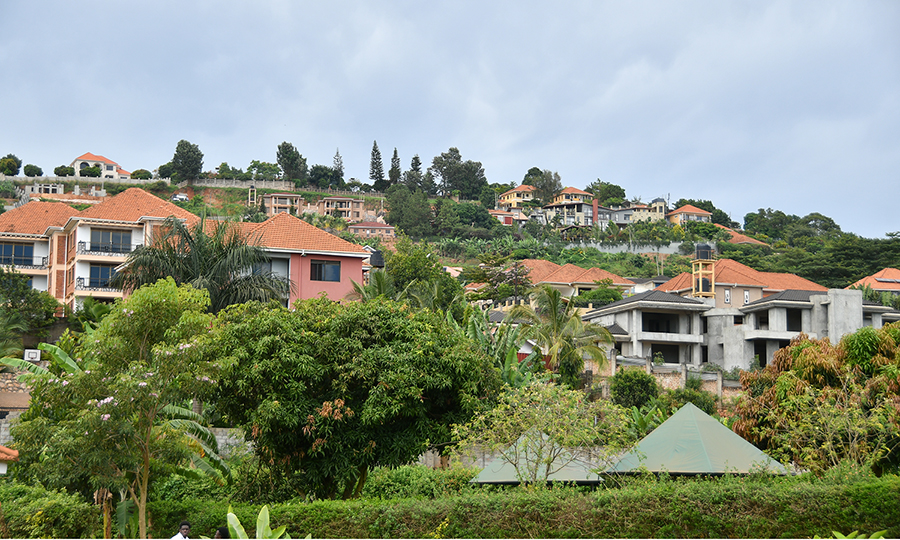
As more Ugandans invest their savings and take out loans to buy homes, particularly through off-plan developments, the country’s booming property market is exposing buyers to growing financial, safety, and legal risks.
Weak regulation, limited consumer protection, and a lack of enforceable guarantees have left many homeowners vulnerable, often long after they have paid for and occupied their homes.
A 2024 government investigation revealed that the situation in several condominium developments had become grave and systemic, posing serious risks to homeowners, public safety, and financial security.
Inspections conducted across multiple residential projects by the Inspectorate of Government uncovered widespread construction defects, regulatory non-compliance, and failures by developers to meet basic habitability and safety standards.
A pattern of failure
At Swan Residences, a two-block mixed-use development with 100 units along the Kireka–Namugongo Road, homeowners reported that they moved into incomplete apartments, forcing many to redo interiors at their own cost.
Inspectors observed visible cracks on exterior walls and unfinished external painting.
Particularly alarming was the placement of swimming pools beneath one of the blocks.
Inspectors warned that this posed a risk to the building’s structural integrity, noting that columns supporting the structure above the pool had already developed cracks.
Despite residents occupying the premises since 2022, occupation permits were not available.
Similar concerns emerged at Leo Zodiac Apartments in Najjeera. Inspectors documented visible exterior wall cracks, persistent flooding caused by poor drainage, and sewerage failures where waste flowed into neighbouring compounds.
The investigation warned that leaking roofs and collapsing ceilings threatened the integrity of the buildings, while ground-floor cracks could compromise structural stability.
Homeowners also reported mold, dampness, and water intrusion through poorly fitted doors and windows.
At Lotus Vicinia in Najjeera 2, inspectors found poor electrical wiring with exposed cables, widespread dampness, and deep exterior wall cracks.
Although some remedial works were undertaken following a meeting with the Inspectorate of Government in October 2023, homeowners continued to report leakage and were forced to repair roofs and drainage systems themselves.
Notably, only a few buyers signed the handover reports, signalling unresolved disputes with the developer.
Other developments inspected, including Waves in Kungu, Hazel Apartments, Casa Marcella, and Sunrise Apartments in Naalya, revealed recurring defects: leaking roofs, non-functional sewerage systems, poor wiring, and inadequate ventilation, flooding compounds, cracking walls, and missing occupation permits.
At Hazel Apartments, inspectors found major sewerage and plumbing failures, with a non-functional biodigester that forced residents to pool funds to construct alternative waste facilities.
At Casa Marcella, water was reported to leak from electrical sockets during rainfall, presenting serious safety risks.
Collectively, these findings point to a systemic failure in condominium developments rather than isolated complaints.
In many cases, buyers bear the financial and safety burden of defects arising from weak enforcement, poor oversight, and limited consumer protection.
The cost borne by buyers
The investigation revealed that homeowners carried the heaviest burden of these failures.
Across multiple developments, buyers took possession of unfinished or unsafe units, often without formal handover or occupation permits.
Many moved in while construction was ongoing, making costly repairs just to render their homes habitable.
Homeowners reported spending significant sums to repair leaking roofs, redesign drainage systems, replace fittings, address plumbing and sewerage failures, and repeatedly waterproof walls to deal with mold and dampness.
In some estates, residents collectively raised funds to construct new soak pits or attempt major structural repairs after developer-installed systems failed.
Despite unresolved defects, residents continue to pay monthly maintenance fees for security, waste management, and cleaning.
At Swan Residences, for example, residents pay between UGX110,000 and UGX130,000 monthly, even as cracks, water pressure failures, unsafe pool designs, and poor waste management persist.
Beyond financial loss, the defects expose residents to serious health and safety risks: leaking sewage, exposed electrical wiring, cracked columns, and failing roofs pose daily hazards, particularly to children and the elderly.
At the same time, these flaws threaten the long-term value of what is often a buyer’s largest lifetime investment, frequently financed through bank loans.
Yet accountability remains unclear. It is not established who bears legal liability for these defects, whether affected buyers will be compensated, or how losses will be recovered.
While some developers undertook limited remedial works after government intervention, no clear mechanism for restitution or buyer redress has been defined. The unresolved question, who pays and when, hangs over the sector.
Kenya’s cautionary tale
A recent collapse in neighbouring Kenya illustrates the risks of off-plan investments without strong safeguards.
In March 2025, real estate developer Banda Homes entered liquidation, leaving hundreds of homebuyers facing massive losses.
The liquidation, announced through the Kenya Gazette, followed years of construction delays and broken promises on projects such as Pinewood Estate and Rosewood Estate near Nairobi.
Buyers had paid up to 50% of property values upfront under the off-plan model, many using life savings or bank loans.
 Kampala’s Property Market Shows Resilience as Economic Growth Rebounds to 6.3% — Says Knight Frank Report
With projects left incomplete and asset values uncertain, analysts warned that buyers were unlikely to recover their full investments.
The collapse has renewed calls in Kenya for stricter regulation, including mandatory escrow accounts to protect buyer deposits and ensure funds are released only upon verified construction milestones.
For Uganda, the Banda Homes case offers a stark warning of what can happen when off-plan markets grow faster than regulation.
Uganda’s expanding off-plan market
Off-plan property sales are expanding rapidly in Kampala and its surroundings, driven by strong housing demand, rapid urbanisation, and a national housing deficit estimated at 2.4 million units.
Developers increasingly launch projects before construction is complete to secure early funding.
Off-plan buyers are attracted by discounted prices, flexible payment plans, often requiring 15–20% deposits, and the promise of capital appreciation as infrastructure develops.
Real estate agents, digital platforms, and podcasts frequently promote off-plan investments as smart, high-growth opportunities.
The most active buyers include middle-income professionals, diaspora Ugandans, and investors seeking rental income or resale gains.
Rising land prices in Kampala’s suburbs have further encouraged developers to sell units before completion.
One prominent example is the Waterfront Hotel Apartments in Munyonyo, developed by Buildnet Construction Company. The project is marketed as “Uganda’s most secure and profitable investment,” backed by a bank guarantee from Centenary Bank.
Under this model, buyers pay a 20% deposit, after which the bank issues a letter of comfort. Upon full payment, a formal bank guarantee, renewable for up to three years, is issued.
Investors are promised guaranteed rental income of up to $1,900 per month for the first three years, regardless of occupancy.
While such models appear innovative, experts warn that risks remain.
Moses Lutalo, managing director of Broll Uganda, notes that many investors lose money when developers directly use buyer funds to finance construction.
Ideally, he says, buyer funds should be held in escrow and used as collateral for bank financing.
“There are two key protections,” Lutalo explains. “First, using buyer funds strictly as collateral. Second, a bank guarantee backed by a legal lien to ensure refunds if projects fail. Without regulation, losses are common in opaque markets like Uganda.”
Weak oversight and regulatory gaps
Despite real estate contributing about 12% of Uganda’s GDP, oversight remains limited.
Recent scrutiny intensified after aggrieved buyers petitioned the Inspectorate of Government over substandard condominiums, particularly affecting diaspora investors.
Irene Umoja, commissioner for Housing Development in the Ministry of Lands, says investigations revealed weak enforcement of building regulations and widespread non-compliance with condominium laws.
She noted that condominium ownership is still poorly understood in Uganda, with many developments failing to establish proper governance and maintenance structures.
Other challenges included the use of unqualified professionals, misleading advertising, compromised materials, and limited due diligence by financial institutions.
These issues, Umoja warned, undermine public confidence in the sector and threaten diaspora investment, which exceeds $1 million annually.
To address these gaps, government is finalising a Real Estate Bill aimed at raising professional standards and strengthening consumer protection.
Other reforms include a digital land portal, public awareness campaigns, and enforcement of building and planning laws.
Strengthening valuation standards
One significant reform is the passage of the Valuation Bill, 2024, approved by Parliament in September 2025.
The law establishes the Institute of Certified Valuers of Uganda, strengthens professional standards, and reinforces the Office of the Chief Government Valuer.
Parliament noted that weak valuation practices had contributed to financial losses, litigation, and non-performing loans. The new law clarifies licensing, governance, accountability, and appeals processes, while tightening entry into the profession.
Once enacted, the law is expected to strengthen trust in valuation processes and support healthier real estate markets.
However, it does not on its own resolve the compensation and liability gaps exposed by defective off-plan developments.
A market at a crossroads
Uganda’s off-plan property market offers real opportunities for homeownership and investment, but it is operating in a regulatory environment struggling to keep pace.
Without stronger enforcement, escrow protections, clear liability rules, and effective buyer redress mechanisms, the risks will continue to fall disproportionately on consumers.
As Kenya’s experience shows, unchecked growth can quickly turn into financial mayhem. Whether Uganda can learn from these warnings and reform before a major collapse may determine the future credibility of its real estate sector.