There are years when an industry grows quietly, and then there are years when it changes character.
For Uganda’s insurance industry, 2025 was unmistakably a change of character.
Viewed from the numbers side, it was a strong year. By mid-year, insurers had written UGX 1.02 trillion in gross premiums, an 8.78% increase from the same period in 2024.
Claims paid reached UGX 443 billion, meaning nearly half of all premiums collected were already being returned to policyholders.
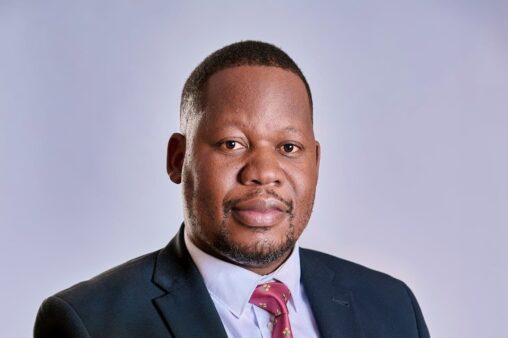
For Ibrahim Kaddunabbi Lubega, Chief Executive Officer of the Insurance Regulatory Authority (IRA), that balance mattered more than topline growth.
“Premium growth without claims would mean risk is not being transferred,” he said during a media engagement. “Claims are the real test of whether insurance is working.”
That framing became central to how 2025 was understood. This was not growth driven purely by policy sales. It was growth being tested through payouts, disputes, and scrutiny.
Where growth came from
Life insurance led growth at over 12%, expanding to more than UGX 402 billion by mid-year.
This surge did not reflect a sudden cultural shift toward life policies. Instead, it was structural.
Insurance was increasingly embedded in financial participation. Loans came bundled with credit life. Employers integrated group life into payroll. Saving products blurred into long-term protection.
Non-life insurance remained the industry’s backbone, growing to approximately UGX 572.6 billion. Motor, fire, marine, and engineering continued to dominate premium volumes.
Motor insurance alone accounted for nearly UGX 190 billion, but it was also where claims frequency, fraud, and customer dissatisfaction were most visible. Insurers confronted an uncomfortable truth: volume without discipline could quickly destroy margins.
Microinsurance recorded the highest percentage growth, over 240%, but from a small base of just UGX 2 billion. Regulators and executives were careful not to oversell this progress.
Microinsurance was not yet a solution to low penetration, but it signaled a shift toward engaging the informal economy rather than merely discussing it.
Health Management Organisations (HMOs) grew by more than 15% to UGX 38.28 billion, reflecting rising demand for medical cover, and persistent strain in health insurance, where loss ratios remained stubbornly high.
By mid-year, one conclusion was clear: growth alone was no longer enough. Premiums were rising, but expectations from the regulator, clients, and shareholders were rising faster.
The merger that changed the market
The shift in expectations crystallised with the arrival of SanlamAllianz, a merged entity carrying the capital, institutional confidence, and global reach of two insurance giants.
When Sanlam and Allianz completed their global merger in 2023 and operationalised it locally in Uganda in 2025, the message was unmistakable: Uganda was no longer a fringe insurance market.
Within months of licensing, SanlamAllianz had captured nearly 20% of the general insurance market. For years, Old Mutual had enjoyed a comfortable lead. In 2025, that comfort disappeared, with the gap narrowing to just over one percentage point.
This was not merely a merger of balance sheets. It was a merger of underwriting philosophies, reinsurance relationships, and ambition.
With assets exceeding UGX 370 billion and investments above UGX 190 billion, SanlamAllianz entered with the capacity to underwrite large infrastructure, energy, aviation, and sovereign-linked risks that smaller players struggled to absorb.
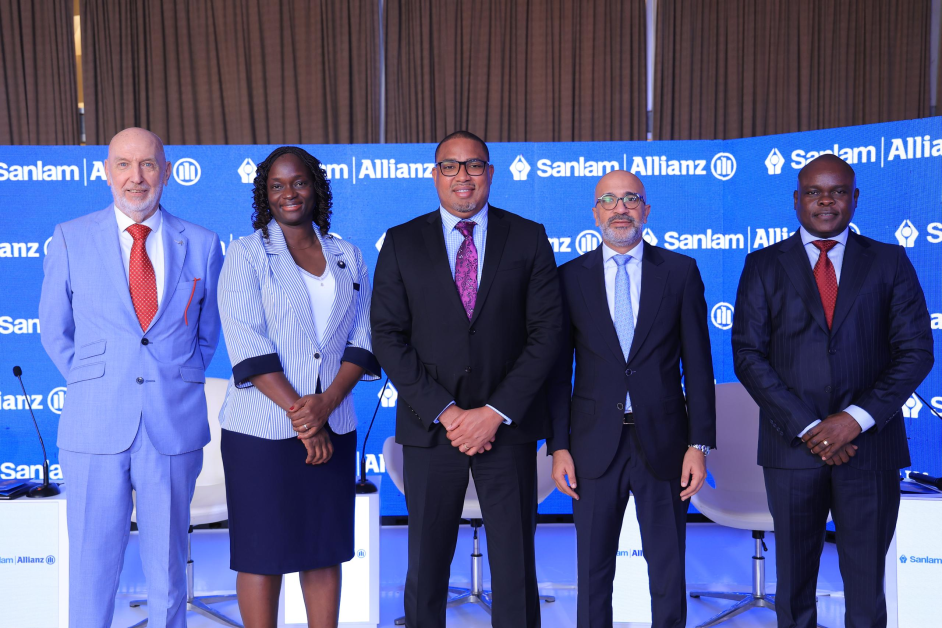
At the Kampala launch, then–CEO Gary Corbit struck a measured but confident tone: “We are bringing together more than 200 years of collective experience. Our goal is to raise benchmarks, innovate responsibly, and deliver real value to customers.”
Ruth Namuli, CEO of SanlamAllianz General Insurance, emphasised reach over dominance: “This merger allows us to meet the evolving needs of individuals, SMEs, corporates, and institutions, while investing in local talent, technology, and partnerships.”
The regulator welcomed the consolidation.
Kaddunabbi said the merger marked a transformative moment for an industry long challenged by fragmentation, blending global expertise with local strength.
Perhaps the merger’s most significant impact was psychological. Brokers recalibrated relationships. Corporate clients reassessed options.
Reinsurers paid closer attention. For the first time in years, market leadership had to be defended, not assumed.
Rebranding and rising expectations
As SanlamAllianz gathered momentum, Old Mutual completed its own transformation with the retirement of the UAP–Old Mutual name, ending a decade-long regional integration process.
At the Kampala launch, Group CEO Arthur Oginga framed the rebrand as strategic rather than cosmetic, arguing that a unified identity would strengthen trust and recognition across markets.
But the applause was restrained. The regulator used the moment to send a clear message: rebranding meant nothing without service improvement, faster claims, and better customer engagement.
Government voices reinforced the pressure. Ramathan Ggoobi, Permanent Secretary at the Ministry of Finance, consistently framed insurance as economic infrastructure.
“Our target is to double national savings to 40% in the next 15 years,” he said. “Insurance must play a central role.”
Motor and fire insurance alone, he argued, would not deliver Uganda’s development ambitions. Agriculture, manufacturing, exports, and long-term savings all required meaningful risk cover.
Related
 Inside Zahid Mustafa’s Turnaround Playbook: How I&M Bank Tanzania Reclaimed Growth and Relevance
Growth arrived—but it came with accountability.
Titans compete
By the third quarter of 2025, competitive pressure had intensified.
IRA’s Q3 performance report showed Old Mutual leading the non-life market with UGX 185.88 billion in gross written premiums (21.2% share), followed closely by SanlamAllianz with UGX 173.33 billion (19.8%).
After reinsurance, both retained nearly identical risk levels. SanlamAllianz, however, converted more of its portfolio into revenue, posting higher net earned premiums.
Claims experience told a sharper story. Old Mutual recorded a 65.2% loss ratio, while SanlamAllianz reported 37.25%, pointing to tighter underwriting or early merger efficiencies.
Cost structures differed. SanlamAllianz carried higher management and commission costs, reflecting aggressive intermediary-driven expansion. Old Mutual remained more cost-efficient overall.
Crucially, Q3 figures were not final. Public-sector insurance placements, aligned to the June-July fiscal cycle, were still unfolding.
High-profile insurance contracts by Bank of Uganda to Britam and Sanlam were closely watched. Several insurers were disqualified for failing technical or solvency requirements, reinforcing the regulator’s insistence on discipline and credibility.
Complaints, trust, and accountability
Beneath strong numbers lay a stubborn reality: insurance penetration hovered under 1%.
Despite over 143 licensed players, distribution remained urban-centric, and public understanding lagged badly. Myths, mistrust, and opaque processes kept millions uninsured.
Complaints told the story premiums could not. Insurance complaints more than doubled over three years, surpassing 350 cases. In 2025, this could not be ignored.
The IRA reframed the narrative: rising complaints were not a failure, but evidence that customers believed the system would respond.
Strict response timelines were enforced. Dispute hearings were capped. A digital complaints platform enabled real-time tracking. Regional offices extended oversight beyond Kampala.
By mid-year, nearly 90% of complaints had been resolved, involving about UGX 18 billion in disputed claims.
“Trust is the currency of insurance,” Kaddunabbi repeated. “And that currency must be protected.”
Literacy, innovation, and inclusion
Mid-2025 saw the launch of the Insurance Literacy and Market Development Agenda, a five-year national campaign under the theme “Insurance for All.”
Government framed literacy as economic infrastructure.
“Insurance underpins our growth strategy,” Ggoobi said. “With stronger literacy and deeper rural outreach, we can grow penetration.”
For the regulator, the diagnosis was blunt: “The biggest barrier is not affordability, but awareness,” said Kaddunabbi.
Innovation finally met everyday life. Excel Insurance’s WhatsApp-based motor insurance platform stood out not for complexity, but for simplicity—meeting customers where they already were.
Meanwhile, bancassurance quietly did the heavy lifting, with premiums growing nearly 28%. Banks offered what insurers needed most: trust, distribution, and relevance.
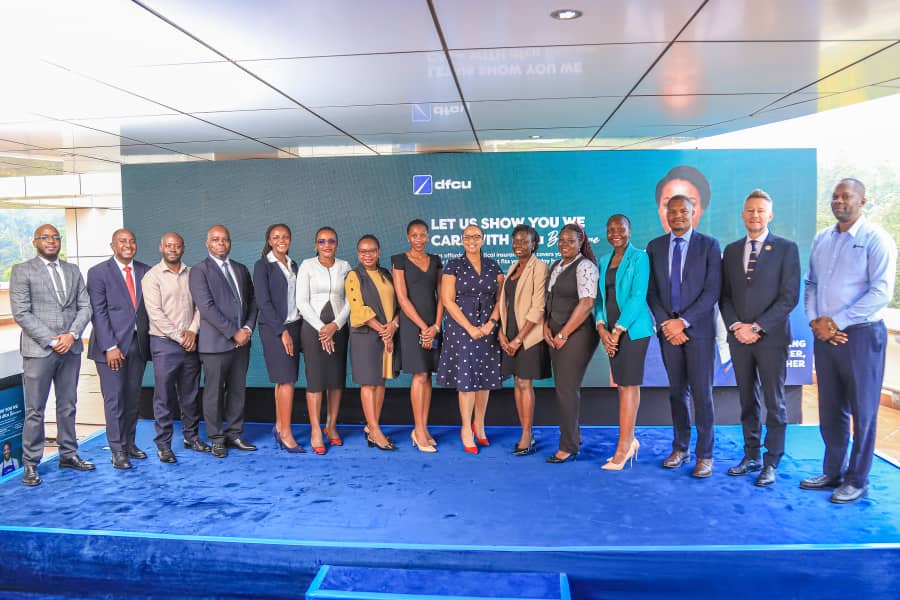
The launch of dfcu BlueCare, in partnership with Jubilee Health Insurance, reflected this shift. Health insurance remained difficult, but partnerships showed how scale could reduce barriers.
Consolidation, exits, and leadership shifts
Brokerage consolidation continued with OLEA’s acquisition of Marsh Insurance Brokers Uganda, accompanied by the appointment of Fiona Magezi as Managing Director.
New entrants tested confidence. AAR General Insurance received approval to enter non-life business, highlighting both the opportunity and the capital-intensive realities of the segment.
Not every story was about expansion. Jubilee Holdings merged its life and health businesses, citing the need for resilience amid regulatory and margin pressure.
Liberty Life exited health insurance entirely, acknowledging long-term viability challenges.
Leadership shifts at the top followed structural change. Stephen Chikovore exited Old Mutual. Nicholas Lutakome joined MUA as CEO, while veteran insurer Latimer Mukasa retired from MUA.
Alexander Mukasa took over SanlamAllianz Life Insurance Uganda. Paul Kavuma transitioned from Jubilee Allianz to Liberty Uganda.
An industry changed
By year’s end, Uganda’s insurance industry felt different, larger, more concentrated, more regulated, more digital, and more vocal.