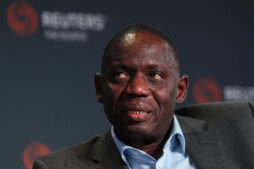

Few Ugandan founders have built, nearly lost, exited, and reinvented themselves as decisively as Anthony Natif. In this rare and unfiltered conversation, the Guardian Health founder reflects on the high-stakes reality of scaling a startup in Uganda, the unseen power dynamics behind investor deals, and the personal cost of building under pressure. From boardroom battles to moments of quiet despair—and an unexpected second act beyond business—this is not a victory lap, but a reckoning with what it really takes to build, exit, and begin again.
This is a long read — but worth every word.
Anthony, let’s start at the very beginning. You’ve never really told me the full Guardian Health origin story. Take me back to that moment—when were you working at Vine Pharmaceuticals, and what exactly sparked the idea? What problem did you see in the market, or in the health system, that convinced you this was something you needed to build?
You know, the story of Guardian is really the story of a founder who simply went where the market pushed him. At the start, I was working at Vine Pharmaceuticals. I even had small interests in two of their stores—one in Kabalagala and another in Ntinda—which I eventually sold back to Grace Munyirwa. Grace mentored me, and to be fair, he has mentored half the people in the pharmacy retail space. Even Ecopharm passed through him. A lot of us owe him a real debt of gratitude.
Around that time, I got into graduate school to study public health. My original plan was to specialise in the pharmacy side of cancer treatment at the University of Washington. Then I enrolled for an MPH. But even as I studied, I’d seen that pharmacies actually made decent money. Still, opening pharmacies wasn’t my dream. Because of my exposure in the U.S., I was thinking much bigger: a vertically integrated healthcare model—control the insurance side, have clinics, have pharmacies, and eventually grow into hospitals. A whole ecosystem.
That’s where the name Guardian came from. I picked it straight from the Guardian newspaper’s Guardian Health section. It sounded perfect for an insurance company—total health safety, we’ve got everything covered. That was the vision. And honestly, I didn’t think I’d live in Uganda. I planned to finish my Master’s, maybe do a PhD, teach a bit—so I thought, let me just set this thing up, have friends run it, and when I’m home, I have something to check on.
So we registered the business in 2012 with a friend. He took 50%, I took 10%, and my daughter took 40%. My friend said he’d chase the licences. Kabalagala was tough to license back then, but I somehow managed to get it done. I even raised the USD50,000 we needed to set up. Then I flew back to the U.S. When I called him to start, he told me, My friend, I would rather keep my job.
So I worked with my lawyer, Brian Kalule from AF Mpanga, to unwind that arrangement. I flew back, we signed off, and he happily returned the shares—he just wanted to continue heading pharmacy operations in an HIV treatment programme.
I came back, opened doors in March 2013, and we grew unbelievably fast. Within five months, we had three stores. By the end of that first year, we were turning over maybe USD 1 million or USD 1.5 million. It was exciting. I was juggling school and the business, but every time I returned to Uganda, I saw more opportunities and kept pushing.
Then something struck me: some studies showed that up to 30% of medicines in sub-Saharan Africa were counterfeit. And I thought—here I am studying public health. I can use business as a force for good. I can practice public health through enterprise by improving access to good-quality, affordable medicine.
My choice became simple: I could stay in school, get my PhD, publish papers, fly around to present them in fancy, air-conditioned European conference rooms… while my people back home continued taking counterfeit meds. Or I could come home and build something meaningful.
So I came back. I initially worked on a project expanding access to the HPV vaccine. Still, after a few weeks, I quit and went back to Kabalagala to sell Viagra and Durex—that’s how the first pharmacy really started.
Before long, we were serving more than half a million clients. We built robust supply chains. I obsessed over cost and quality, and the market rewarded us.
Then, around 2015, the National Drug Authority announced it was going to stop licensing pharmacies in Kampala and other busy traditional districts. A friend inside NDA told me, Natif, you’d better start buying locations before people realise how hard it will be to get licences. It was good advice—but nearly fatal advice.
Around the same time, a fund approached me. They wanted to invest. I told them, But guys, we’re turning over USD 2.5 million—what more do we need? I had no CFO, no systems, no inventory management. I was looking at turnover like a Kikuubo guy and convincing myself we were okay. We even signed a letter of intent and did nothing with it because I thought we didn’t need the money.
Then we started acquiring pharmacies. By 2016, we were at around 18 pharmacies. And here’s the thing with this business: working capital is everything. You open a store in a prime location, then go to the Indian wholesaler downtown. He gives you medicine on a 60-day credit. You expand on his money.
But each location costs UGX 150–200 million to buy—just the empty shell and the licence. And without proper projections or a board to hold you back, you start using working capital to fund acquisitions. Before you know it, you’re sitting on beautifully located stores with no medicine, because the wholesalers—who are basically a cartel—start reducing your credit limits the moment you delay payment—sales dip. Payroll becomes a struggle. Rent becomes a struggle. And that’s where the real Guardian story begins.
Wait—when you say you were acquiring these locations, were you actually buying existing pharmacies, or just taking over the premises and licences? What exactly were you purchasing in those deals?
Yes—these were existing pharmacies, individual stores whose owners had basically given up or wanted out. But in reality, what you’re buying is just an empty shell. You’re paying for the fact that someone is already trading from a prime location, plus their licence. So imagine spending about UGX 200 million per store, and you’re not doing proper projections, you don’t have a board, no one is holding you back—you’re obviously going to start dipping into working capital.
That’s precisely what happened. I ended up with all these beautifully located stores… but without medicine. The downtown distributors—who, by the way, pretend to be competitors but are essentially one cartel; their kids play together on Sundays—quickly realised something had changed. This Natif, who used to pay every 60 days religiously, was now paying in 90 days, four months even. So they quietly started reducing my credit limits. Sales dipped. Payroll became a struggle. Rent became a struggle. The whole thing began to wobble.
Thankfully, many landlords stood with me. Around 2016, heading into 2017, I went to a particular bank—let me not mention names, but it has Dutch investors; you can guess. I told them, Guys, I need UGX 500 million to revive my working capital. They took me through the whole process. At the time, we even had a few acres of land in Entebbe, so I offered that as security. The branch manager at Lugogo Mall called me on a Friday, very excited: Come on Monday and sign your offer letter.
Monday, 2 p.m., I show up. She calls me into her office and says, By the way, our head of credit—who usually never looks at files at this small threshold—decided to review yours. There’s an unpaid cheque.
Now, here’s what happened: one of our suppliers panicked and banked a security cheque we’d given him. Remember, in this business, you often get stock on credit, but you secure it with undated cheques. Sometimes you’d even sign without writing the amount—based on trust. We owed this guy only UGX 9 million, but he wrote his name on the cheque, banked it without warning, and, of course, it bounced—because we were in a cash-flow crunch.
Back then, you even played the banking float. If supplier K banks in Barclays and I’m in KCB, I could give him a UGX 20 million cheque on Friday, knowing I only had to honour it on Tuesday afternoon—just enough time to collect money over the weekend. That was the reality.
But once that cheque bounced, the bank said, You’re going to have to run this account properly for another three months before we can consider giving you money.
That was it. The whole deal collapsed on that one bounced cheque.
So essentially, after taking you through the whole process, they turned around and said, ‘We can’t give you the money’? Just like that—after you’d been cleared and were expecting the offer letter?
That was it. I had no other option. I went back to the same fund I had brushed off in 2015. Thankfully, they still had an appetite. They moved fast—did quick due diligence—and within six months, they invested. It was about USD 3 million.
But here’s the thing I keep telling entrepreneurs: the best time to sell a stake in your company is when the business is going up, not when you’re struggling. It sounds counterintuitive, but it’s the truth. If I had taken that money in 2015, when everything was still rising and before that wild expansion, I would have kept a much bigger portion of the company.
By 2016, I was struggling. I genuinely needed the money. I had almost 100 staff people who felt like family. I couldn’t just mess up, then jump on a plane back to Seattle, slip into school, and tell myself, Well, I tried. So I said, I’ll take this deal for them. They had done so much to build Guardian with me. I owed them that.
Yes, I had expanded too fast. Yes, I lacked proper financial guidance. But that wasn’t on them.
We took the deal. But I always describe it this way: it was like buying a Ferrari, driving it towards Jinja, and, somewhere in Lugazi, the dashboard starts warning you: ‘Fuel level critical.’ You keep pushing, and then in the middle of Mabira Forest at midnight, the car dies. You can see shadows—robbers—closing in on you. Then a guy appears and says, I have one million shillings. Give me a controlling stake in the Ferrari. My million will buy the fuel to get us both to safety.
In that moment, you take the deal. You don’t think twice.
Exactly—you can literally see the robbers gathering in the shadows at that point.
Yes—when you’re seeing robbers in the shadows, you take the deal. You don’t have the luxury of pride at that point.
And to make matters worse, the guy who banked that UGX 9 million cheque went and bribed a police officer at CPS. Remember, bouncing a cheque in that context wasn’t even a criminal matter—it was a civil issue. But they picked me up and locked me in CPS over the weekend. Grace rescued me from Vine. He came in furious, asking, How do you lock up someone you didn’t even notify about banking the cheque? It’s not a crime. Give him two days—he’s never defaulted. He has done billions of shillings of business with you.
But that’s the kind of situation I was in—and all this was happening right in the middle of fundraising.
Anyway, the fund put fuel in the Ferrari, but then handed the keys to a tractor driver. We had those discussions. This guy didn’t know how to run a business here. He didn’t understand the market realities, but it made for a good pitch to their investors: We’re bringing in new management, fancy systems, international best practice. So one of the directors brought in his brother-in-law to run the company.
And the guy ran it like you’d run a tractor on a farm—but this was a Ferrari.
For a founder, mistrust is always in the picture. They are learning you; you are learning them. Meanwhile, as things wobble, they blame you. He’s not smart enough… he collapsed the business. Yet, in truth, the business didn’t collapse. If we’d had proper corporate governance earlier, maybe I wouldn’t have made some of those expansion decisions. Plus, we were operating in a brutal economic environment—credit is expensive, yet you’re driven by this ambition to reach millions of people.
So you tell yourself, We’ve entered this marriage; let’s make it work. You bring your skill, they bring theirs, the money is there—so build.
But the first one or two years were full of fights. No one took responsibility. And sometimes even the investors themselves misbehaved. After all, it’s not their personal money. General partners start stealing from the fund, and you can’t take them on. We got caught up in that chaos, too.
But despite all that chaos, the business itself was still growing, right?
Yes, the business was growing. In fact, around that time, an online health business in Nairobi had just been acquired—they were literally on the beach celebrating. Money was flowing into the sector. If we had held onto Guardian for another two or three years, the story would have been very different.
Imagine if, instead of selling, we had gone to the Uganda Stock Exchange and said, Guys, give us USD 2 million. Instead of exiting at around USD 12–15 million, we could easily have sold for USD 50 million. Even now, if those guys took Guardian Health to market, the least they’d ask for would be USD 50 million.
But that reality also speaks to the challenges entrepreneurs face here. We simply can’t access capital. So you take whatever capital is available—whatever terms, whatever structure—because the alternative is death. And not just financial death; reputational death, legal death, emotional death.
So, for me, I thought: Look, I’ve had a decent exit. Let me plough this money into causes I care deeply about, and take a break from business. That’s where I’ve been.
So take me through the whole cycle—back to the Private Equity Fund, through due diligence, negotiations, closing the deal, and eventually the exit. What stood out for you? What did you learn that you had never imagined before? And for founders who aren’t yet going through a deal, what should they be looking out for—the good, the bad, and the ugly of it all?
You know, the fundamentals of business never change. Whether you’re running a small shop or a national chain, the basics are the same: you need proper corporate governance. And to be fair, that’s one of the biggest things the investors brought in. They introduced a governance structure.
Of course, when that structure was put to the test… slowly, slowly, things didn’t always go as expected. But I felt I owed it to their investors—and to my own reputation and staff—to build the right talent and wait things out. Eventually, they realised what I’d been saying all along: they had handed a Ferrari to a tractor driver. Once they recognised that, they handed it back to someone who could actually drive it.
That’s how I hired Cedric Ssendiwala. Cedric went to Mbarara University of Science and Technology (MUST). I got him right out of pharmacy school. I also identified young, smart, hungry-to-learn university graduates at Makerere, where I part-lectured. My classes at MUK also helped me hire other young talent that could so easily have run the company as well as he has. I got four kids from Makerere, and they’ve been excellent.
Cedric is perhaps the brightest. He understood the Ugandan market. He understood that very few people could find pharmacy locations as well as I could. He believed in me. So I handled strategy and site acquisition, and he handled operations.
Eventually, he caught the tractor driver playing certain games, and not even the brother-in-law connection could save him. He was fired, Cedric took over, and suddenly the company stabilised. The Ferrari was back on the autobahn.
Once that happened, everything changed. The numbers improved; people started looking at us for acquisition. And you know how it is—when the numbers are good, the fighting reduces. Everyone starts pulling in the same direction.
By the time we exited, Guardian was serving close to 2 million people. From a public health perspective, I felt I had done my part. The acquirers were backed by Estée Lauder and Rockefeller—serious global capital.
Now, to be clear, to the extent that some of their people misbehaved, they obviously took a different direction. But I remain grateful for the governance discipline they brought. Before spending any company money, you had to write a paper, justify it, and defend it before the board. Most founders react to that with, How dare I ask a lawyer or a historian for permission to spend money in a pharmaceutical business? But that discipline is important.
And the humbling part? Realising these people can actually fire you from the company you founded. That alone teaches you volumes.
I also learnt something else: never go to a board with a decision you haven’t already secured. You must build working relationships—not friendships—with board members. I had a great relationship with one of the investors and a terrible, torrid one with another. To this day, I don’t respect him; he was shady. But you recognise the politics and work around it.
Because here’s the real danger: if you sue investors or make noise, it reflects badly on you—not them. Just like the wholesaler cartel in downtown Kampala, the finance world also has its quiet networks. Even if you’re right, they’ll brand you a troublesome founder, and no one will touch your future ventures.
And pursuing redress is almost impossible. They structure agreements, so arbitration is in the UK. They use the funds to fight you. You have to use your personal money. A lawyer will tell you £50,000 as instruction fees, and you realise justice has simply eluded you.
So after going through all that—the bounced cheque, the cash-flow pressure, the governance fights—you reach a point where you simply take whatever terms are available, just to keep the company alive?
Exactly. And this is something founders really need to understand: investors are not your friends. They are pure business people. It’s never personal—it’s business. So you must get lawyers who understand these deals, because you’re providing value they want a piece of. They wouldn’t be putting money into your company if it weren’t valuable to them.
Many founders make the mistake of thinking, Ah, this guy is bringing USD 5 million, USD 10 million—he’s doing me a favour. No. They’re putting that money in so they can extract value. And most of that value is going to end up offshore. Very little remains in the country. The only money that stays here is whatever portion comes to you as a founder.
So scrutinise the agreements—line by line. Even the placement of a comma can completely change the meaning. This isn’t an exaggeration. Read everything carefully before you sign.
Then there’s the issue of exit, which many founders ignore at the beginning. Let’s say someone invests USD 3 million in your company for a 60% equity stake. Maybe staff get 4%, and everyone gets diluted pro rata. The investment is at a valuation of, say, USD 5 million. Two years later, someone buys the business for USD 10 million.
How do we make that decision? What if, like in our Guardian case, I know for sure that if we hold the asset for two more years, that USD 10–12–15 million valuation could jump to USD 40 million?
How do I, as a minority shareholder, force you—the majority shareholder—to listen to that argument? Most founders never think about that moment. But if you’re building a solid company, that moment will come. And if you haven’t planned for it in the shareholders’ agreement, you’ll have no leverage.
So the exit is just as important as the entry—and in the end, these investors aren’t really helping you out of goodwill; they’re looking out for themselves, right?
Yes, it should make sense that way, but in reality, it doesn’t always work out for the founder. Here’s how these clauses actually play out.
Most investment agreements come with tag-along and drag-along provisions. On paper, they exist to protect all shareholders, but in practice, they protect the majority shareholder far more.
For example, let’s say the investor invested USD 3 million at a USD 5 million valuation and took a 60% stake in the company. Two years later:
- I might find a buyer willing to pay USD 25 million
- The investor might find someone offering USD 20 million
Now, common sense says we should go with the USD 25 million buyer—it’s better for everyone, right? But if the contract says the investor only needs to double their money to trigger a drag-along, then even the USD 20 million offer meets that threshold. They can force all shareholders—including me—to sell at that lower price.
Flip the scenario:
- Suppose I find a USD 20 million buyer
- And the investor finds a USD 60 million buyer
They can also force the deal—even if the business could be worth USD 100 million in another two years. Because as long as their return target is met, they can drag everyone along.

That’s the imbalance founders never think about. The majority shareholder controls the timing and the narrative of the exit—not the founder.
And the worst part is this:
You cannot negotiate these things properly when you’re desperate.
When you don’t have runway…
When suppliers are bouncing your cheques…
When a wholesaler is threatening to lock you up…
When your landlord wants you out, and staff are stealing because salaries are delayed…
In that state, you’ll sign anything just to survive. That’s how founders lose leverage without realising it.
So how do you actually know when it’s the right time to sell? Because, like you’ve said, it’s better to exit when the business is still growing, the projections look good, the banks aren’t knocking, and nothing is on fire. Does that come back to having the right systems—and especially the right board—people who can look you in the eye and say, ‘Boss, this money you’re seeing is not real profit; in fact, we may already be in trouble—you just haven’t noticed it yet’?
So here’s what happens in most companies at the start: the founder isn’t just a founder. He’s the vision bearer, the accountant, the HR manager, sometimes even the guy standing behind the counter dispensing medicine. You simply don’t have the money to hire senior people—you hire bean counters and do the rest yourself.
But as the company grows, one of the most important hires you can ever make is a CFO. And not the kind who dances to your tunes. A real CFO must have a level of independence. In fact, in big multinationals, the CFO reports to the CEO but also has a dotted reporting line to the board. That dual accountability isn’t accidental. It’s designed so the CFO can advise both the CEO and the board on the company’s true health.
Founders, on the other hand, tend to fall into a belief system of grow, grow, grow. You’re excited. You’re opening stores left and right—this location looks good, that location looks good—you want them all. But you’re not paying attention to the bottom line.
A good CFO will tell you, Look, every new store takes four months before it even begins to cover its costs. So if you open ten stores at once, that’s 40 months of losses. And if each store loses, say, UGX 15 million per month for four months, that’s UGX 60 million per store. Multiply that by 40 stores—you need an enormous amount of money just to survive the ramp-up period.
Most founders don’t run those numbers. They just keep expanding, thinking growth alone will save them. But without a CFO—and without a board to give the CFO backbone—you won’t see the financial cliff until you’re already falling off it.
Meaning—you must already have that money somewhere, waiting to absorb those losses, right?
But did I have that kind of money sitting somewhere? Of course not. I was just opening stores and running. I genuinely didn’t know. I didn’t understand the financial implications. I didn’t know any of this at the time.
So you only learned all of this later—after the investors came in?
Yes—honestly, I only learned all of this after the investment came in. In fact, sometimes I look back and wonder why they even invested in the first place. But they made a very good return. Our exit was named the Exit of the Year in East Africa in 2023—the first time a Ugandan company had received that honour.
And when I look back now, I realise that despite all the fighting, there were real positives. They taught me how to run a business differently. They taught me something many founders struggle with: you and the business are not the same thing. The business is its own independent entity. You, the founder, are your own individual. Learning to separate the two is crucial.
Unfortunately, many founders—including myself in the early years—think of themselves as an extension of the business. But you need outside help. You need genuine, honest internal advice—especially from a good CFO—to keep that separation clear and to keep you grounded.
But how do you actually make that separation in practice? Because as a founder, you’re usually the one who appoints the board—and that doesn’t automatically give you any kind of divine wisdom. In fact, in the early days, many founders put their spouses or close friends on the board, and before you know it, home issues are spilling into business decisions. Doesn’t that just create even more confusion?
Running a business requires discipline. What people like to call divine grace is really just discipline. If you want to build a business that goes beyond simply supporting your lifestyle—paying school fees at Kampala Parents, owning a four-bedroom house in Najjera and maybe a small apartment on the side—if you want to build something that can actually outlive you, something generational like what I believe Guardian Health will become, then you must understand one thing: you are separate from the business.
You can’t just pick money out of the company for a personal expense. That separation is a habit you start cultivating from day one.
In the early days, yes—you may put together a simple advisory board of friends: a lawyer you know, an economist who can donate their time, someone who can give basic guidance. That’s fine. But as the business grows and you can afford it, you need a more solid, professional board that you actually compensate—people who will tell you the truth and whom you are disciplined enough to listen to.
And once you attract investment, things change even more. Investors are not interested in symbolism; they want voting rights. They will build safety mechanisms into the board structure to protect their money—and rightly so. There’s a reason voting rights matter. Look at Jeff Bezos: when he divorced his wife, he was happy to give her billions of dollars in shares, but he retained the voting rights. Because whoever holds the voting rights holds the steering wheel.
That’s what founders must understand. A board is not a decoration. Governance is not vibes. It is the structure that disciplines you and protects the business from you—and sometimes protects you from yourself.
I can now see why, in the Rocket Health case, the investors insisted on more voting rights than the founders—even though the founders owned more shares.
Exactly. The Rocket Health founders owned more shares, but the investors had more voting rights. And in a corporate setting, voting rights are everything. Having voting rights is like having your hands on the steering wheel.
You might own the car, but the person holding the steering wheel is the one determining where it goes—because their money is at stake. They’ll be the ones to say, We’re driving to Fort Portal. Don’t divert.
Now, if the actual car owner says, But let’s first pass by Kasese to check on my girlfriend, then return through Mbarara, the person with the steering wheel will say, No—you’ll hit potholes, damage the shock absorbers, burn fuel we don’t have… we’re not doing that.
And if the argument escalates, the person with voting rights doesn’t just have the steering wheel—they also have the handbrake. Voting rights are the handbrake. When there’s a deadlock, they can pull it and stop everything, and their decision prevails.
That’s how power works in corporate governance. Ownership is one thing, but control is voting rights.
Once you bring investors on board, how do you actually handle that transition? You’ve been the boss—everyone looks to you, you make all the decisions. Then suddenly, even if you stay on as CEO or managing director, you now have a new boss. You’re still a shareholder, but you also have to report to other people. How do you navigate that shift—from absolute control to shared or even reduced control?
The truth is, the hustle for financing in this country will humble you very quickly. When someone finally brings money to the table, you’re already desperate. But even more importantly, you start thinking about the people you’ve built the business with—your employees. They’re also stakeholders. So the transition stops being just about your ego; it becomes about protecting their livelihoods, too.
Understanding that makes it easier to take a lot of pain from people whose understanding of the business might not go beyond an Excel sheet. But you still need their votes. They now have power.
Let me give you an example. Guardian Health was the best evaluated bidder to run pharmacies in Mulago. The contract even went to the Solicitor General. I had pitched that concept to Mulago in 2016, long before investors came in. We had a clear opportunity: commit USD 20,000, secure the lease, and build something transformational. The land title, the approvals—everything was lined up.
My board voted it down.
Today, when we look back, we ask ourselves, Why? The answer is simple: they didn’t understand the business. They didn’t understand the value. They didn’t understand that Mulago has a UGX 120 billion budget, but only receives about UGX 12 billion. That gap is where a powerful public-private partnership sits.
But as a founder, imagine this: you’ve chased an opportunity since 2016. It finally materialises in 2018. And the board—now with majority voting rights—says no.
What do you do?
Do you throw tantrums?
Do you stop showing up?
Do you sue them?
You can’t. You swallow it and keep going. That’s the transition: accepting that the final decision is no longer yours alone, even when you know the opportunity is golden.
I imagine moments like that must have taken a real emotional toll. Were there times you felt completely overwhelmed—maybe even depressed? Did you ever break down? And how did you deal with that level of pressure?
No, Kyamutetera, let me tell you something. I’m now an activist—I deal with anti-corruption work involving billions of shillings. I get threats. People tell me, We will kill you. One MP once told me bluntly, My people will kill you.
But I can say this with absolute certainty: I have never experienced stress in activism that comes anywhere close to the stress I faced in business. Running a company and scaling it as fast as we did in Uganda is the most emotionally debilitating thing I’ve ever gone through.
And many founders are silently suffering. People are depressed. They find comfort in whiskey, in womanising, in isolation. We don’t talk about it enough. A time has to come when founders acknowledge the emotional toll entrepreneurship takes and deliberately build support systems. Inside the company, everyone sees you as the king. You’re the one paying their rent, their salaries, their children’s school fees. They see stability—they don’t see the storms inside you.
I’ll never forget one moment before I got the investment. It was the 30th of the month. I had no money to pay salaries. Not a shilling. Then, out of nowhere, a guy who hadn’t paid me in almost a year called me: Come pick your money. It was just enough to pay salaries and the most urgent supplier cheques. I couldn’t even afford a cup of coffee.
I went home and found an empty tin of Nescafé. I boiled water, poured it into the empty tin, shook it, poured whatever residue came out into a cup, and drank it like it was the best coffee in the world. The next morning, I walked into the office and saw the staff smiling. They had paid rent, paid school fees, and taken their wives out. They were happy.
To them, I was a hero. But I felt like a man riding a lion—everyone admires you, but you know that if you fall off, the lion will eat you.
So, where do you get the fuel to keep going? How do you show up when you haven’t paid salaries for two or three months, you owe the landlord, suppliers are shouting, and everything feels like it’s collapsing?
Thankfully, things never got that bad for too long. We usually paid people on time. And even in the hard times, because we paid above-market rates and treated staff like family, they stayed. They believed in the vision as much as I did. A lot of them are still there running the company today. That’s the power of selling a vision—they don’t just work for you, they work with you.
But the stress doesn’t go away. You just find ways to cope. At first, I found whiskey, which was a terrible idea. Then I found the outdoors—and I got addicted. Being in nature helped. But even that only distracts you for a while. Eventually, you’re back in the trenches.
You need shock absorbers. One shock absorber is spreading the risk. Bringing in investors. Sharing the load. Another is having people you can talk to honestly about the mental strain.
And let me tell you something else: when we finally sold the company, it should have felt like an extraordinary moment. We built something from USD 50,000 to millions of dollars. It should have been pure joy.
But after the sale, all I wanted to do was pick up my daughter, get into my tiny sports car, drive to the Entebbe Expressway, roll the windows down, and max out the speed while we screamed. That was it.
Inside, I was asking myself:
Was it worth it? Is this really it? Why do I feel empty?
Everyone around me was celebrating. But inside, I was wondering,
can I go back and build again? Do I even have the strength for that pain anymore?
It’s rough. Very rough. But that’s the unspoken side of entrepreneurship.
Would you do it all over again? I’m curious—after that drive on the expressway, you probably went home, slept, and woke up the next morning. What did it feel like then, especially after the money had actually hit the account? When that SMS alert came from the bank, what went through your mind?
You know, when the money actually hits the account—it usually comes the next day—it feels almost unreal. It’s like magic, but not in the way people imagine. Honestly, what I felt was emptiness. A deep emptiness.
But then something beautiful happened. My daughter told me, Dad, these days you’re not so irritated. You spend more time with me. And it was true. We started spending more time in the mountains, outdoors, reading together. I began to pay real attention to her. We even spent some time in the mountains of Malawi, her first trip abroad.
That’s when it hit me: it wasn’t the money that mattered—it was the freedom.
Looking back now, the pursuit of an exit and the financial rewards that come with it is really a pursuit of freedom. The freedom to wake up and say, Even if I don’t work for the next five years, I’ll be okay. I can live my life.
That feeling—of being able to breathe, to spend time with the people you love, to reclaim your mind from the constant stress—that was the real reward. Not the zeros on the bank balance.
You know, I recently interviewed a founder who openly admitted she loves money—not for the money itself, but for the freedom it brings. The freedom to do what you want, when you want. And it reminded me of an interview with Dangote, where he said people kept calling him a millionaire, and he didn’t believe it. So he went to the bank, withdrew a million dollars, put it in his car, touched it, counted it, and said, ‘Okay, now I believe them’—then took it back to the bank.
Did you ever have a moment like that?
No—I’m actually strange that way. Money doesn’t fascinate me. I don’t look at it the way many people do. I genuinely couldn’t tell you my bank balance—not because I have a lot, but because after a certain point, the basics are covered. I don’t pay rent. I can afford my family’s school fees. If I want a beer, I’ll have a beer. I don’t drive fancy cars. Even the cars I do own, I rarely use—I jump on bodas or take an Uber. I live a relatively simple life, apart from my expensive outdoor hobbies.
So the idea of chasing money or obsessing over accumulation is just not who I am. And I know that’s a privilege to say. It’s also why it was easy for me to take a big portion of my exit money and plough it straight into activism—anti-corruption work, civic engagement, the Public Square. That work is extremely expensive. Over the two years we’ve been in existence, we’ve uncovered more than USD 100 million in corruption. That requires enormous financial and personal risk. But I fund most of it myself, and my colleagues donate significant time as volunteers.
Why? Because I have this belief that I’m contributing to building a society my children will grow up in. You really can’t quantify that in monetary terms. So for me, the liberating thing is not valuing life purely through the lens of money. Not that I don’t like money—everyone likes money—but it’s not what drives me.
You asked whether I’d go back and build again. Funny enough, I was recently raising about EUR 3 million. I’m toying with the idea of returning and building the largest pharmacy chain in Uganda again. Over two and a half years, 50 stores—I could almost do it in my sleep. We already have some commitments lined up.
But I haven’t deployed anyone’s money yet. I’m waiting for the hunger. Right now, my hunger is in this public policy and activism space. When that shifts, then maybe I’ll build again.
It’s interesting that your hunger now sits in the public policy space. Are you, in some way, trying to address the injustices or systemic failures that you yourself experienced while building Guardian?
Yes. And to be honest, the way we lost that Mulago deal still pains me. That one was mostly an internal injustice, though it had a few external contributors.
But the Wandegeya case—that one still burns the most.
I paid UGX 100 million of my own money to Grace Munyirwa of Vine Pharmaceuticals. He had a pharmacy next to Friecca. Now, at that time, the NDA guidelines said you couldn’t open a new pharmacy within 200 meters of an existing one—but if you were already within that radius, you could move your pharmacy anywhere within that 200-meter area.
This Vine store was right next to Friecca. So in 2017, I bought the Vine pharmacy, then rented the building next to Friecca to relocate it. Rent was about UGX 15 million a month—of my own money—and I even paid a year upfront.
Then Friecca ran to court.
They sued me, the National Drug Authority, and my company—claiming I couldn’t open a pharmacy there. Yet there was no law stopping me. Even if such a law existed, I was still fully within the guidelines. And guidelines aren’t law.
There are even court decisions that clearly state Uganda does not have anti-competition laws that prevent such moves. So legally, I was fine.
I truly believe they colluded with people inside the NDA. An NDA inspector had already assessed the premises and told me, Natif: “You meet all the criteria.” We’re going to license you. I sat waiting for the official letter.
The current head of NDA—then head of Inspectorate—sat on that letter. He was managing stakeholders. What he was really doing was buying time for these people to file the case, secure an interim order, and block me from operating.
That interim order achieved two things:
- It stopped him from issuing my licence, so he had a clean excuse.
- It stopped me from doing anything with the premises, even though I was bleeding cash.
They filed the case in the Commercial Court, knowing that commercial cases move slowly. They kept missing court dates deliberately. Meanwhile, I was spending UGX 15 million every month on rent for a branch I was legally entitled to operate but barred from opening.
It was unjust—deeply unjust.
So you were basically pouring money into a hole—money that wasn’t coming back—, and you’d probably already ordered stock or made other commitments tied to that branch, right?
Yes, one full year has passed. I’m bleeding money—rent, costs, stock, everything—and I still can’t operate. Then Justice Alividza finally rules in our favour. No costs awarded, nothing, but at least we won. So we go back to NDA. NDA writes a letter confirming that I qualify to operate a pharmacy there.
By this time, I already had investors on board.
Then someone says to me, “Talk to Chairman Yasin of Muyenga; that building actually has three owners—two sons who own 99%, and their mother with 1%. Because of the kind of business I wanted to set up there, they told me the place was extremely strategic.
One of the major owners was a Ugandan doctor based in the U.S. These are the same people who had been fighting with Watoto over the Kakiri land. They said, Buy him out. I asked how much—they said a couple of billion shillings. I had already paid him before, so I sent him the money again, more than USD 350,000, and he transferred the title. I now legally own the building.
But because my competitors had failed to stop me through the NDA and the court, they changed strategy. Suddenly, they were claiming they had bought the building. They ran back to court, saying I was trespassing.
The court said, No. The man is in possession. The status quo must be maintained. Status quo meant I should remain in the building.

But these people weren’t interested in the law—they wanted an excuse to use impunity. They produced an agreement showing they had bought the building, but it wasn’t even signed. Their aim wasn’t justice; it was to get any order, however foolish, and use it to eject me.
You’ve probably seen my public fights with John Musiime—the current chairman of the NRM tribunal. He ran to court again, claiming trespass. The court again said, Status quo.
I was in South Africa when it happened. A senior police officer—the former head of Human Rights in Police, Twaruhuka—wrote to the O.C. Wandegeya Police, Sam Abwang, instructing him to enforce a takeover. John Musiime had even signed a security contract with Arrow Security to facilitate their client taking over the building.
Abwang messaged me: Boss, I see a court order here. What’s happening?
I told him, There is no court order.
But Field Force Unit (FFU) police—two full trucks—had already been mobilised. They came to the premises and told my staff to get out.
My people asked, “Where is the court order?
There was none. But there was FFU.
I told my staff, Please get out. Hand the keys to the police. They did. Police handed the keys to John Musiime and his people. They took over the building.
Inside, we had medicine worth hundreds of millions. We had to set up shelves in almost 15 stores for two companies—over USD 100,000 worth of fittings.
A few days later, they came with two Fuso trucks, packed everything, and disappeared.
When I returned to Kampala, I asked the registrar who had issued the supposed eviction order. She said, I issued no such order. The only order was to maintain the status quo. How did they evict you? She wrote to the Minister of Justice—Otafiire—who escalated it to the IGP at the time, Martin Okoth Ochola.
We were sent to Kampala Metropolitan Police under Kafeero to investigate. With media present, they opened the pharmacy—the place was completely empty. Everything had been looted.
The police advised us to file a theft case. We did. That’s when the pressure from powers above began. Orders were given for Wandegeya Police to stop investigating. They refused. Within weeks:
- OC Abwang was transferred to Zombo.
- The DPC was sent to Jinja, then was transferred almost immediately to a tiny district.
Why? He is big-headed.
The file stagnated.
Through months of running around, we reached Grace Akullo, the head of CIID at the time. She pushed for an investigation. A few people were arrested. The labourers who moved the items admitted they were paid UGX 20,000 to load the items. Their bosses had told them they owned the pharmacy and the items being shifted. Some of the stolen medicine was even found in their homes.
The file was later moved to the police special investigations unit (SIU) Kireka. SIU conducted a full investigation and recommended arresting several individuals, including a key figure behind the takeover.
Eventually, the nephew was arrested; in his statement, he said, “Their lawyer told me that they had bought the building through the court, so we cleaned it.”
The financier—Kyoji—admitted in his police statement that they had acted on the lawyer’s advice and claimed to have a court order.
But then the usual pattern kicked in:
- The file reached the LDC Court.
- Hearings were missed or postponed.
- A prosecutor told me quietly to physically show up because they were deliberately not calling us.
- When I finally showed up, the court was shocked.
- Weeks later, the prosecutor handling the case was suddenly transferred.
At Buganda Road, a very bold prosecutor—Akao Jackie—read the file and asked, How come this man was never charged? She charged him immediately. But the DPP promptly transferred her for her own good and then issued a nolle prosequi—dropping all charges.
They even filed a complaint against the Buganda Road Court Magistrate, Mangeni, who had insisted on following the evidence. She was transferred from the court to the registry. Shortly after, she died. Her partner said at her funeral that she died disgruntled, blocked from promotion, probably because of such cases.
And the tragedy continues. Up to today—five years later—police officers still sit at that building in complete contravention of court orders. The building remains empty. I’m not operating, yet every day I don’t operate that store costs me at least UGX 25 million in lost sales.
I bought that building. Legally. But the place is still closed.
That’s when I said: Never again.
After my exit from Guardian—even Guardian fined me for the stolen shelves—I knew I needed to fight for justice. Otherwise, people will continue to suffer this way.
If I had borrowed the money to buy and set up that branch, I would be in Luzira today. Not because I made mistakes—but because I dared to dream in a place where a cartel says you cannot.
And that, Kyam, is why I do public policy and anti-corruption work today.
You’ve today and before, spoken very candidly about what people often call founder syndrome—this idea that founders sometimes look unreasonable, stubborn, or even ‘mad’ from the outside when making decisions. But from your experience, what is actually happening in the head of a founder? Why do founders sometimes appear unwilling to let go, or make decisions outsiders can’t understand? Is it because they’re so deep in the A-to-D vision—the zig-zags, the swamps, the rebels—that only they can see the full journey?
And how does that clash with investors who only want a clear, linear roadmap, 100-day plans, and predictable milestones? What really drives this tension, and why do founders like Davis at Rocket Health often get mischaracterised when they’re simply trying to steer through a maze investors don’t fully appreciate?
This thing people call founder syndrome is, in my view, deeply misunderstood. From the outside, a founder can look unreasonable—even mad—because sometimes the decisions we make don’t make sense to anyone else. But inside the founder’s head, something very different is happening.
From my experience, founders are often mischaracterised. As a founder, you’ll say, We’re at point A, and we’re going to point D but what people hear is a straight path—A to D in a clean line. In truth, the journey looks nothing like that. You rotate this way, go down, come back, find B, overshoot D, stumble onto C, return—all while still believing you’re heading to D.
Founders operate from a certain hunch, an instinct you can’t easily explain. You’ve done the thing so many times that you just know the direction, even if you can’t map every twist. Meanwhile, investors sit across from you, saying, “Show us a clear path to D.” So in the boardroom, you’re forced to articulate every swamp you’ll pour concrete into, every river where you’ll build a bridge, every forest where you’ll meet rebels.
But founders have been raised to bet on themselves. And when those bets work, you’re celebrated like Elon Musk. People forget how many rockets he blew up on the way there. Founders get up after every explosion and tell the team: Guys, I didn’t realise those rebels had guns—not just machetes—but we survived. Let’s keep going.
So founders often die at these points—not because the vision was a pipe dream, and certainly not because they intended to damage the system—but because they truly believed they could get there. They won’t always be right, but with the right investor who works with them, they often do succeed.
The clash arises when investors bring in money alongside 100-day plans. Sometimes you’re unlucky and get investors who are not hands-on, who are dictating 100-day plans from France or wherever—plans that cost a fortune to implement. You’re told that once we build this foundation, we’ll do a follow-on investment. But in between, both sides are still learning from each other. There’s ego—yours and theirs.
For you, this business is your life’s work. You’ve done 15 years of it. For them, it’s one of twenty portfolio companies. They can afford to write it off. And because they know how much is at stake for you emotionally, they play that card. They expect you to bend. If you don’t, they break you.
They activate voting rights. They merge your company with one of their other investee companies. They take priority. If the residual value is below their initial investment, they take everything. You can walk away with nothing—even if you own 70%, because their 30% sits in preferential shares. Your 70% becomes worthless. Then you’re forced into a merger, and your stake shrinks to 2% in a bigger entity. In comparison, the investor injects more money and ends up with 15%, positioning themselves to recover losses if the new company sells for USD 100 million down the road.
This is exactly the kind of maze Davis at Rocket Health found himself in. He’s been given a bad rap, but many founders who’ve lived through this know exactly what happened. It’s not always misuse of funds. Look closely: everything they spent on was in the 100-day plan. You have investors in France saying, “Hire a CEO from this firm,” and suddenly you’re paying people USD 10,000–20,000 per month—three of them—and the business isn’t even generating that kind of money yet.
So when they promise, ‘Stay on as founder —you’ll continue leading the company,’ and then, out of the blue, they hand you a sacking letter—what do you expect? You’ll be angry. It will blow up.
This is the part of founder syndrome no one talks about. The outside world sees madness; only founders who’ve walked through this fire understand what’s really going on.
It sounds like, in this journey, there’s an art to bending—because as you said, if you don’t bend, you break. Investors can break you, circumstances can break you, even the very dream you’re chasing can break you. So how does a founder learn that fortitude? How do you bend without breaking?
And right now, founders are going through this exact fire. If you stepped onto a pulpit on a Sunday to preach the ‘gospel of founding,’ what would your message be to them?
Sell your company when it’s going up.
You see it with Rocket Health, and even with the Ubuntu Towers—the same pattern. My advice is simple: exit when you’re at the top, not when you’re desperate. And when you do, negotiate every detail of that agreement.
The truth is, the investors you’re dealing with have been doing these deals for over a hundred years. They come from economies that have refined an investment culture for generations. We—just 70 years ago—were farmers, fishermen, pastoralists. So sometimes you see big money on the table and forget the critical issues.
The right time to sort these disagreements is at the entry, not when the crisis comes. Anticipate conflict. Discuss scenarios. Talk to people who’ve been through it. I’m honestly shocked that founders raising money today know someone like me—who led a company to the best exit in East Africa two years ago—and they never reach out. Why not talk to someone who has lived this journey?
When Davis was raising money, he actually sat with us. We discussed several issues. But once that 100-day plan landed, everything shifted. They followed it blindly. Many of these wars are avoidable if you consult widely and deeply.
But the responsibility is not only on the founders. Investors also have a duty. If you’re investing in a company, set aside a budget to mentor the founder. Prepare them emotionally, mentally, and professionally for what it means to work with you. Even marriages go through premarital counselling. Why isn’t there counselling in investment?
There should be a structured process to help the founder and investor learn to work together, align expectations, and navigate power dynamics. Without that, you are essentially throwing two people into a marriage with no preparation—and then acting surprised when it collapses.
Do you feel there’s an urgent need for deliberate support in this ecosystem?
Let’s say I were President and I appointed you Minister for Founders or Startups—which honestly isn’t a far-fetched idea—because these companies, if properly nurtured, can attract meaningful capital and transform the economy.
Instead, what we often see is wild fundraising ideas, questionable actors, and founders walking into deals blind. Isn’t it time the government recognised this investment segment and invested in preparing founders—whether through business schools, policy support, or even building local legal and financial expertise? Right now, we simply don’t have enough people who understand how to structure these deals effectively.
Interestingly, you mention lawyers. Most of these transactions are actually done by law firms in Kenya or the UK. They only tap Ugandan firms to do the legwork—just to localise the process. Yet the talent is right here. I know for a fact that firms like AF Mpanga, KAA Advocates, and others have extremely solid lawyers. But foreign investors come in with the mindset that there’s no mergers-and-acquisitions expertise in Uganda, so they import talent.
Meanwhile, there’s a whole industry here that could be developed. Kenya has already figured this out. They’re attracting billions of dollars into their startup ecosystem because the state has deliberately created an environment where capital feels safe and well-structured.
Our government needs to do the same.
Look at something like the money that was handed to the Dei Pharmaceuticals guy. You’re giving a trillion shillings to someone whose manufacturing experience was in cassava processing—yet we have at least fifteen pharmaceutical companies in Uganda that already have skin in the game. They’ve built factories, invested their own money, taken bank loans, created jobs—they’re in the arena.
Why not distribute that capital among them? Help them scale, help them clean up their balance sheets, help them attract foreign investment. If you injected that money into companies that are already operational and struggling with capital constraints, you would collect that trillion shillings back in taxes in five years.
But the government doesn’t understand this space. They don’t see the multiplier effect. They don’t see how strategic support can unlock billions in external funding and create whole industries. Instead, they funnel money into pet projects and politically convenient ventures—while the real builders of the economy are left scrambling.
I’ve always believed Uganda has thousands of SMEs built by ordinary people using their own capital, sweat, and local knowledge. Many of these businesses are right on the cusp of becoming viable, profitable enterprises—but they’re suffocating under maybe a UGX 1 billion in tax arrears, supplier pressure, unpaid government arrears, or other debts that need restructuring.
So imagine this: instead of the Government spending UGX 1 trillion on something like PDM, that money is divided into 1,000 properly valued investment chunks—not free money, but equity investment in 1,000 SMEs that have already proven they’re capable of building something real. The government would complement this by paying all arrears it owes these companies, and bringing in experts to help restructure their other debts with banks and creditors.
And better still, you could bring in long-term institutional investors like NSSF and other pension or patient-capital lenders, so the Government doesn’t have to walk this journey alone. With that kind of blended support—plus governance strengthening, targeted tax waivers, and a clear pathway to exit through mechanisms like the stock exchange—we could transition 1,000 SMEs a year from near-collapse into strong, profitable, Ugandan-owned corporates.
These are the businesses that would build stable markets for rural farmers, strengthen local value chains, create jobs, and expand the tax base.
Given your journey—and your interactions with other founders and hustlers out there—what do you think of this kind of approach?
I think setting up something like a startup factory—a proper venture studio backed by some state capital—would be perfect for Uganda. Imagine a model where tested and proven entrepreneurs and experts, and other experienced business coaches, come together and say:
We’re going to select 100 companies a year.
We will train these founders.
We will give them seed capital.
We will give them a home to innovate.
And we will spoon-feed them the capital and mentorship they need as they grow.
Within that kind of structured environment, you would create mega companies—businesses that can scale, attract external capital, and build entire sectors.
But here’s the problem: if you took this idea to state actors today, the moment the money leaves the Bank of Uganda, that would be the last you would hear of it. That’s the truth. The system lacks the entrepreneurial skill set needed to manage such a studio, and, more critically, the discipline to stop the theft and haemorrhage.
For a venture studio model to work, you need people inside the machinery who understand entrepreneurship—not career bureaucrats. You need people who know what it means to build, to sweat, to sacrifice, to scale, to fail and rise again. And you need mechanisms that ensure the money doesn’t evaporate the moment it touches the system.
Until that capability exists, the idea will remain good on paper—but dead on arrival in implementation.
There’s this narrative out there that Africans—and Ugandans in particular—are inherently poor at governance, that we’re disorganised, corrupt, or incapable. Yet when you look at stories like yours, you started with almost nothing: you scraped together USD 50,000, hustled, added bit by bit, opened your first store, and grew it into a major company long before any help came.
So are we really as bad as people say? Or is it the system that is failing us? Are we actually capable, hardworking people who are simply swimming against a sea full of sharks?
The system is failing us. Completely.
Let me ask you something: what is the cost of capital in Uganda?
Anyone who manages to borrow at 20% per annum is considered lucky—those are the privileged few. For most entrepreneurs, the real cost of capital is absurd. It is punitive. It crushes you before you even begin.
So how do you expect a Ugandan founder to compete when they’re borrowing at 23%, 25%, even 30%—while their counterparts in other countries are borrowing at 5%? You cannot build a scalable, competitive business when the cost of money itself is trying to kill you.
People look at Ugandan entrepreneurs and say, Ah, these people don’t know how to run companies. No—what they don’t understand is that we are building under almost hostile conditions. Founders here are swimming against sharks every single day: expensive money, slow systems, corrupt gatekeepers, outdated regulations, and institutions that frustrate rather than enable.
So no, Ugandans are not inherently bad at governance or incapable of it.
What’s broken is the environment they are forced to operate in.
Our people are capable. The system is what is failing them.
Let’s talk about life after an exit. You walked away from Guardian with money in your account—real liquidity—something many founders dream of but aren’t prepared for. From your own experience, and from talking to others who’ve gone through exits, what lessons have you learned about what to do with that money?
Where should a founder invest after an exit? How do you protect yourself from slipping back into the same financial pressures you once escaped?
I’m actually not afraid of going back to zero and starting again. I’ve built before, and I believe I can build again. But of course, you don’t want to lose everything you’ve worked for.
My choices after the Guardian exit were shaped by what I care about. A big portion of that money went into governance work, anti-corruption efforts, and climate-related initiatives—clean air, civic education, and the work we do under Public Square. I’ve invested heavily there because I wanted to prove something: that Africans can fund their own fight for better governance. We don’t always have to wait for donors. We can put our own money behind our values. And honestly, it’s working. Bringing an entrepreneurial mindset into activism has produced results.
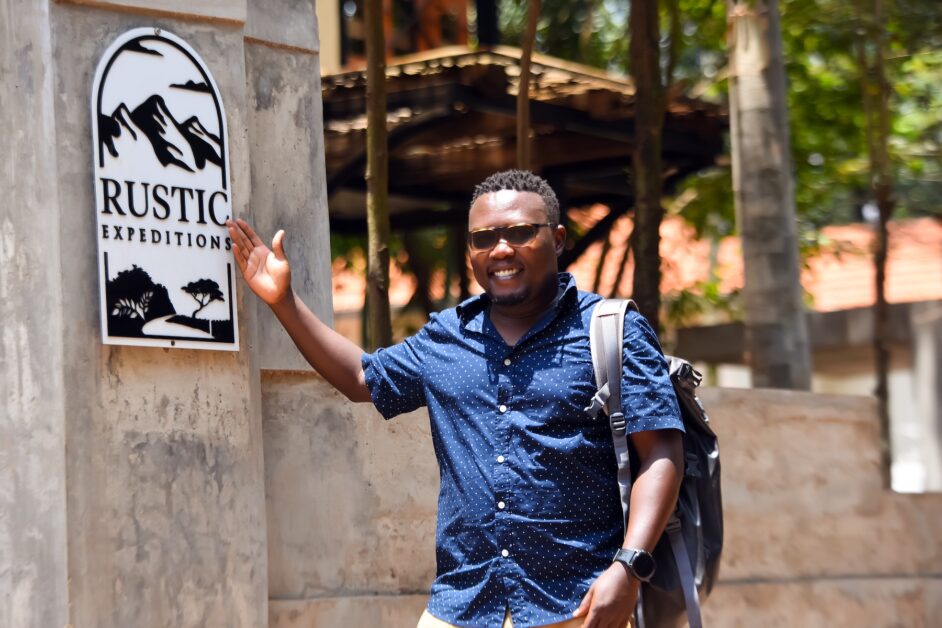
I’ve also diversified a bit—put some money in real estate, invested a little in tourism, and I’m building a company called Rustic Expeditions with my German business partner. It’s doing well. I’m also getting into entertainment, and I may eventually return to healthcare. And yes, I still want to build that venture studio we talked about.
But the truth is, I don’t have enough capital to fund all these ideas at the scale they deserve—at least not yet.
For most founders who exit, the safest move is usually real estate. At the very least, it ensures that if everything fails, you still have a roof over your head and the ability to buy yourself a beer. I’m no different; I’ve done that too. And then I’ve put the rest into activism and public policy work—work that never pays financially, but pays in purpose.
For me, it’s about demonstrating that we can own our destiny. That we can create change with our own resources. And that’s been my investment philosophy since the exit.
Before I forget, one thing that really struck me is that you’ve put significant money into charity. You’ve supported some of my community charity causes, contributed UGX 500 million to the Namilyango College Endowment Fund, and backed many other initiatives. What’s the thinking behind that generosity? And have you found any good—any personal reward or meaning—in doing good?
I don’t do good so that good can come back to me. I do it because of how I was raised. Our grandmother brought up nearly 30 of us. She didn’t speak English, she had no formal education, but she had a profound understanding of human interaction and karma. For her, paying it forward was simply the rule of life.
And she used to say the equivalent of: “You don’t want to be the richest fool in the slum.
Because in the end, you can never build fences high enough to protect yourself. So instead of building fences, you invest in the community. You put money into education, into the environment, into making people’s lives better. When citizens are more capable, more educated, healthier, and have higher buying power, the whole society becomes safer and more prosperous; even your own children grow up in a better world.
Someone once said, No one gives without an ulterior motive. Maybe the motive is simply the good feeling you get from helping someone. And that’s a valid reward. For example, with the Namilyango College endowment fund, or even the kids we quietly pay fees for—you meet someone years later, and he says, I’m a doctor now or I’m a lecturer, and only then does he learn you helped him. That’s huge.
It’s the same feeling when we co-sponsor that exceptionally gifted boy from the village. You don’t pay his fees expecting anything in return. But every time you hold his report card, you think, At least we’ve helped one more person who will go on to help others. There’s a boomerang effect. It may not come back to you directly, but it comes back to society—and that’s good enough.
For me, education is the best way to invest in human beings. And the more young people we give an opportunity—especially something like a Namilyango education—the better. In fact, for me, it’s not even charity; it feels like an obligation. Without those Namilyango scholarships, I wouldn’t be here talking to you today.
And now that you’ve crossed over into the civil society space, what has the experience been like for you? Have you encountered any surprises—good or bad—since making that transition from business to activism?
Yes—and honestly, my biggest surprise has been that civil society is much more bare-knuckles than business. People see these campaigns and think, ‘Oh, these are the saviours of society,’ but underneath the branding and the moral language lies sheer brutality. These actors protect their turf religiously.
What shocked me is that the industry isn’t outcome-based like entrepreneurship is. In business, if I put in a million dollars, my investors expect four million back in a year or two. Results are measurable. Here, someone travels to the Western world, begs for money, comes back, makes a bit of noise, doesn’t solve the problem, writes a report, accounts for the funds, then goes back for more.
But when you enter this space with a business mindset, your expectations are totally different. For us in Public Square, if we say there’s corruption in the Electoral Commission, we don’t just do a workshop and issue a statement. We investigate, uncover evidence, expose it through our platforms and the media, and push relentlessly until something actually happens—leadership changes, prosecutions begin, or a system is forced to shift.
Or take the ritual murders in Kiteezi: young Muslim girls, six or seven years old, raped and beheaded for witchcraft rituals. The police weren’t investigating. So we went there ourselves. We used our own money, hired private investigators, exposed the story publicly, and forced the police to act. Arrests were made. And nearly a year and a half later, no more killings. For me, that is an outcome. That is impact.
It’s the same with the Bank of Uganda heist. We exposed it, pushed it into public consciousness, and people were arrested. Those are the results.
But many actors in traditional civil society don’t operate that way. They’ve been BS artists for years—performing a kind of tap dance with the state:
Give me space to survive, I’ll give you space to breathe.
So the work becomes secondary to survival.
Of course, some organisations genuinely get things done, but the bulk of those I’ve interacted with—even the ones you think care deeply—are often primarily concerned with paying their bills. When a new actor emerges and is doing real work that exposes problems, they don’t attack your work; they attack you.

They attack your credibility, not your output. They manufacture personal scandals—he drinks too much, he sleeps around, he’s this or that—instead of challenging the substance of what you’ve exposed. They do it to discredit you, not to improve the work.
It’s upsetting, especially because many of our people volunteer at Public Square. They donate time. They stretch every shilling to make sure work gets done. So when someone attacks them based on made-up nonsense rather than engaging with the evidence or the impact, it’s infuriating.
And when you study the history of civil society in Uganda, you see the pattern:
every new kingpin rises by trying to slay the one before him.
You can literally put up a board of the top 10 actors over the last 20 years and trace how each one rose by accusing the previous one of corruption or misconduct. It’s like a competitive mafia ecosystem. Nasty, territorial, full of intrigue.
For me, it’s actually nastier than business.
Have you also seen situations where people literally ‘mark’ certain donors—claiming, ‘that one is my donor’—as if donors are personal territory? Does that kind of ownership and gatekeeping happen in this space as well?
Yes. In this sector, people absolutely mark donors. They treat certain donors as personal territory. And they will go as far as undermining anyone they think might attract support—even if you’ve never applied for that donor’s funding.
It’s wild. Someone will meet you and praise your work:
Great job, man, I saw that campaign.
Then they go behind your back to the donor and say,
Be careful with that guy — when he worked at X, he didn’t pay so-and-so.
They know exactly what they’re doing. It’s calculated. And for me, that was a shocker.
Let me give you a very clear example.
You know Stone Ridge School. We’ve been opposing the UGX 1 trillion investment in Dei Pharmaceuticals — a greenfield operation valued at nearly half the size of Africa’s largest pharma manufacturer. The government was taking just 9% at a valuation of UGX 1 trillion. Insane.
Now, the board chairman of Dei is also a proprietor of Stone Ridge. One of his co-investors in Stone Ridge is also a prominent civil society actor. Meanwhile, Stone Ridge was quietly requesting a USD 1.5 million soft loan from the same Dei money — yet publicly, these same people were positioning themselves as anti-corruption crusaders.
So over the table, they shout about corruption. Under the table, they are trying to benefit from the very corruption they condemn. When you’re doing an investigation, and you land on letters like that, everything suddenly makes sense — and it’s disturbing. These actors are messy. Very messy.
That’s corruption. That’s pretence.
When you expose this as an activist, you suddenly realise the rot is not only in government — it’s also in civil society. Which is why I think the old NGO model of begging and spending needs to end. There has to be sustainability. There has to be a measurable impact.
You cannot keep writing reports that say,
“We ran an online campaign and reached 10 million people.”
So what? What changed?
Look at the parliamentary exhibitions — lots of noise, little outcome. Or consider when we subjected Airtel to mob justice online — that could damage a company’s market cap in a serious market. But then what? What exactly do citizens gain from that noise?
The civil society sector has become obsessed with vanity metrics.
Take air quality. Some organisations have received hundreds of thousands, and even millions, of dollars for advocacy. Yet have you seen any real conversation around it? Any policy shifts? Any pressure on the government? No.
So we entered the space with a business mindset.
Step one: make the issue mainstream. We targeted highly respected public figures — Joseph Beyanga, Mujuni Kataha and others — and got them talking about it.
Step two: identify the real problem sources. For instance: old vehicles. Kampala has maybe 2 million boda bodas. Only about 5,000 are electric.
Step three: bring every stakeholder into the same room — literally. Ministry of Science and Technology, Asaak (the financiers), and electric bike suppliers like Spiro. Same WhatsApp group. Same table.
Then we asked: Can we reduce the financing costs?
Can we lower the price of the bikes?
Can we meet halfway?
Can we fix misconceptions?
Boda riders think e-bikes are slow. Fine—let’s run real-life tests, film them, and post them on TikTok. Use data, visuals, and real outcomes.
All this requires investment — but it’s investment in outcomes, not noise.
So far, the model is working. We have more than 40 campaigns with clear, tangible results. We can show:
- This official was fired.
- That one was arrested.
- This case was opened.
- That policy changed.
One example: a video emerged of police dragging a woman in Mbarara over a land issue. We were the first to move. Within 24 hours, those officers were fired and prosecuted — the fastest disciplinary action I’ve ever seen from police.
This is what a results-driven civil society looks like.
And that’s the model we’re trying to build — not noise, not theatrics, not donor dancing.
Actual outcomes.
As we come toward the end of this conversation, I want to touch on something delicate. You personally have faced attacks — social media mob justice of one kind or another. Fair or unfair, people have thrown stones your way.
Like Jesus being questioned for eating with Pharisees and Sadducees, some accuse you of ‘hobnobbing with government’ while at the same time claiming to hold that very government accountable. I’ve seen your responses, but I want to hear it plainly:
What’s your worldview on this? Do you see government as an enemy, or as a partner you must still engage if you want change? And how do you balance working with the state while still holding it to account?
I’m an activist for the public good. That’s my starting point. It’s not a secret that Uganda is one of the most corrupt countries in the world. But even in a corrupt system, you can still secure wins for citizens.
And this is the part people don’t want to hear:
Who distributes the public good? The state.
Government.
You cannot wish them away.
If you want anything to actually reach the people, you must find a way of engaging the government. You can’t sit outside the gate throwing stones and then expect the gatekeeper to open for you. You need some form of working relationship — not friendship, not political allegiance — but engagement that allows you to push for action.
One of the biggest criticisms I’ve received is that I met the President three times. But these were not social visits. These were meetings about causes I believe in — mentorship, anti-corruption, and governance reforms. And honestly, if the President of Uganda says, Come, let’s discuss corruption, how do we fight it? — Why wouldn’t I go? When we expose corruption, who do we expect to act? It’s the state structures.
When Electoral Commission officials were removed — that was partly our work. But it was the government that had to execute the decision.
Will the state act every time? No.
But you must keep the channel open.
Here’s the thing: if all you do is attack and criticise, people will block you out for their own peace of mind — even when you have a valid point. It’s human nature. If someone only tears you down, you eventually stop listening. Not because the criticism is false, but because the actor is unreasonable.
That’s why I believe activism must involve dialogue. We don’t need to like each other. I don’t need to invite a minister to my dinner table. But if he wants to have tea and discuss an issue I care about, I will go. If the Minister of Environment says, We’ve seen your work on air quality, come share your ideas, why should I refuse simply because he’s NRM?
He controls the machinery that has to implement the solution.
I am not a political activist seeking power for any party. I am an activist for causes — corruption, clean air, governance, public health — things that affect all Ugandans regardless of political colour. The air you breathe doesn’t care if you’re NRM, DP, FDC, or independent. It’s the same air.
So if I can go into a room with the power to fix something, I will.
If tomorrow the President says, “I’m not banning 50-year-old car imports”, but explains his position, I’ll say, “Sir, 50-year-old cars are rare vintage cars — that’s not the issue. Let’s talk about banning 20-year-old cars. They are not vintage, they pollute heavily, and they have no value to society”. That’s a constructive conversation.
That’s what activism is for me: Bring a societal issue to light, push it to the right table, and try to get a decision made.
And ultimately, he’s the only person you can have that conversation with anyway, right?
You can only have that conversation with him. Unfortunately — or fortunately — the Ugandan state today has coalesced around one man. You simply cannot get any meaningful intervention in this country if you spend all your time demonising the President.
Look at our political reality: the Speaker of Parliament kneels before him. He appoints everyone. When he sneezes, the entire system catches a cold. So how are you going to avoid such a person and still claim to want real change? And then people attack me for going to see him — and, even worse, for not insulting him. I ask myself, Are these people serious?
He is the President.
At the end of the day, you have to respect the man — and if you can’t do that, then at least respect the office. Unless you’re saying you’re renouncing your citizenship and this country no longer governs your life, the presidency of Uganda matters to you whether you like it or not.
And another thing: these leaders are not deliberately bad actors every minute of the day. Their children go to school here. When they have emergencies, they first stop at Mulago or a local hospital before they are flown out. They understand the stakes. They know the system needs to work better.
So you must give them what I call a safe corridor — some wiggle room and a dignified pathway to make the right decision. If you corner anyone with only shame or hostility, they will shut down. But if you give them space to engage, you can actually get outcomes.
What frustrates me is that people assume that if you meet the President, you must be walking away with bags of money — that you’ve been compromised. But that’s what they would do. They’re projecting.
Meanwhile, I’m someone who has funded this work — anti-corruption, air quality, governance — out of my own pocket for two straight years. How many civil society actors in this country can say that?
None.
So if I meet the one person who can influence a national decision, not because I need anything from him, but because I want something fixed for the public good — why is that a crime?
Finally, when you look back on your life — the childhood struggles, the triumphs, the setbacks, the years of building a business, nearly losing it, winning in the end, and now crossing into civil society — all of that has shaped the person you are today.
What has this entire journey taught you about life and how to live it going forward?
How has it influenced the way you now choose your battles, how you play your cards, what you walk away from, and what you pursue with conviction?
In short, how have all these experiences shaped the man you have become — and the one you are still becoming?
First, I’ve learned not to take myself too seriously — and that has been one of my greatest tools for survival.
When you start believing your own hype, you lose sight of the bigger picture. But when you see people simply as humans — your janitor, your boda guy, the CEO you’re pitching for a loan — all carrying their own triumphs, mistakes, and baggage, life becomes less performative and more grounded.
That’s a lesson I carried from Guardian Health into civil society. Some of my most important people in that journey were not the ‘big names’, but the ordinary ones who kept the engine running. And when you don’t take yourself too seriously, the attacks — the mob justice, the criticism — don’t pierce you as deeply. You stop reacting with ego. You start responding with purpose.
For me, criticism is never about me; it’s about the work. If I made it personal, I would lose the plot.
Secondly, my fear of death is not as loud as my sense of purpose.
Anyone can die — even a two-year-old child can get cancer and pass on. So when people ask, ‘How are you taking on billionaires, cartels, mafias? Aren’t you afraid?’ My answer is simple: the cause must outlive the man.
But that doesn’t mean I’m reckless. I’ve had to adjust my life — party less, drive less, appear less, protect my daughter more. I no longer drop her off at school because I refuse to expose innocent people to the risks that come with my work.
It’s a balancing act between courage and caution.
Entrepreneurship also taught me hope.
There were days I had cheques due, no money, and somehow someone who owed me for a year would suddenly call and pay. So I wake up every day with that belief: if you don’t buy the ticket, you cannot win the lottery.
So I show up. I keep going. Even on the days I feel empty.
Finally, I am learning to prioritise my mental health — deliberately.
I just got back from Mt. Elgon, where I spent five days with almost no phone signal. Just climbing, thinking, breathing, listening to my thoughts. Forty-three minutes of phone time in five days.
Nature is healing.
Silence is healing.
And when I return, I’m stronger for the next battle.
Other civil society actors have institutional support — they have ‘protectors’, international defenders, and wellness structures. People like us don’t have that. We fund our work. We carry our burdens. We patch our own wounds.
So I’ve learned to take my breaks seriously, to choose my battles wisely, and to live my life intentionally — with purpose, with humility, and with hope.
*“Tony, you walked away from the brutal grind of entrepreneurship — a life of sleepless nights, near-bankruptcy moments, investor wars, and emotional exhaustion — only to throw yourself into another battlefield that is just as bruising, if not worse.
Why leave one hard life for another? Why step out of the frying pan of business and into the fire of civil society?
Is there something in you that is drawn to difficult battles? Almost as if you’re inspired — or even fueled — by suffering?”**
No, I’m not inspired by suffering. What drives me is the joy of fixing things.
If, in a year or two, Kampala’s air quality improves because of the work we’re doing, the ripple effect on society is enormous. Cleaner air attracts investment. It makes the city more livable. It reduces the long-term burden on our healthcare system. Developers building high-end homes will actually have buyers. Children will grow up healthier. These are not small wins — they transform a city.
So we choose problems where, if we nail them, the upside for society is massive. And for me, that’s reward enough. It’s not monetary. In fact, it costs me money — and yes, I knowingly step on a few toes along the way — but the impact is worth the trouble.
Right now, for example, we’re working on an urban reforestation project for Kampala. Many people don’t know this, but Kampala technically has 11 parks. Yet if I asked you to name even one where you can comfortably take your child to play, you would probably struggle. The parks exist on paper, not in reality.
Think about that open space near the old Kira Road Police Station — above Radio Simba. Imagine turning that idle land into a real public space: trees, shade, benches, art installations, maybe even a small fountain. A place where tired people can decompress after a long day… where parents can take their kids… where someone can sit with a book and breathe.
That’s the kind of work we’re doing now — raising funds, partnering with NEMA, reclaiming degraded areas, converting no-man’s land into the lungs of the city.
So yes — entrepreneurship enriches you personally.
But this work enriches the society that raised you.
And for me, that’s more than enough reason to endure the discomfort. It’s meaningful work. It’s worth the pain.