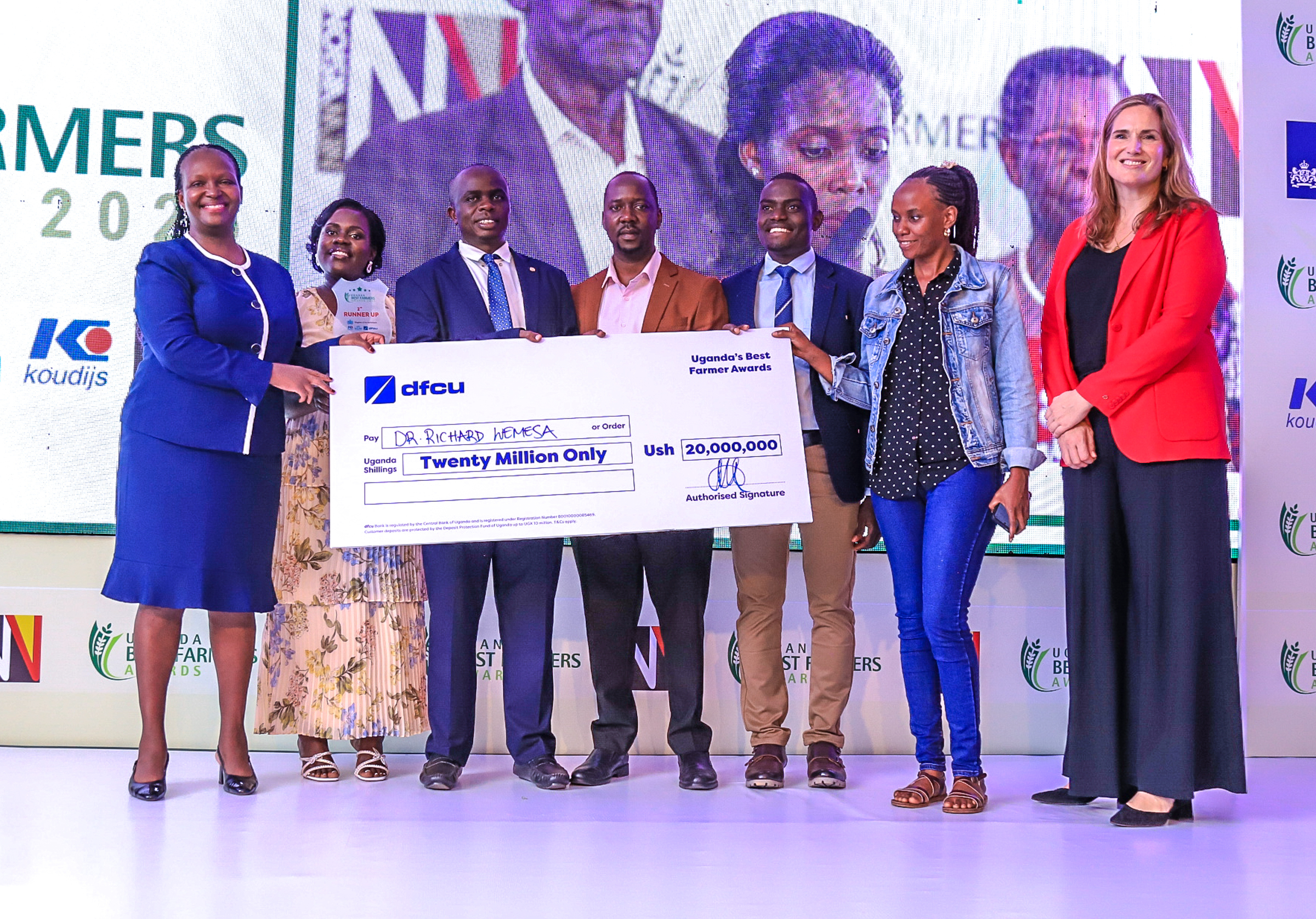
When Dr. Richard Wemesa was announced as second runner-up at the 2025 Best Farmers Awards, the applause that followed did not merely celebrate a well-run farm in Wakiso District.
The Vision Group’s Best Farmers Awards, in partnership with dfcu Bank, KLM, and the Netherlands Embassy, is an annual initiative recognizing outstanding Ugandan farmers, featuring transparent judging, significant cash prizes, and learning trips to the Netherlands to promote modern, sustainable agriculture.
Dr. Wemesa’s national recognition as one of Uganda’s best farmers acknowledged something deeper: a story of patience, failure, reinvention and the quiet power of timely finance.
At the heart of that journey stands dfcu Bank. An early overdraft facility became the spark that transformed a fragile maize farm into Jolwe Group, a tightly integrated agribusiness venture.
“Winning this award is big for me personally,” Dr. Wemesa says, smiling, reflective. “But more importantly, it validates the systems we’ve built, sustainable farming, value addition, and structured finance. It tells me we’re doing something right.”
For dfcu, the recognition affirms a philosophy it has long championed: that agricultural transformation requires more than money. It requires belief in people, flexibility in financing, and advisory support that helps ideas survive early shocks and then scale.
Roots in the hills of Sironko
Long before milling machines, balance sheets, or Excel trackers, Dr. Wemesa’s education began in the steep hills of Sironko District in eastern Uganda.
He grew up in a household where survival depended almost entirely on coffee farming. Days began early. Very early.
“My father used to wake us up around 4:00 a.m.,” he recalls. “We would walk into the hills to dig. Coffee is what paid our school fees.”
Those mornings taught him discipline long before he encountered economics textbooks. Farming, he learned early, was not poetry. It was work. Hard, unforgiving work.
Education became his ladder to a more sustainable life, but never an escape from agriculture.
Instead, it sharpened his thinking. He pursued advanced training in economics and quantitative disciplines, eventually earning a doctorate and specializing in statistics, microeconomics, macroeconomics, econometrics, and mathematical economics.
Today, he lectures part-time at the University of Nairobi, Makerere University, and other institutions, travelling to Kenya every month. Yet farming never left his mind.
“Uganda’s population has grown from about 15 million in 1986 to over 51 million today,” he says. “People must eat every single day. Food processing is still a virgin space.”
From the beginning, his ambition was bigger than farming plots. He wanted to be part of the entire food security chain, from farm to table.
The price crash that changed everything
In 2019, Dr. Wemesa acquired land in Jolwe Village, Manyangwa Sub-County, Kasangati Town Council, Wakiso District, about five kilometres from Gayaza town. He planted maize in the second season. The harvest was good. The market was not. Prices collapsed. He sold at a loss.
“That moment was painful,” he says. “But it was also a lesson. I realised production alone is not enough. Value addition is everything.”
When COVID-19 lockdowns hit in 2020 and much of the economy froze, Dr. Wemesa did the opposite of panicking. He planned.
He already had land. What he needed was processing capacity and financing.
dfcu steps in: Financing the first leap
The breakthrough came in the form of an overdraft facility of UGX 90 million from dfcu Bank.
That single facility funded the construction of a milling structure, installation of three-phase power, and the purchase of hullers and milling machines. Jolwe Grain Milling Enterprise was born. But beginnings are rarely glamorous.
The first machines, imported from North China Machinery on Jinja Road, broke down within three months. The supplier refused to refund the money.
“That moment almost killed the dream,” Dr. Wemesa admits.
Flour quality was inconsistent. The market rejected it. There was no truck, no reliable operators, and no established customers.
Slowly, painfully, he learned, consulting seasoned millers, visiting other operations, asking uncomfortable questions. One truth stood out: most successful millers relied on locally fabricated machines from Katwe, a Kampala suburb famous for local machinery assembly.
He made another bold decision, investing an additional UGX 32 million.
That choice changed everything.
From Survival to Scale
Related
 Living Longer, Saving Less: Experts Call on Procurement Professionals to Rethink Retirement Strategy
By 2021, Jolwe Grain Milling Enterprise stabilised. Then it grew.
Production climbed from a humble 100 kilograms to 15 tonnes of maize per day, yielding about 9 tonnes of maize flour and nearly 6,000 kilograms of maize bran daily.
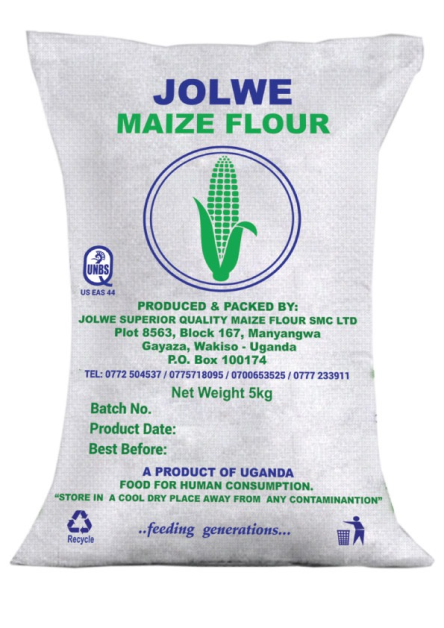
One customer anchored the business: St. Julian Secondary School, one of the schools with a large population of 12,000 students, started consuming over five tonnes of posho every day.
Demand created momentum. Momentum created new questions.
What to do with all the maize bran?
Where others saw waste, Dr. Wemesa saw opportunity.
Around 2023, after benchmarking visits to farms in Kenya and across Uganda, Jolwe began diversifying. Poultry came first and failed. Poor breeds. Little expertise.
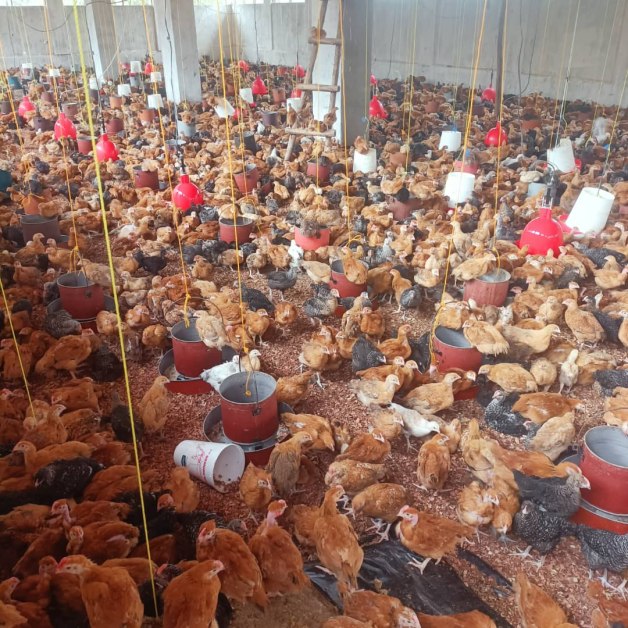
Instead of quitting, the team regrouped, learned, and corrected the course. Today, Jolwe Poultry keeps about 5,000 layers, producing between 102 and 150 trays of eggs daily. Each bird consumes roughly 120 grams of feed per day, sourced internally from the milling enterprise.
Then came piggery.
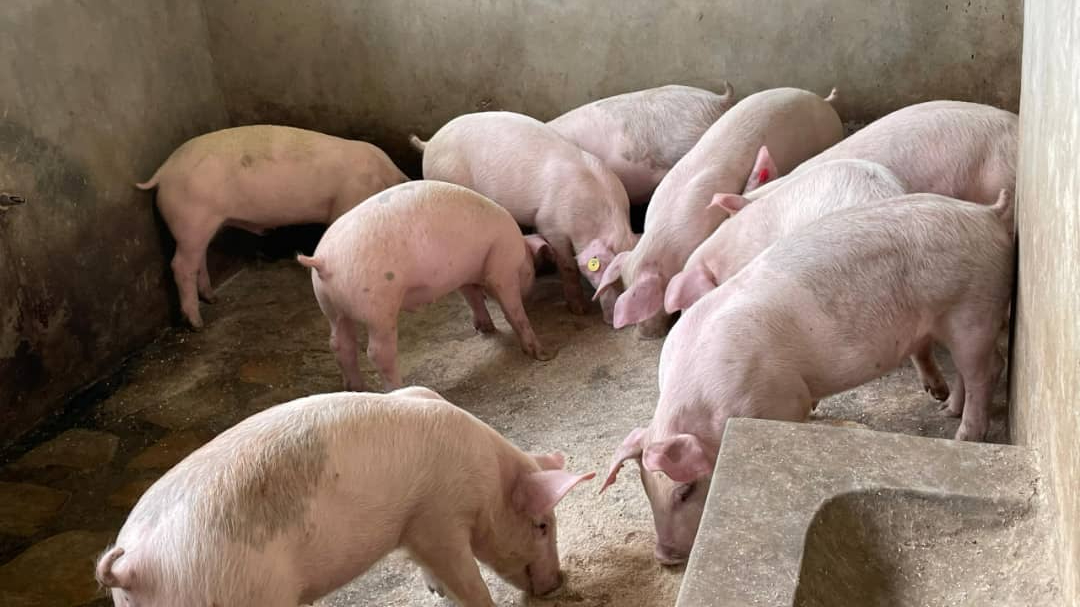
From just three piglets, Jolwe now manages over 500 pigs across three sites. With about 52 sows, the farm produces 520 to 600 piglets every three months, many sold to beneficiaries of Uganda’s Parish Development Model.
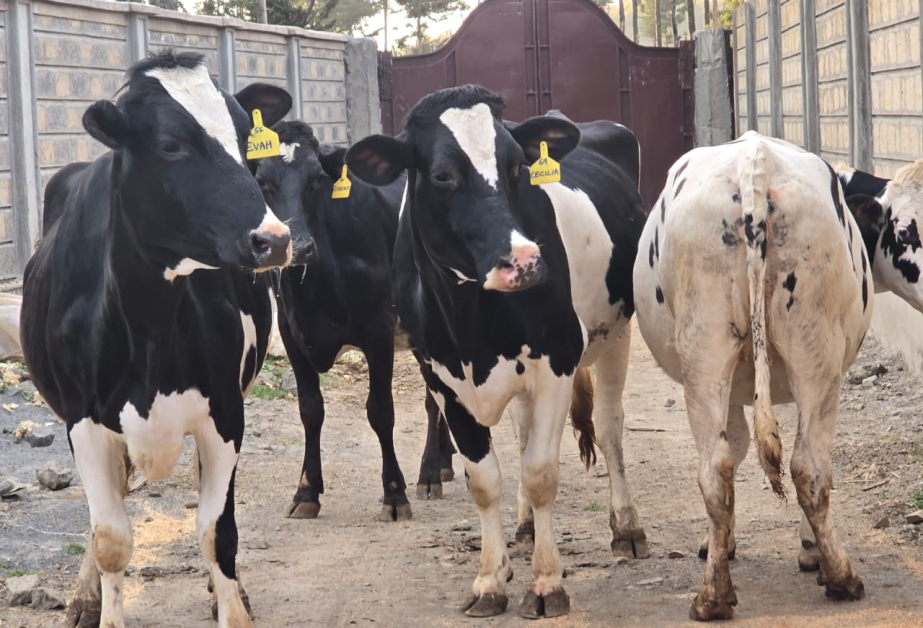
Dairy farming followed, adding stability. From a single heifer, the herd has grown to over 25, with about 12 actively milking, producing 198–210 litres daily, largely sold to schools.
The newest frontier? Fish.
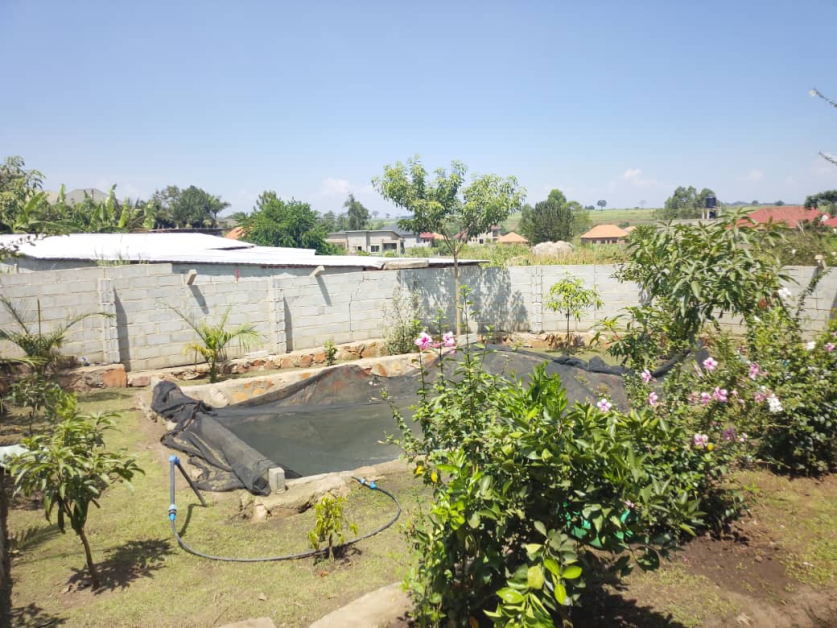
Jolwe now stocks between 7,000 and 10,000 catfish per cycle, harvested every six to nine months, proof that innovation remains part of the DNA.
Farming, run like a business
What makes Jolwe different is integration. Every enterprise buys from another. Poultry, pigs, and dairy all source feed from the milling unit. Costs are tracked rigorously. Each unit runs on a budget, monitored through Excel tools and overseen by a qualified accountant.
“If you don’t manage costs,” Dr. Wemesa says plainly, “farming will throw you off balance.”
Supervision is relentless. Weekly meetings happen every Saturday evening. He is physically present on the farm almost daily and often supervises milling operations between midnight and 6:00 a.m., when electricity tariffs are lower.
“Supervision is a factor of production,” he insists. “If you’re not there, things won’t move.”
A growing partnership with dfcu
Through it all, dfcu Bank has remained present.
The initial UGX 90 million overdraft was later increased to UGX 110 million, supporting upgrades, working capital, and expansion. Beyond financing, dfcu provided advisory support, training programmes, and technical guidance through regular engagement.
“They are flexible, knowledgeable, and practical,” Dr. Wemesa says. “For me, banking is about reliability and understanding how business actually works.”
Recognition, and What Comes Next
Being named second runner-up in the 2025 Best Farmers Cohort has elevated Jolwe’s national profile.
It brings credibility, visibility, and access to new markets, and study tours, including a confirmed trip to the Netherlands as one of Uganda’s top 13 farmers.
“It gives personal satisfaction,” Dr. Wemesa says. “It brings pride to the community. And it proves that hard work pays.”
His long-term ambition is bold but grounded: to build a tech-driven, environmentally responsible agribusiness deeply embedded in Uganda’s food system, creating jobs, adding value, and feeding cities.
For dfcu Bank, Jolwe’s story is a quiet testament to what happens when patient capital meets relentless supervision.
For Dr. Richard Wemesa, it is not a climax.
It is only the beginning.