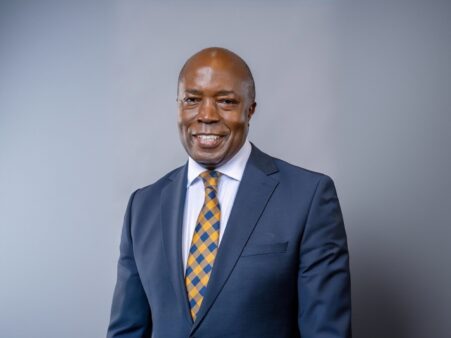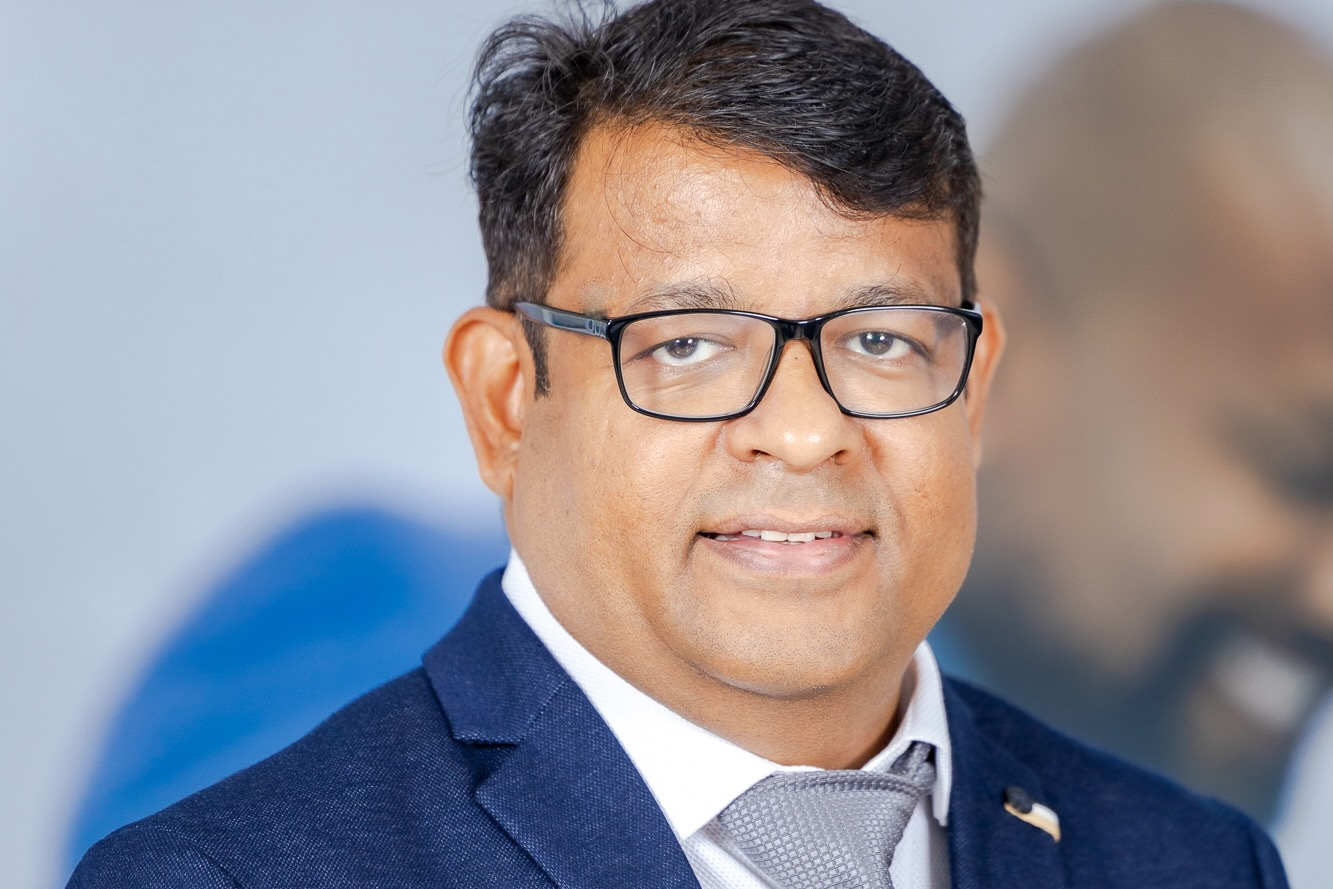
When Soumendra Sahu took over as Managing Director and Chief Executive Officer of Airtel Uganda in December 2024, he stepped into one of the most competitive, politically sensitive, and fast-evolving sectors of Uganda’s economy.
Telecom is unforgiving: customer expectations shift daily, technology cycles move at speed, and regulatory, security, and customer trust issues sit permanently in the spotlight.
One year on, December 2025 marks a meaningful checkpoint — not just of activity, but of direction.
What has emerged over Sahu’s first twelve months is a leadership style anchored in execution, discipline, and scale, with a clear bias toward long-term infrastructure, people effectiveness, and stakeholder trust.
That approach is deeply informed by Sahu’s professional journey. Before arriving in Uganda, he spent more than two decades building his career across some of India’s most demanding and competitive markets. He began in frontline commercial roles at Asian Paints, developing a ground-level understanding of sales execution and channel management, before moving into telecom with Airtel, where he managed commercial roles in Odisha and Maharashtra.
Sahu later joined the Tata Group, holding senior roles at Tata Teleservices(Tata Docomo), spanning distribution, acquisition, and marketing leadership across multiple Indian circles. His career reached full stride at Bharti Airtel, where over nearly a decade he progressed through key commercial and operational positions — Vice President for Marketing, Vice President and Head of Sales Operations, Chief Operating Officer, and ultimately CEO of Gujarat, one of Airtel’s largest and most competitive markets.
Complementing this hands-on operational background is a strong academic foundation: a Bachelor of Science (Honours) in Physics from Sambalpur University, a Postgraduate Diploma in Sales and Marketing from NIS Bhubaneswar, and an Executive Leadership Programme in Strategy and Leadership Transformation from INSEAD.
Starting with the fundamentals: invest, expand, execute
Sahu’s first and clearest signal was capital.
The past year marked the highest level of investment in Airtel Uganda’s history, with resources committed to expanding and strengthening the network across both urban and rural Uganda. Airtel pushed population coverage to 96%, deliberately extending infrastructure into communities that have historically been underserved.
“Some parts of the country are forests or water bodies,” Sahu told the CEO East Africa Magazine, in an exclusive interview, adding: “But wherever there is demand — tourism, industry, or communities — we will serve. Even if it requires partnerships.”
That pragmatism has informed Airtel’s willingness to explore alternative connectivity models, including satellite partnerships, while continuing to scale its terrestrial network. Over the year, Airtel added over 250 new sites, rolled out 365 5G sites across major towns, and expanded capacity to absorb surging data demand.

The results were visible early. By the close of H1 2025, Airtel Uganda had posted 13.3% YoY revenue growth in Q2, with an EBITDA margin of 53.5%. Data consumption grew by 51.2%, users grew by 25.9%, underscoring the payoff of sustained network investment.
Yet Sahu is clear that the heavy lifting is not over.
“We will be doing our ever-highest investment in the next two years,” he says. “That commitment is already approved at the board level.”
Beyond towers: building an enabling ecosystem
For Soumendra Sahu, network expansion is inseparable from the broader economic conditions that determine whether connectivity translates into real use. As Airtel Uganda pushed population coverage to 96%, his focus increasingly shifted to the harder question identified by the GSMA Uganda Digital Economy Report: why millions of Ugandans who live within mobile internet coverage remain offline.
The GSMA’s findings are stark. While network reach is near-universal, around 75% of Ugandans who live within mobile internet coverage are not actively using it, pointing to a deep structural “usage gap”. For Sahu, this confirms that the next phase of growth is no longer primarily about infrastructure supply, but about fixing the ecosystem around it.
Within weeks of assuming office in January 2025, Sahu began a deliberate and sustained engagement with Uganda’s digital economy stakeholders, holding early conversations with the Uganda Communications Commission (UCC), the Ministry of ICT and National Guidance, the Ministry of Finance, Planning and Economic Development, the Bank of Uganda, and partners involved in device financing and digital inclusion. These were not one-off courtesy meetings, but the start of what he describes as a rolling dialogue, revisited throughout the year as policy discussions, budget cycles, and sector performance evolved.
At the centre of those conversations has been smartphone affordability. GSMA data shows that entry-level smartphones in Uganda cost an average of USD 38.91, equivalent to 39% of monthly GDP per capita, and as much as 96% of monthly income for the poorest 40% of the population. Critically, taxes account for roughly 35% of the final device cost, placing Uganda among the most expensive markets in Sub-Saharan Africa for entry-level smartphones.
“Smartphone penetration directly affects household consumption, productivity, and GDP,” Sahu argues. “This is not just a telecom issue — it’s an economic one.”
That evidence has shaped Airtel’s approach to government relations. Sahu has consistently advocated for lower taxes on entry-level smartphones, improved access to consumer and micro-device financing, and stronger coordination across ministries responsible for ICT, finance, trade, and education — recognising, as the GSMA report underscores, that broadband adoption is ultimately a whole-of-government challenge.
The GSMA’s economic modelling reinforces the logic of this engagement. It shows that even a modest reduction in sector-specific telecom taxes could increase broadband adoption, create tens of thousands of jobs, and expand overall tax revenues through growth effects, rather than eroding the tax base. In other words, policies that improve affordability are not a concession to operators, but a lever for wider economic participation.
Crucially, Sahu’s engagement with policymakers has continued throughout the year, informed by this data and grounded in operational realities. By maintaining an open, evidence-based channel with regulators rather than seeking one-off concessions, he has positioned Airtel as a long-term partner in Uganda’s national broadband and digital transformation agenda, aligned with Vision 2040 and the priorities outlined in National Development Plan IV.
In Sahu’s view, sustainable growth for the telecom sector — and meaningful digital inclusion for citizens — will only come from policies that close the usage gap, expand participation, and allow the country’s digital infrastructure to deliver its full economic return.
From Silos to Synergy: Operating as One Airtel
If network investment was the most visible pillar of Soumendra Sahu’s first year, the less obvious — but equally consequential — shift took place inside the organisation.
Early on, Sahu concluded that Airtel Uganda’s ability to compete in a fast-moving market was being constrained by traditional departmental silos. While functional expertise remained strong, execution often slowed at the seams, where accountability blurred, and priorities competed rather than aligned.
His response was structural and cultural.
The business strategy was cascaded to the entire team for the first time at the start of the year. This provided clarity about everyone’s contribution to the success of the business.

Under Sahu’s leadership, Airtel Uganda moved away from a conventional department-led operating model to cross-functional project teams, organised around clearly defined outcomes rather than hierarchies. These teams bring together staff from network, commercial, finance, technology, and customer operations to work jointly on priority areas such as network experience, new site delivery, ARPU growth, cost discipline, and customer satisfaction.
“For productivity and efficiency, we are not only organised around departments,” Sahu says. “We’ve broken the cycle.”
The intent was not to dilute accountability, but to sharpen it. Each project team is assigned clear targets, timelines, and ownership, with individual contributions formally tracked. In this model, success or failure is shared — and visible.
Crucially, the shift was accompanied by a strong emphasis on communication and engagement. Sahu instituted regular town halls, direct feedback surveys, and open forums where staff at all levels could question decisions, propose ideas, and challenge assumptions. He has been particularly deliberate about engaging younger employees, often seeking their input on customer propositions and digital products.
“For me, effectiveness matters more than popularity,” he says. “Sometimes the right decisions are uncomfortable, but they are necessary if you want the organisation to move faster and work better together.”
 Stanbic’s Five-Year Scorecard: How Profit Growth, Deposits, Lending and Dividends Reshaped Performance
Together, these changes have begun to reshape how Airtel Uganda works: faster decision-making, clearer accountability, and stronger alignment between teams that once operated in parallel. While the full impact will be measured over time, Sahu is clear about the objective.
“In a business like telecom,” he says, “execution is everything. And execution improves when people stop working in silos and start working on the same problems together.”
Trust through Discipline, consistency, credibility and commitment
The organisation also reinforced a culture of discipline.
That philosophy was tested most visibly during the SIM swap and fraud allegations that erupted on social media in August 2025.
Rather than deflecting, Airtel responded by tightening controls, launching investigations, and reinforcing a zero-tolerance policy on fraud. Audits were commissioned, internal processes were reworked, and accountability was enforced.
The impact was tangible. According to Sahu, fraud complaints dropped significantly, restoring operational credibility and internal discipline.
“Partial measures don’t work,” he says. “If you want trust, you have to be consistent — even when it’s uncomfortable.”
Growing Talent, Inspiring Performance and Celebrating Impact
If discipline was one pillar of Sahu’s leadership, engagement was the other.
Over 10 months, Airtel Uganda held eight large employee engagement events, ranging from skills showcases to cultural and social initiatives. For the first time, there is a Business Marketplace and Sports Day where teams compete in various aspects of the business and games. The aim was not spectacle but belonging.

“For the first time in several years, the sales team is earning better commissions and enabling teams are poised for a much better annual bonus,” Sahu notes, directly linking improved profitability and market performance to employee reward.
He also engages directly with junior staff — often soliciting ideas from younger employees on various things.
To reinforce this culture, Airtel introduced the MD Platinum Club, celebrating top-performing individuals and teams throughout the year rather than waiting for annual reviews.
Winning in the community — and with stakeholders
Beyond markets and metrics, Soumendra Sahu has been deliberate about strengthening Airtel Uganda’s social licence to operate — recognising that in telecom, long-term success depends as much on trust and legitimacy as it does on network reach.
Over the past year, Airtel’s community engagements have been shaped less by visibility for its own sake and more by alignment with national priorities around inclusion, youth, and digital opportunity. This has been most evident in Airtel’s continued focus on education and youth development, where connectivity is positioned as a tool for empowerment rather than charity.
In March, Airtel Uganda partnered with UNICEF Uganda to mark the International Day of Digital Learning, reaffirming a commitment to safe and inclusive internet access for learners. By the end of this December, Airtel will have connected 223 schools across the country, extending access to digital learning resources and reinforcing the role of connectivity in human capital development.
Sahu sees such initiatives as strategic, not peripheral.
“If we want a digital economy tomorrow, we must invest in digital confidence today,” he says — a philosophy that links Airtel’s social investments directly to future participation in the digital ecosystem.
Cultural and community institutions have also remained central to Airtel’s stakeholder strategy. Through sustained support for platforms such as the Kabaka Birthday Run and the Masaza Cup, Airtel has reinforced its relationship with the Buganda Kingdom and its youth constituencies, supporting public health, unity, and talent development initiatives that resonate well beyond the telecom sector.
Importantly, many of these engagements have been ongoing rather than episodic, reflecting partnerships that predate Sahu’s tenure. This continuity signals commitment and reliability — qualities that matter deeply in a sector where trust is fragile, and reputations are hard-earned.
Market momentum and investor confidence
Over the course of 2025, the business maintained momentum against a backdrop of continued network investment, organisational efficiency, and sustained stakeholder engagement. By mid-year, Airtel Uganda was reporting stronger base growth, with both the GSM and Airtel Money businesses recording market share gains following a period of heightened competitive pressure.
These developments were reflected in capital market performance. In Crested Capital’s inaugural Black Diamonds list for Q1 2025, Airtel Uganda was ranked as the top-performing stock on the Uganda Securities Exchange, delivering a 74.21% total shareholder return between January 2 and April 4, 2025. The return, which exceeded prevailing government securities yields of 10–17%, was driven by a combination of capital appreciation and dividends. Over the period, Airtel’s share price increased 60.62%, from UGX 58.00 to UGX 93.16, alongside a UGX 7.88 per share dividend, equivalent to a dividend yield of 8.47%.
The performance was sustained over a longer horizon. In the January–September 2025 Black Diamonds update, Airtel again featured among the USE’s leading stocks, posting a 45.43% total shareholder return over the nine-month period.
By the end of 2025, market commentary increasingly reflected Airtel Uganda’s consistent financial performance and operational stability. The next point of assessment will be March 2026, when a full year of Soumendra Sahu’s strategic and operational decisions is reflected in audited results, providing a clearer basis for evaluating the durability of the company’s performance trajectory.
Looking ahead: the next phase
As he completes his first year in office, Soumendra Sahu is already focused on what comes next. He sees the next three to four years being shaped by the continued expansion of the “internet generation,” rising data consumption, and the growing integration of AI-driven platforms across everyday services.
His response is not to concentrate expertise at the top, but to broaden capability across the organisation.
“Everybody’s knowledge has to be enhanced,” he says. “So when disruption comes, people can handle it.”
Alongside this, Sahu has signalled a sharper focus on youth inclusion. He has acknowledged the gap between Airtel Uganda’s workforce profile and Uganda’s broader demographics, and has committed to gradually rebalancing this through recruitment, skills development, and exposure to emerging technologies.
Taken together, Sahu’s first year at Airtel Uganda has been characterised by strong investment, focus on efficiency with clearer accountability, deeper stakeholder engagement, and a consistent focus on execution excellence.
If year one was primarily about stabilising and scaling, the period ahead will test whether those foundations translate into durable market leadership. For now, Airtel Uganda enters its next phase with a clearer sense of direction, operational momentum, and leadership focused on balancing performance in the marketplace with responsibility to the stakeholders who shape it.