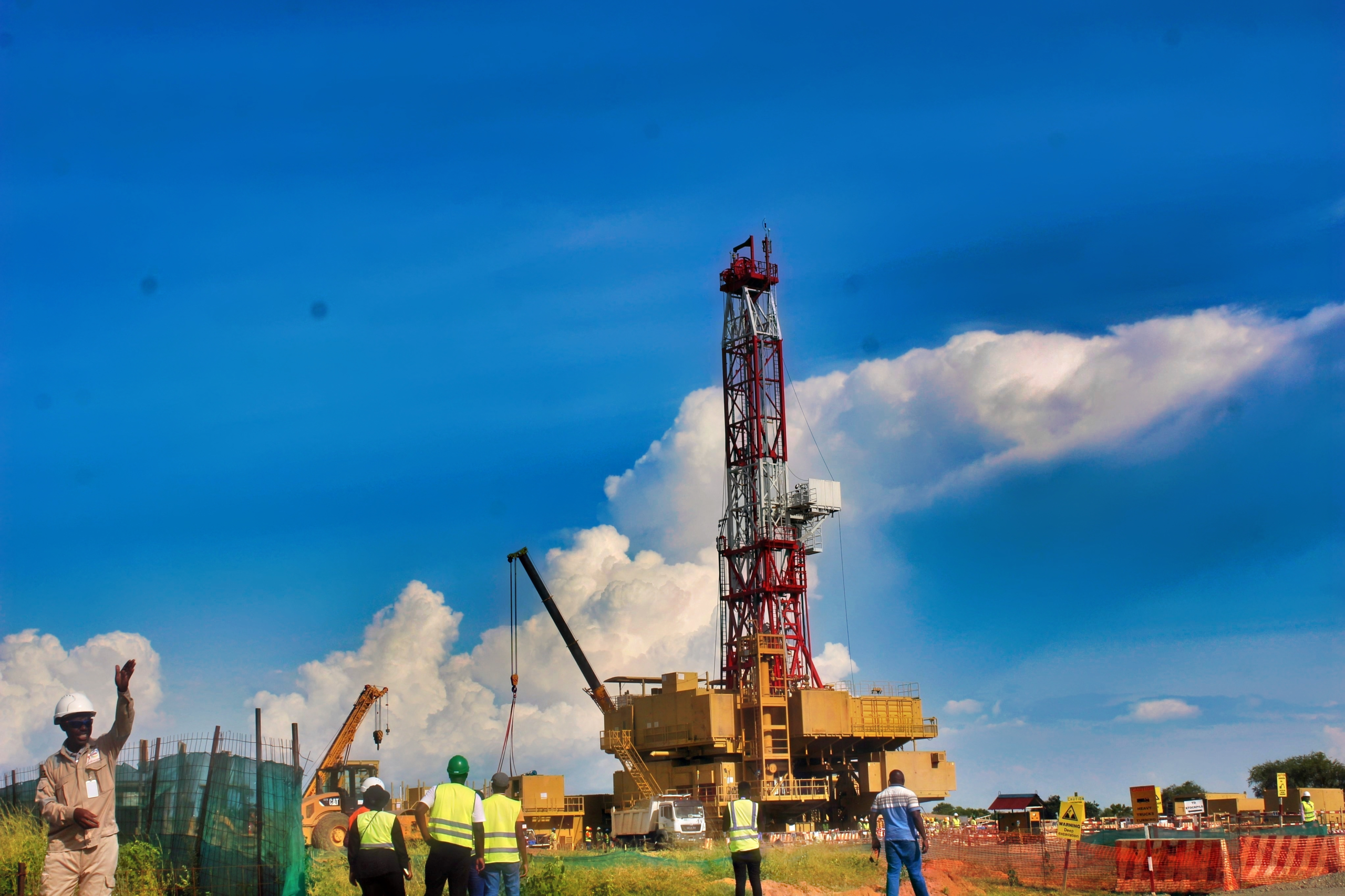
In Uganda’s Tilenga oil fields, where the low rumble of drilling rigs never stops, every passing hour of operation carries a price tag measured in tens of thousands of dollars.
According to official briefings and technical presentations from the Petroleum Authority of Uganda (PAU), the average daily cost to drill a single oil costs $140,000 (UGX 506 million) in the Tilenga project run by TotalEnergies.
However, for an industry often defined by staggering figures, a PAU official notes that this figure stands out among the lowest drilling-day rates in the world; other oil wells across the world cost as much as $400,000 (UGX 1.45 billion) per day in drilling costs.
The $140,000 (UGX 506 million) per day is not merely a headline figure. It reflects a mix of rig operations, fuel, logistics, consumables, and personnel costs, averaged across the drilling campaign.
The PAU official notes that the figure is derived from an accounting perspective that divides accumulated costs by total drilling days.
Each well on the Tilenga project now takes less than 9 days to drill, down from around 11 days previously. Based on the daily rate of $140,000, the total spend across nine days of drilling is $1.3 million (UGX 4.6 Billion)
This acceleration translates directly into cost savings: at $140,000 per day, each two-day reduction saves approximately $280,000 (UGX 1 billion) per well.
A CEO East Africa Magazine independent analysis of the $140,000 daily amount reveals that at the project’s current scale, the 170 wells required for first oil would carry an estimated $214 million (UGX 776 billion) in total drilling costs.
Those average figures exclude completion, infrastructure, and production costs but underscore how quickly efficiency gains can add up in a multi-year campaign.
Energy costs remain one of the biggest line items in the $140,000 daily spend.
Currently, the rig operates primarily on diesel generators, but TotalEnergies and its contractors have begun pilot tests of battery-assisted power systems designed to reduce fuel consumption.
If successful, the move toward hybrid or fully battery-powered rigs could mark a major step toward sustainable operations in Uganda’s emerging oil industry.
It would also directly impact the cost base, potentially saving thousands of dollars on daily operations as global oilfield services move toward low-carbon methods.
Oversight, audits, and the question of recoverable costs
In Uganda’s production sharing agreements, drilling costs are recoverable by the operator, meaning TotalEnergies can reclaim these expenditures before government begins sharing in profits from oil once production begins.
PAU, Uganda Revenue Authority, Ministry of Finance and the Office of the Auditor General closely monitor these costs.
Every line item in drilling costs must pass through annual budget approvals and later reconciliation.
The audit focuses mainly on amounts to be recovered by licensed oil companies; however, some fiscal experts note that there is need for stronger alignment between government and licensed oil companies to confirm and agree on the recoverable costs.
PAU runs a multilayered oversight mechanism where its staff monitor operations on site while the Auditor General audits recoverable expenditures at year’s end to ensure accuracy and compliance.
This vigilance keeps project costs in check and prevents inflated recoverable claims.
While Tilenga’s wells are relatively shallow, averaging 1.2 kilometres in depth, the Kingfisher field, operated by CNOOC, presents a different picture.
Some wells there reach depths of between five and seven kilometres; however, there are no specific drilling costs provided for the Kingfisher project, which gives a suggestion they might be ‘much more complex’.
While the $140,000 daily rate offers a snapshot of Uganda’s operational efficiency, it doesn’t represent the full cost of bringing a barrel of crude to market.
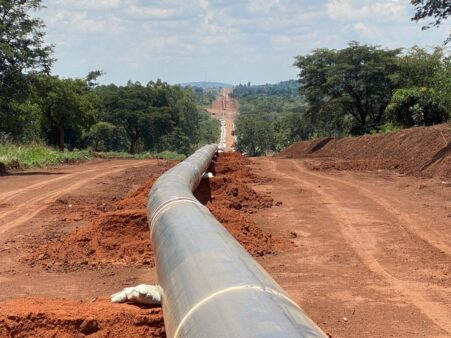
Beyond drilling, the Tilenga and Kingfisher projects involve massive capital investments in processing facilities, pipelines, and export terminals, notably the East African Crude Oil Pipeline (EACOP), a 1,443-kilometre conduit to the Tanzanian coast.
Still, controlling drilling costs remains critical. Lower day rates and faster cycle times improve project economics, accelerating the payback period and increasing government revenues sooner.
Cost recovery rejected
A 2021 Oxfam publication titled “Cost Oil Check Down the Line: Understanding how oil recoverable costs could erode Uganda’s petroleum revenue gains” reveals that while the cost recovery arrangement aligns with international practice, it places substantial fiscal risk on government due to limited control over cost verification.
It is, therefore, not surprising that former Auditor General, John Muwanga, in October 2023, rejected over UGX1 trillion in oil recoverable costs claimed by international oil companies, citing inconsistencies in expenditure justification.
The decision marked one of government’s strongest assertions of financial control over the petroleum sector ahead of first oil production.
Speaking at the sixth Annual Citizens’ Convention on Extractives in Kampala in 2023, Muwanga revealed that the audit had verified only UGX 7.9 trillion as genuinely recoverable out of the UGX 8.9 trillion submitted by oil companies operating in the Albertine Graben.
Petroleum Authority and CNOOC respond
In a detailed response to CEO East Africa Magazine, PAU sheds fresh light on the true cost of drilling wells in Uganda’s oil fields, the benchmarks used to evaluate expenditures, and the multi-layered systems in place to control and audit recoverable costs.

When asked to explain how the daily average spend on Tilenga compares to drilling costs in the Kingfisher project, Angella Nalweyiso Ssemakula, Manager Cost Monitoring at PAU, offers a grounded technical clarification that underscores how different the two projects are.
In her response, Ssemakula explains that drilling costs are best evaluated based on the cost of drilling per meter, not by simply comparing daily rates.
“On average, the cost of drilling per meter in Tilenga is lower than in Kingfisher,” she notes.
“Kingfisher’s wells,” she explains, “are deeper and more complex than the wells in the Tilenga project, and they are also highly deviated, hence the higher cost.”
Because of this increased complexity, “the rig used for Kingfisher has a higher capacity than those used for Tilenga wells.”
Her explanation highlights a critical point: Uganda’s two major oil projects operate in different geological environments, and the costs reflect that reality.
Ssemakula notes that drilling costs cover multiple technical services, each provided under its own contract.
 Stanbic’s Five-Year Scorecard: How Profit Growth, Deposits, Lending and Dividends Reshaped Performance
These include rig costs, cementing, wireline logging, casings, mud logging, upper and lower completions, and waste management.
All these services, she emphasizes, are “procured through open competitive bidding to ensure that the most qualified providers offering the most optimal cost on the market are brought on board.”
PAU reviews and approves the bid evaluation reports “to ensure achievement of both quality and optimal services.”
To manage these demands efficiently, CNOOC, in a written response to the CEO East Africa Magazine, notes that it applies a combination of advanced technology and disciplined planning.
CNOOC deploys the use of cost-effective Rotary Steerable System (RSS) tools used in the oil and gas industry for advanced directional drilling, which are specifically designed and developed by China Oilfield Services Limited.
CNOOC notes that RSS tools such as DRILOG and WELLEADER, along with strong well design and international best practices, help shorten drilling time and limit non-productive hours.
The company is also evaluating low-carbon options, including battery-assisted systems and external power supply solutions, to improve energy efficiency.
“Cost control is maintained through strict enforcement of contract terms and mandatory PAU approvals for all activities and expenditures,” CNOOC shares in a response, noting that local content requirements ensure that logistics and labour services support national participation while staying within regulated cost structures.
Across all its operations, CNOOC adheres to international environmental and safety standards to balance efficiency with responsible development.
To evaluate whether day rates and drilling expenditures are reasonable, PAU relies on both internal historical databases, accumulated since drilling began in Uganda, and international databases such as S&P Global’s Questor.
For cost comparison to be meaningful, Ssemakula stresses, one must consider multiple factors, including the location of the well, whether it is vertical or horizontal, its depth, and the logistical realities of transporting equipment.
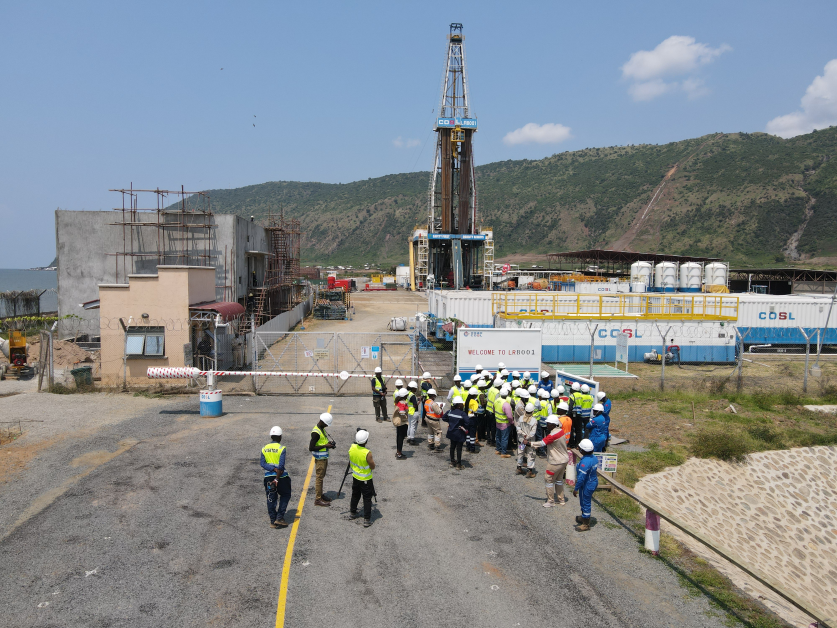
PAU’s oversight extends far beyond benchmarking to maintaining a 24/7 monitoring presence at drilling sites.
Its staff continuously observe drilling operations, compiling daily reports that are then compared with daily reports submitted by the licensees.
Operators also submit daily cost reports, which PAU reviews in conjunction with its own activity records.
Once drilling is completed, companies submit end-of-drilling reports showing the total costs incurred. PAU then verifies these figures against the recorded drilling activities, ensuring they align with what actually occurred in the field.
This on-site supervision connects seamlessly with a broader network of oversight entities.
According to Ssemakula, Uganda’s cost-verification process is built on “adequate segregation of duties” between PAU, URA, the Ministry of Finance and the Office of the Auditor General.
PAU reviews and approves operator budgets at the beginning of each year and monitors expenditure throughout.
The Auditor General reviews expenditure statements at year’s end and determines which costs are recoverable.
URA ensures tax compliance, while Ministry of Finance oversees government’s petroleum revenues.
The goal of each institution, Ssemakula say, is to ensure that only necessary and justified expenditures are incurred in the sector.
The importance of this coordination became, especially clear in 2023, when the Office of the Auditor General rejected over UGX 1 trillion in recoverable cost claims.
According to PAU, the rejected costs were largely due to expenditures incurred outside approved budgets.
Since then, PAU has strengthened its support to the Auditor General during audits by submitting detailed information, including budgets, procurement reports and correspondence, and attending exit meetings.
The audit cycle allows operators to explain their cost claims through verification sessions.
Where disagreements persist, the Production Sharing Agreements provide avenues for dispute resolution, including recourse to Advisory Committee Meetings and expert determination mechanisms.
To ensure consistency across Uganda’s two major operators, CNOOC and TotalEnergies, government has developed a manual for reviewing work programmes and budgets, ensuring alignment in the evaluation and approval process for both companies.
This harmonization is intended to avoid discrepancies during recoverable cost audits.
Ssemakula also addresses whether Uganda should introduce a cost ceiling or standardized cost models for drilling operations.
She notes that the existing legal framework and PSAs already protect the country’s revenue.
Through budget reviews, approvals and cost recovery audits, Uganda ensures that “only necessary and economical costs incurred by the licensee are recovered.”
Introducing a cost ceiling, she argues, may actually undermine efficiency. “A cost ceiling may not be an effective approach,” she warns, explaining that it could prevent operators from undertaking work needed for efficient resource management, ultimately harming government revenue.
She also notes that exploration wells were naturally more expensive because Uganda’s industry was still in its early stages.
Today, the country is benefiting from technological improvements such as casing-while-drilling, batch drilling and horizontal drilling, all of which improve efficiency and reduce costs.
As Uganda prepares for first oil, Ssemakula expresses confidence in the robustness of the country’s cost management systems.
In a PSA setting, she says, “any recovered or optimized cost implies an increase in government’s revenue.”
To secure maximum value for the country, PAU has focused on building capacity among staff across government agencies, reviewing and approving all budgets and work programmes in the sector, and scrutinizing procurement processes for goods and services above $100,000 (UGX 363 million).
It also reviews all draft contracts worth $5 million (UGX 18 billion) and above, as well as daily and end-of-activity cost reports.
As the country enters the final stretch toward first oil, PAU’s detailed oversight mechanisms may prove to be as important as the drilling rigs themselves in determining how much Uganda ultimately earns from its petroleum resources.