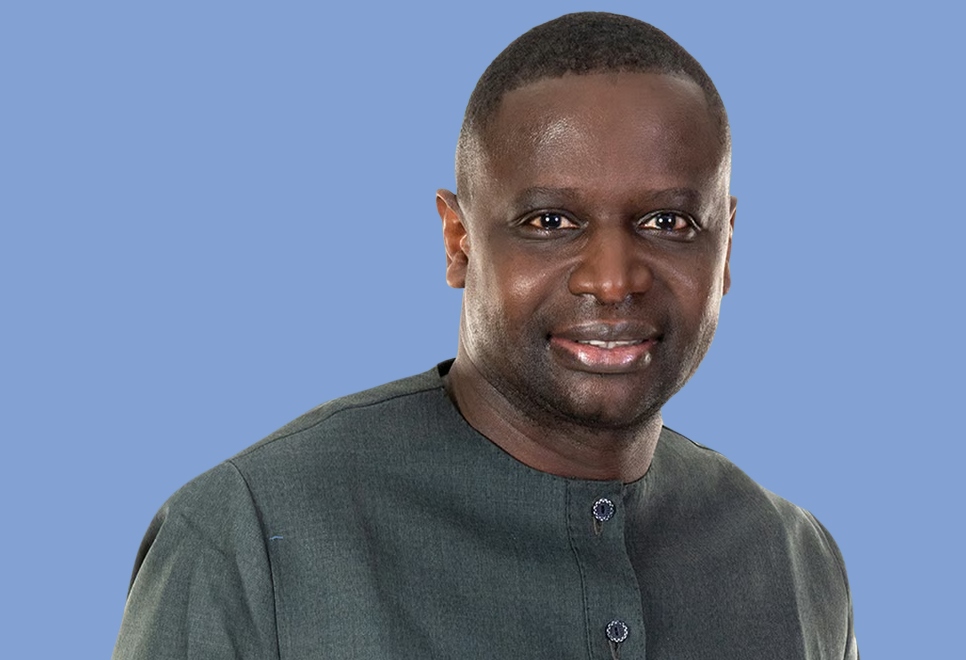
Tatenda Nigel Chinodakufa is often described as “the man helping Africa’s fintechs grow without stepping on regulatory landmines.”
As Regional Business Development Director at Sumsub, a technology firm specializing in identity verification and anti–money laundering solutions, Tatenda operates where innovation meets regulation, a space where trust and technology constantly collide.
The new face of fraud
Sumsub uses artificial intelligence and data analytics to help financial institutions verify identities and stop fraud.
Operating in 224 jurisdictions, it has verified over a billion identities in 10 years and blocks roughly 350,000 fraud attempts annually.
Its data tells a stark story. According to Sumsub’s 2024 Fraud Report, which analyzed more than three million fraud attempts, digital fraud has been “democratized.”
“With a Telegram account, $50, a virtual card, and a VPN, you can launch an attack anywhere in the world,” Tatenda says.
The report found a 167% surge in identity fraud in Africa, the sharpest global increase.
Deepfakes and forged IDs are now common tools, while three-quarters of attacks occur after onboarding, meaning fraudsters clear KYC before they strike.
“It’s no longer enough to have a good KYC system,” Tatenda warns. “You also need to know what happens once your users come on board.”
Growth meets exposure
That warning feels especially relevant for Uganda, one of Africa’s fastest-growing but most exposed digital economies.
According to the Uganda Police Annual Crime Report 2024, Ugandans lost $272 million to cybercrime, bank fraud, and online scams, a 4,700% increase from the previous year.
Small and medium enterprises bore the brunt, and even Bank of Uganda is probing a UGX 60 billion ($16 million) payment-system manipulation case.
The PwC Uganda 2024 report recorded a 60% surge in cybercrimes, fuelled by AI-generated scams and SIM swaps.
“Fintechs need a mindset shift,” Tatenda says. “Fraud prevention isn’t about gatekeeping anymore; it’s about continuous monitoring.”
“It’s like going to a drone fight with a pocket knife. You can’t use spreadsheets to fight an AI-powered fraud attack,” he adds with an irony.
Fighting AI with AI
Sumsub’s solution is to fight artificial intelligence with more sophisticated AI.
Its systems combine deepfake detection, machine learning, and network mapping to flag suspicious behavior, often before an ID is even uploaded.
“You don’t even have to ask someone to submit an ID,” Tatenda explains. “Pre-screening data can already identify a fraudster from afar off.”
The firm’s technology powers financial platforms, telecoms, and global service providers, helping them onboard genuine users faster while filtering out digital impostors.
Deepfakes: When even faces lie
Across Africa, fraud is evolving from physical theft to digital deception.
In 2023, Uganda’s mobile-money systems processed 6.4 billion transactions worth UGX 227.5 trillion, a scale that also magnifies risk.
 Stanbic’s Five-Year Scorecard: How Profit Growth, Deposits, Lending and Dividends Reshaped Performance
From SIM swaps to AI-generated voice impersonations, criminals are adapting fast.
Tatenda says deepfakes have improved so much in the past year that “even trained compliance officers struggle to spot them.”
Between 2023 and 2024, deepfake-related fraud quadrupled, accounting for 7% of all global attempts recorded by Sumsub.
Yet many banks still rely on manual checks and outdated systems.
“We’ve reached a stage where you need AI across the entire user journey,” Tatenda says.
“AI-powered liveness checks can spot deepfakes, and ongoing monitoring ensures bad actors don’t slip through later.”
Sumsub’s layered verification combines digital-reputation scoring, IP risk analysis, and behavioral tracking to identify suspicious users before they transact.
Africa’s fraud hotspots
Sumsub’s research found that Africa’s overall fraud rate grew 167% in 2024, led by Nigeria (5.9%), followed by Algeria, Tanzania, and Uganda, which entered the top 10.
Some local firms now quietly budget for “expected losses”, a symptom of fatigue rather than strategy.
Tatenda warns that normalization of fraud is far riskier than the attacks themselves.
“Fraud doesn’t wait for onboarding,” he says. “It’s already testing your gates before you even open them.”
His prescription: continuous compliance, what he calls “full-cycle verification”, monitoring users across their entire engagement lifecycle.
Innovation or the fraud tax
The digital boom has made fintech one of Africa’s most dynamic industries, but also its most targeted.
For Tatenda, the solution is not to retreat, but to innovate faster than fraudsters evolve.
“For leaders in this space, the choice is simple,” he says. “Innovate compliantly with trust in mind, or pay the fraud tax.”
Sumsub’s system combines pre-verification intelligence with ongoing behavioral analysis.
This allows clients to both block bad actors and fast-track legitimate customers, enabling scale without sacrificing security.
“We’re not just preventing fraud,” Tatenda explains. “We’re helping companies onboard genuine customers quickly, safely, and confidently.”
A battle for trust
In a region where billions now flow through digital platforms, identity has become both currency and target.
The future of Africa’s fintech revolution may hinge not on how fast companies grow, but on how well they can protect that growth.
As Tatenda puts it: “In a world where even faces can lie, vigilance, not marketing, is the new currency of trust.”