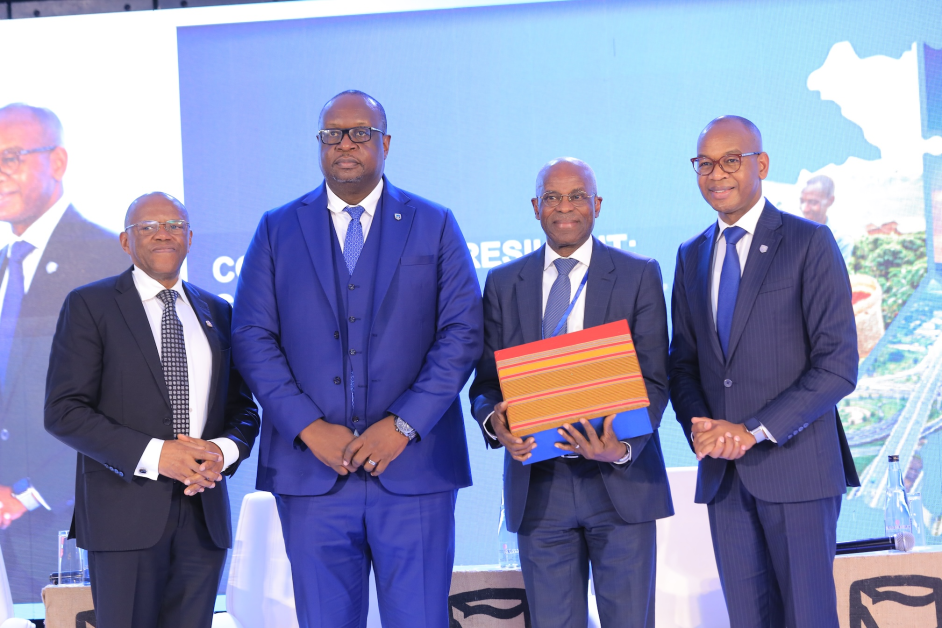
When Dr. Layi Fatona took the stage at the Stanbic Bank East Africa Economic Summit in Kampala, there was a certain stillness in the room — the kind that precedes an idea with continental weight. The Chairman of Renaissance Africa Energy Company Limited, a man who has spent four decades transforming Nigeria’s energy sector, wasn’t here merely to talk about barrels and pipelines. He came to make a case for a Pan-African economic awakening.
“Africa must no longer build its future on borrowed capital,” Fatona declared. “We cannot continue to finance African dreams with external debt and imported patience.”
From the Niger Delta to the Rift Valley
Dr. Fatona’s story is one of conviction and continental vision. In 1985, he left a high-flying career at Shell — one of the world’s largest energy corporations — to pursue what many thought was an improbable dream: building an indigenous African oil and gas company that could operate “profitably, responsibly, and competitively.”
That decision led to the creation of Niger Delta Exploration & Production Plc, which evolved into Aradel Holdings Plc, now listed on the Nigerian Stock Exchange with a market capitalization exceeding US $1.5 billion. From that foundation grew ND Western Limited, one of Nigeria’s top gas producers — and today, the flagship of his leadership, Renaissance Africa Energy Company Limited (RAECL), which recently acquired Shell Petroleum Development Company of Nigeria Ltd (SPDC) in a deal worth US $2.4 billion.
“Each of these milestones represents a brick in the foundation of a larger continental ambition,” he told the Kampala audience. “To demonstrate that African enterprises, funded by African capital and driven by African leadership, can transform not just markets but mindsets.”
The East African Play
Now, Dr. Fatona’s compass points eastward — toward the fertile markets and untapped energy corridors of East Africa. Through Renaissance Africa Energy, he is spearheading projects in Uganda and South Sudan, signaling a new wave of South-South African investment that transcends old colonial trade routes.
“We entered South Sudan in a 49–51 percent joint venture with the National Oil Company, Nilepet,” he explained. “That partnership — Nile-Delta Petroleum Ltd — is the first truly Pan-African upstream partnership between two African companies.”
In Uganda, Renaissance committed capital, technology, and expertise to develop a marginal oil field and construct a 5,000 barrels-per-day modular refinery to serve the domestic market — a bold proposal that was not warmed up to.
“When we came into Uganda, we arrived with commitment, expertise, and capital,” Fatona recalled. “Yet despite two years of engagement, progress stalled. We were not a ‘major’; we were African — and worse still, Nigerian. And I ask again: must we be non-African to be trusted with Africa’s future?”
It was one of the most candid moments of his speech — a direct challenge to the unspoken bias that often privileges Western investors over homegrown African ones.
Building a Pan-African Economic Platform
Beyond his corporate milestones, Dr. Fatona’s speech was a manifesto for African self-determination in business and finance. His argument was simple but profound: Africa’s next economic leap will not be imported — it must be mobilised from within.
“We must build bridges not only between ports and pipelines, but also between regions, industries, and people,” he urged. “We must exchange ideas, talent, and technology across borders with the same ease that we trade goods.”
He outlined an ambitious agenda:
- “Build an inclusive, integrated, and indigenous Pan-African economic platform.”
- “Mobilise African capital to fund African ambitions.”
- “Invest not only in infrastructure, but in trust, institutions, and shared purpose.”
Fatona’s vision rests on leveraging African capital for African growth. He called for unlocking liquidity trapped in the continent’s pension funds, insurance pools, and sovereign wealth vehicles, and for banks and regulators to move beyond being custodians of capital to becoming partners in development.
“Our banks, pension managers, and sovereign wealth funds must now become development partners, not mere custodians of idle liquidity,” he said. “Economic sovereignty begins not with slogans, but with financial self-belief.”
East Africa: A Region in Motion
For Fatona, East Africa represents not just a growth market but a proving ground for Africa’s resilience and integration.
He pointed to the East African Community’s projected GDP of US $603 billion in 2025, its population of 400 million, and a 53.6% surge in intra-EAC trade as evidence that “regional integration is no longer aspirational; it is happening.”
 Stanbic Accelerates Uganda’s Digital Future with “Kikole Ku Speedii” Campaign
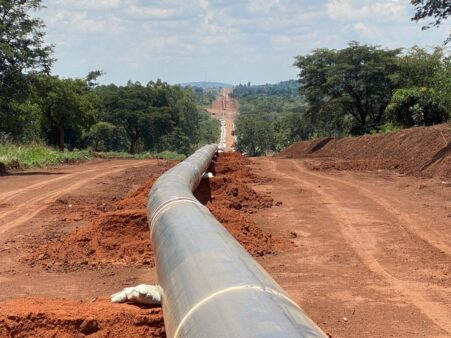
“In Ethiopia, the Grand Renaissance Dam is redefining the power architecture of the Horn of Africa,” he noted. “In Rwanda, visa-openness and digital reforms have turned Kigali into a continental hub. Tanzania is modernising its agriculture, and Uganda, with its oil and gas sector, is poised to rewrite its industrial future through projects like the East African Crude Oil Pipeline.”
Energy as the Great Connector
Dr. Fatona describes energy as “the bloodstream of industrialisation.” Without it, he argues, there can be no regional manufacturing hubs, agro-processing corridors, or digital economies.
“Reliable and affordable energy is the great connector,” he said. “With it, everything else becomes possible.”
He envisions a future where:
- “A Ugandan agribusiness partners with Nigerian investors to scale food processing for export.”
- “A Kenyan fintech collaborates with Ghanaian developers to provide seamless intra-African payments.”
- “A gas hub in Western Uganda fuels industrial parks in Rwanda and South Sudan.”
- “A renewable-energy corridor extends from Tanzania’s coast to Mozambique’s northern border.”
Financing Africa’s Future
To sustain this momentum, Fatona points to the newly launched Africa Energy Bank (AEB) — an initiative promoted by the African Petroleum Producers Organisation (APPO) and Afreximbank, with a starting capital of US $5 billion, scaling to US $120 billion.
“The AEB represents a watershed moment,” he said. “It will not merely fund hydrocarbons; it will fund the transition — enabling gas-to-power projects, cleaner fuels, and eventually renewable integration.”
This model of African-led financing is central to Fatona’s thesis of Pan-African capitalism — a system where Africans recycle their own surpluses to build continental wealth.
The Call for a Continental Renaissance
Dr. Fatona’s closing words were less of a conclusion and more of a rallying cry — an appeal to entrepreneurs, financiers, and policymakers to rise above fragmentation and seize the historic opportunity before them.
“Let us build an inclusive, integrated, and indigenous Pan-African economic platform; mobilise African capital to fund African ambitions; forge partnerships stretching from Lagos to Kampala, from Luanda to Nairobi, from the Gulf of Guinea to the Indian Ocean,” he declared.
And with characteristic conviction, he ended with a simple but resonant line:
“East Africa is ready. Africa is ready. And the time to act is now. Let the true African Renaissance begin.”
Postscript: The Billionaire with a Pan-African Mandate
Dr. Layi Fatona’s influence in East Africa is not just about pipelines and refineries. It’s about a philosophy of ownership — a belief that Africans can and must define their own economic destiny.
He stands at the intersection of energy, finance, and integration, representing a new breed of continental entrepreneurs who see Africa not as fragmented markets, but as a single, self-sustaining economy.
As he reminded the summit in Kampala:
“The development of Africa requires an awareness — on the part of Africans — of Africa’s own potential.”