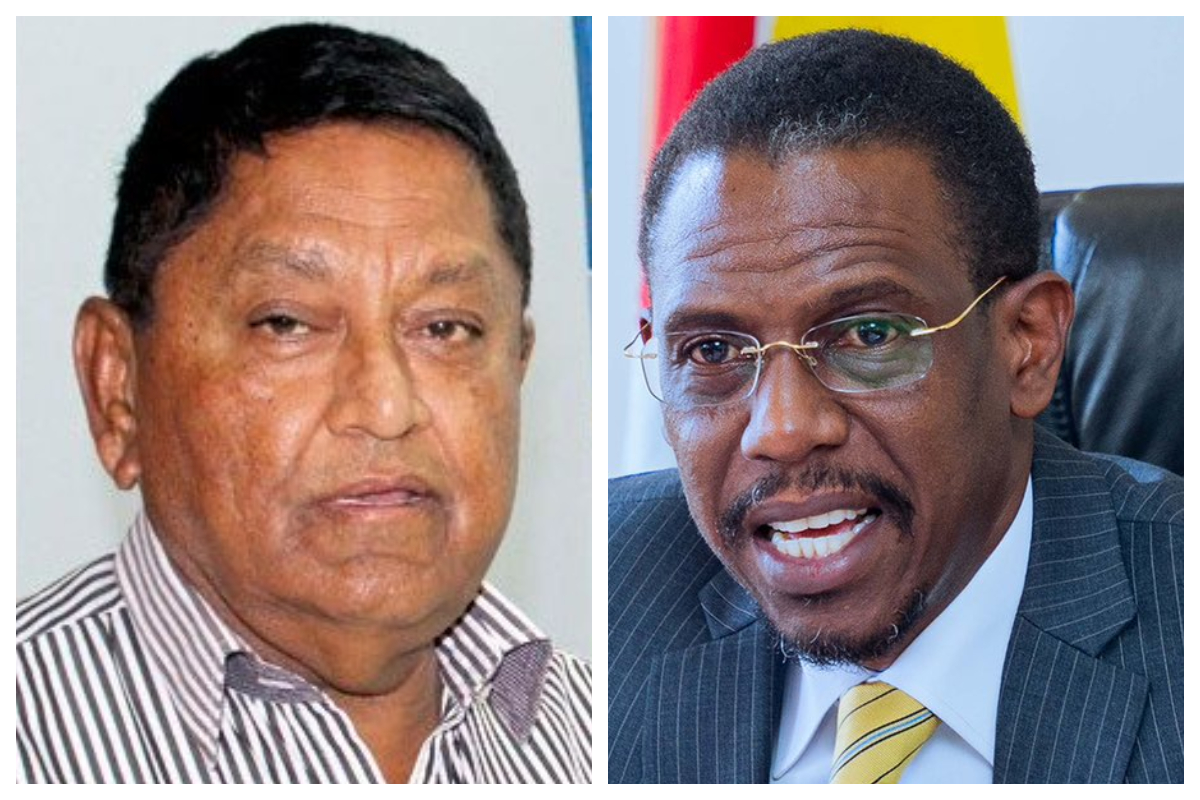
The Court of Appeal has upheld a High Court decision ordering Imperial Royale Hotel, one of Kampala’s flagship luxury hotels, to refund government $1.46 million (about UGX 5.05 billion) and pay UGX 800 million in general damages, for what judges described as a fundamental breach of contract tied to preparations for the 2007 Commonwealth Heads of Government Meeting (CHOGM).
In a unanimous ruling delivered on November 4, 2025, justices Moses Kazibwe Kawumi, Irene Mulyagonja, and Oscar John Kihika dismissed the hotel’s appeal in its entirety, bringing to a close one of the most enduring and controversial legal battles from Uganda’s CHOGM-era spending scandals.
The appellate court affirmed the 2016 findings of High Court Judge Christopher Adonyo, who had ruled that the hotel failed to deliver the contracted accommodation and conference facilities despite receiving full payment from government months before the summit.
The fallout
In June 2007, the Ministry of Foreign Affairs entered into a $2.5 million contract with Imperial Royale Hotel, then part of businessman Karim Hirji’s Imperial Hotels Group, to accommodate foreign dignitaries attending CHOGM.
A follow-up addendum signed in September 2007 pegged the rate at $350 per night and required the hotel to be “in full operation and capable of use by August 31, 2007.”
However, as the summit drew closer, reports from the CHOGM Secretariat and site inspectors showed that major portions of the hotel were still incomplete, including some guest rooms, conference spaces, and finishing works on the façade.
On October 26, 2007, when delegations began arriving, officials from the Ministry of Foreign Affairs were forced to divert guests to other hotels, prompting government auditors to launch an investigation.
An audit conducted by Johnson & Nyende Certified Public Accountants concluded that the hotel was not ready to host delegates and that government had paid for services not rendered.
The audit also found discrepancies in billing; including cases where 37 guests were charged $433.65 per night, above the contractually agreed rate of $350.
In 2009, the Attorney General sued the hotel in the Commercial Division of the High Court, seeking refund of the unutilized funds ($1,464,363.81), UGX 800 million in general damages, and interest at 12 percent per annum on the dollar sum and 23 percent per annum on the shilling sum from the date of default until full payment.
In its defence, Imperial Royale argued that the hotel had been ready by October 24, 2007, citing a Kampala City Council occupation permit as proof.
It also claimed that government officials failed to send the expected guests and that heavy security restrictions during CHOGM prevented access to the hotel.
High Court verdict
In April 2016, Justice Christopher Adonyo ruled decisively against the hotel, describing its conduct as a “breach of the first order.”
He held that the evidence showed construction and finishing were ongoing well into November 2007, long after the first guests had arrived.
Justice Adonyo relied heavily on the audit findings and witness testimonies, including from CHOGM Secretariat officials, who testified that they had to reassign delegates to other hotels.
The court also noted that Imperial Royale’s “readiness” claims were contradicted by the timing of its occupation permit, which was issued only three weeks before CHOGM and later shown to contain false particulars.
He ordered the hotel to refund the full $1.46 million, pay UGX 800 million in damages, and meet all legal costs.
Unwilling to concede, Imperial Royale lodged an appeal in 2017, challenging the High Court judgment on six grounds.
The hotel’s lawyers, led by Timothy Lugayizi, argued that the trial judge misinterpreted the evidence, relied on inconsistent audit reports, and disregarded crucial exhibits.
This was particularly the then Kampala City Council (KCC) occupation permit and an email from Managing Director Karim Hirji to Permanent Secretary James Mugume, claiming readiness to host guests.
 Stanbic’s Five-Year Scorecard: How Profit Growth, Deposits, Lending and Dividends Reshaped Performance
The Attorney General’s team, led by George Kallemera, countered that the record was clear: Imperial Royale had not fulfilled its contractual obligations and had instead engaged in overbilling and misrepresentation.
In his 32-page lead judgment, Justice Moses Kazibwe Kawumi meticulously dissected the evidence, reaffirming that Imperial Royale’s readiness claim was not credible, and that the trial judge’s findings were “well reasoned, consistent with the evidence, and supported by law.”
Court struck out the hotel’s claim that the trial judge shifted the burden of proof, noting that the issue had not been properly pleaded in its memorandum of appeal, a direct violation of Rule 66(2) of the Court of Appeal Rules.
The judges dismissed the argument that the Johnson & Nyende audit report was unreliable, describing the ground as “general, vague, and barred in law.”
The audit, they said, was conducted within contractual terms and remained the best available evidence of performance failure.
The court agreed with the High Court that Imperial Royale breached the addendum by charging higher rates to delegates.
The overbilling of 37 guests at $433.65 per night, instead of the agreed $350, was confirmed by both the audit and the testimony of the hotel’s own finance officer.
Perhaps the most damaging finding was that the KCC occupation permit (marked DEX 1) was unreliable.
Moses Atwine Kamunira, the Assistant Director for City Planning at the Kampala Capital City Authority, testified that the permit erroneously covered both Plots 5 and 7 Kintu Road, yet Plot 5 was still at foundation level in 2007.
Justice Kazibwe observed: “The Occupation Permit was wanting in evidential value. It was issued without considering what was on ground.”
This revelation discredited the hotel’s central defence that it had completed construction before CHOGM began.
The “security cordon” defence, that construction could not proceed due to police restrictions during CHOGM, was dismissed outright.
Court found that it had never been pleaded in the hotel’s defence and therefore could not be raised at appeal.
Even if it were true, the judges held, it would not excuse the failure to meet the contractual completion date.
Court also faulted the hotel for failing to communicate through proper channels.
The email from Karim Hirji to PS James Mugume complaining about unallocated guests was sent to Mugume’s personal address, not to the official CHOGM Secretariat.
Justice Kazibwe ruled that such correspondence had “no contractual effect” since the contract explicitly required communication to be directed to the Secretariat’s Executive Director.
Having rejected all six grounds of appeal, the Court of Appeal upheld the High Court’s full judgment.
Justice Kazibwe concluded: “The appellant failed on all the grounds of appeal. The appeal ought to be dismissed and the orders of the High Court upheld.”
The decision means Imperial Royale must refund $1.46 million (about UGX 5.05 billion), pay UGX 800 million in general damages, interest at 12% and 23% per annum respectively, and meet government’s legal costs.