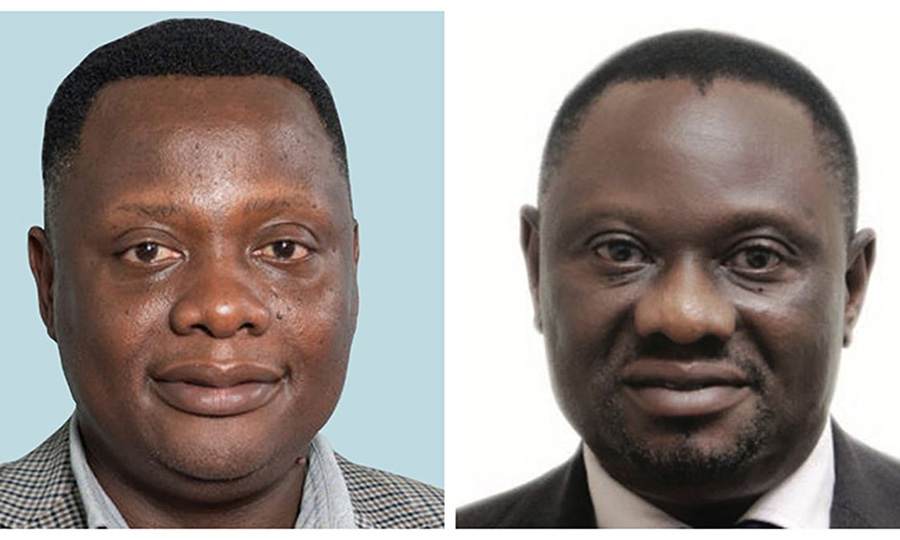
On September 4, 2025, Justice Susan Odongo of the Commercial Court Division of the High Court in Kampala ruled against an application by the Baitwa brothers and their company to set aside a garnishee order.
The order froze accounts of Three Ways Shipping Services (Group) in Stanbic and Standard Chartered, clearing the path for recovery of a $126,000 debt owed to Kenyan firm Transpares.
The Baitwa brothers, Geoffrey Baitwa Bihamaiso and Oscar Rolands Baitwa Businge, had argued that they and their Ugandan group company were distinct from the Kenyan subsidiary that incurred the debt.
But Justice Odongo dismissed this defence, ruling that the directors were using “slightly different corporate vehicles” to avoid a legitimate obligation.
She pierced the corporate veil, holding them personally accountable.
The ruling was another legal setback in a long list that has defined the brothers’ careers.
But it also underscored the central tension of their story: visionary entrepreneurs determined to grow a logistics empire.
Yet repeatedly dragged down by a checkered past characterised by legal and financial crises.

A debt across borders
The Transpares dispute dates back to 2015, when the Kenyan company supplied fuel and weighbridge services to Three Ways Shipping Services (K) Ltd.
After invoices went unpaid, Transpares sued and obtained a default judgment in Nairobi for $126,000.
Unable to enforce it in Kenya, the subsidiary had gone quiet amid receivership, and the creditor turned to Uganda.
The Ugandan courts agreed, ruling that the parent company and its directors could not wash their hands of debts contracted under their watch. By 2025, the brothers were personally liable.
The garnishee ruling may appear modest in scale compared to other disputes, but it carried symbolic weight.
It marked a turning point in judicial willingness to hold directors to account.
It also signaled that the corporate shield would not protect those who blurred the lines of accountability.
A catalogue of courtroom drama
The Transpares saga is only the latest chapter in the Baitwas’ decade-long run-ins with courts across East Africa.
Their companies have faced cases ranging from fraud to receivership disputes, tax arrears, and wrongful trading.
Wrongful trading at Transtrac
In 2024, the High Court ruled that the Baitwas were guilty of wrongful trading in Transtrac.
By continuing to trade despite insolvency, they had placed creditors at risk.
The court ordered them to pay UGX 159.2 million personally.
It is another example of directors being held to account beyond the company shell.
The MTN fraud saga
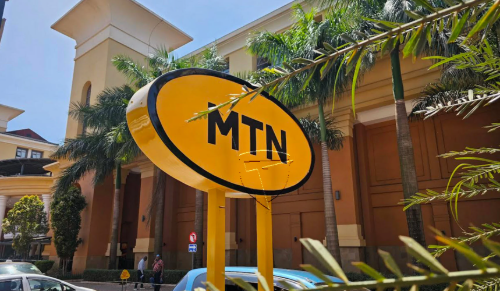
Perhaps their most notorious case was with MTN Uganda. In 2012, the telecom accused Three Ways of colluding with insiders to defraud it of $3.8 million through fictitious invoices.
After 13 years in court, the brothers were acquitted in April 2025.
Justice Lawrence Gidudu found fraud had occurred but ruled that the prosecution failed to prove the brothers’ involvement.
The victory was short-lived: the Director of Public Prosecutions filed an appeal days later, keeping the controversy alive.
The Standard Chartered loan and Liberty ICD dispute
In 2015, Standard Chartered extended a $7 million loan to Three Ways. By 2016, defaults had triggered receivership.
Though the receivership was lifted in 2019 after a negotiated repayment, fresh defaults during Covid-19 forced the sale of the group’s Namanve Industrial Park property.
The eviction of trucks and containers from Namanve spawned another lawsuit. The assets ended up at Liberty ICD, which is now suing for UGX 4–6 billion in storage fees. The case remains unresolved.
 Inside Ramathan Ggoobi’s Plan to Raise UGX 2.3 Trillion in New Taxes and UGX 2.54 Trillion Through Enforcement
A rare victory in Kenya
In 2019, the brothers secured a rare win in Kenya. The Court of Appeal dismissed an appeal by the Kenya Ports Authority.
The dispute concerned four containers that went missing at Mombasa port in 2009.
The ruling in favor of Three Ways underscored that, occasionally, they too were victims of systemic failures in the logistics chain.
Tax arrears settled quietly
Between 2021 and 2023, Uganda Revenue Authority moved against Three Ways affiliates for unpaid taxes.
These disputes were resolved through negotiated settlements and installment plans, allowing the main shipping business to claim compliance.
Reputation and perception
Court cases, even when won, have left indelible marks on the Baitwas’ reputation. To many in Uganda’s corporate community, their names are synonymous with litigation.
Critics argue the pattern reflects reckless management and poor governance.
Supporters counter that the brothers are scapegoats of a tough industry where volatile markets, risky contracts, and complex financing make disputes inevitable.
Justice Odongo’s ruling in September 2025 struck at the core of the governance question.
By insisting that the brothers could not shelter behind “slightly different corporate vehicles,” the court implied that their business structures were designed to obscure responsibility rather than uphold it.
A bid for reorganisation
Even as legal challenges mounted, the brothers sought to chart a new course. In 2023, they unveiled Bro-Group, a holding company designed to consolidate subsidiaries and attract new investment.
They brought on board Daniel Pettersson, a respected former Lafarge/Hima Cement executive, as co-managing director and shareholder.
Pettersson’s capital injection helped lift Standard Chartered’s receivership and brought in professional management practices.
To strengthen governance, the group appointed a new board of directors, chaired by veteran corporate leader Hannington Karuhanga and featuring names such as Olive Lumonya, Moses Kiwanuka, and Charlotte Kazoora.
The changes signaled an attempt to professionalize management, improve oversight, and reposition the company for long-term growth.
The results have been encouraging. Bro-Group has since landed multi-year contracts worth $70 million in the oil and gas logistics supply chain, securing a role in one of Uganda’s most strategic sectors.
For the Baitwas, it represents a shot at redemption and stability—a chance at a second act.
What the Baitwas say
When approached for comment, the brothers, through their PR agency, acknowledged the weight of litigation in shaping their public image but insisted that legal battles did not define them.
“We thank you for expressing interest in working with Threeways Shipping Services with respect to the interview guide. Unfortunately, we realize that over 95% of your questions dwell a lot on ongoing litigations, except for the MTN criminal matter that was recently put to bed.
“In as much as we are often tempted to comment on such matters, they don’t define us as a company. Nonetheless, given another opportunity, we will be glad to share our insights, thoughts, and knowledge on who we are, what we do, and represent.
“We believe that such conversations would facilitate and provide a better understanding and perspective to your readers and the wider audience of our vision, challenges, and the progress realized.”
A cautionary tale
The Baitwas’ story is a cautionary tale of the risks of aggressive expansion, weak governance, and financial overreach.
But it is also a story of resilience. Few companies could survive the weight of fraud charges, receiverships, tax arrears, and garnishee orders, yet the Baitwas’ businesses continue to operate and even expand.
The key question is whether their reorganisation and new governance structures will be enough to rebuild trust with creditors, regulators, and the market, or whether future headlines will continue to come from courtrooms.
For now, September 4, 2025, marked another painful reminder of their turbulent past.
But with Bro-Group in place and oil logistics contracts secured, the Baitwa brothers are betting on a second act in business, one they hope will be defined less by crisis and more by consolidation, growth, and lessons learned.