In a fast-changing Uganda, the definition of wealth is shifting. It’s no longer just about today’s comfort — it’s about building legacies that last.
Across the country, more people are looking beyond simple savings accounts, asking bigger questions: How can I secure my children’s education? How do I grow my business into a family enterprise? How do I invest for a retirement free of financial worry?
For Stanbic Bank Uganda, these aren’t abstract questions. They are the daily reality of its Personal & Private Banking (PPB) division — a business unit undergoing a strategic transformation to put generational wealth creation at the heart of its client relationships.
At a time when Uganda’s economy is on a steady upward trajectory — and with prosperity aspirations rising across every income segment — Stanbic, the country’s leading bank by assets, lending, deposits, and profitability, is doubling down on what it does best: helping clients unlock their full potential.
This transformation is being championed by Samuel Fredrick Mwogeza, Executive Head of Personal and Private Banking — a seasoned banking leader with over two decades of experience spanning Uganda, Zambia, Tanzania, and the Democratic Republic of Congo.
A Fellow Chartered Certified Accountant (FCCA) and respected executive coach, Mwogeza has led diverse portfolios including consumer, high-net-worth, and corporate client segments, and has built a reputation for turning strategy into measurable results.
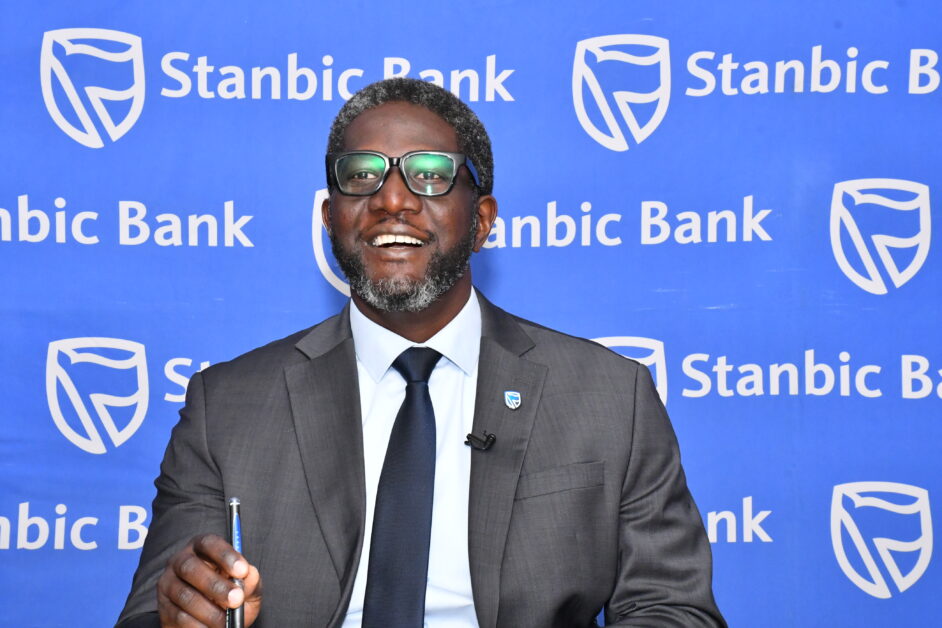
Under his leadership, Stanbic’s refreshed PPB strategy for 2025–2028 is built on four pillars: technical know-how, deep client understanding, strategic innovation, and a people-first delivery model. The goal is to deliver relevant, practical, and impactful financial solutions that meet Ugandans where they are — and take them where they want to go.
As Uganda’s most awarded and respected bank, and part of the Standard Bank Group — Africa’s largest banking group with a 160+ year heritage and global reach — Stanbic is uniquely positioned to lead this conversation.
Mwogeza’s renewed retail proposition — to be the best retail and private bank — sits firmly within the bank’s overarching brand promise:
“Uganda is our home; we drive her growth.”
For Israel Arinaitwe, Head of Personal Banking, everything begins with people.
“If you think about a bank, first and foremost it’s about human beings,” he says. “Uganda is our home, we drive her growth — and that means enabling the growth of Ugandans themselves.”
His portfolio serves individuals across the income spectrum — from salaried workers and small business owners to farmers, innovators, and youth.
The philosophy is to support the entire financial life cycle: making, saving, growing, and investing money. And increasingly, that journey is powered by technology.
“The best way to save money is to do stuff digitally. You don’t need to move with cash. You don’t need to come to the branch. The biggest value we’re giving our customers is convenience in their hands,” Arinaitwe explains.
Stanbic’s “Phygital” model — blending human interaction in branches with robust mobile and online platforms — ensures clients can move seamlessly between personal engagement and digital convenience.
Products like FlexiPay, which allows customers to receive money, pay, and borrow using just a phone and national ID, are extending Stanbic’s reach into communities where building a branch would be costly.
But Arinaitwe insists that technology alone isn’t enough.
“Financial literacy is almost overlooked, especially among the elite. We think we know, but we don’t,” he warns.
That’s why every product is designed with education built in — from teaching customers how to save as little as UGX 1,000, to showing them that even UGX 100,000 can buy a treasury bill.
The aim is to make banking not just accessible, but empowering, so that clients can turn everyday transactions into stepping stones toward long-term prosperity.
Wealth & Investments: Opening the Doors Beyond the Elite
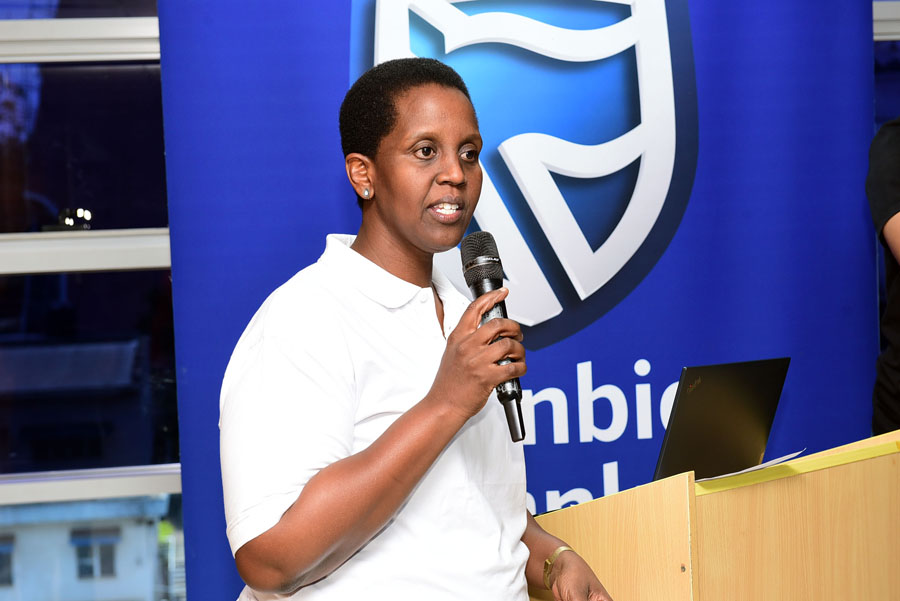
For Bernice Mvano, Head of Wealth and Investments at Stanbic Bank Uganda, the mission is clear — to change the perception that wealth creation is reserved for a privileged few.
“Wealth is not only for the wealthy. You can start a journey to getting wealthy, but you’re the one who defines what wealth is”.
Her team works with high-net-worth individuals, business owners, and affluent professionals — but the principles of wealth planning apply to every client segment. The difference lies in how those principles are tailored.
“We sit with clients and have a holistic conversation about where they are, where they want to go, and how we can help them get there,” she explains.
This means planning for education, retirement, estate transitions, and property investments — often with solutions that cut across Stanbic Holdings’ ecosystem, from SBG Securities to Stanbic Properties.
SBG Securities is Stanbic’s licensed investment arm, providing access to a wide range of investment products such as unit trusts, treasury bills, and bonds — enabling clients to start investing with as little as UGX 100,000.
Stanbic Properties, on the other hand, offers expert real estate services including property search, valuation, sales, and advisory — giving clients both investment opportunities and the assurance of professional due diligence.
Mvano is driving a shift from transactional sales to relationship-based advisory, ensuring every recommendation fits a client’s unique life stage and aspirations.
“It’s no longer just about selling you a loan or an insurance product. It’s about understanding your children, business or future plans and structuring financial solutions around them”.
Yet, she admits, financial literacy remains a major barrier. Many people don’t know that these solutions exist or believe they are unaffordable. That’s why her team runs financial fitness sessions in organisations and holds one-on-one advisory engagements — meeting clients where they are, both physically and financially.
Her long-term goal is ambitious but unwavering: to make Stanbic the trusted financial planner for every Ugandan household.
Private Banking: Sophistication Meets Opportunity
For Uganda’s most accomplished professionals and entrepreneurs, Stanbic’s Private Banking offers a finely tuned blend of exclusivity, expertise, and access to opportunities.
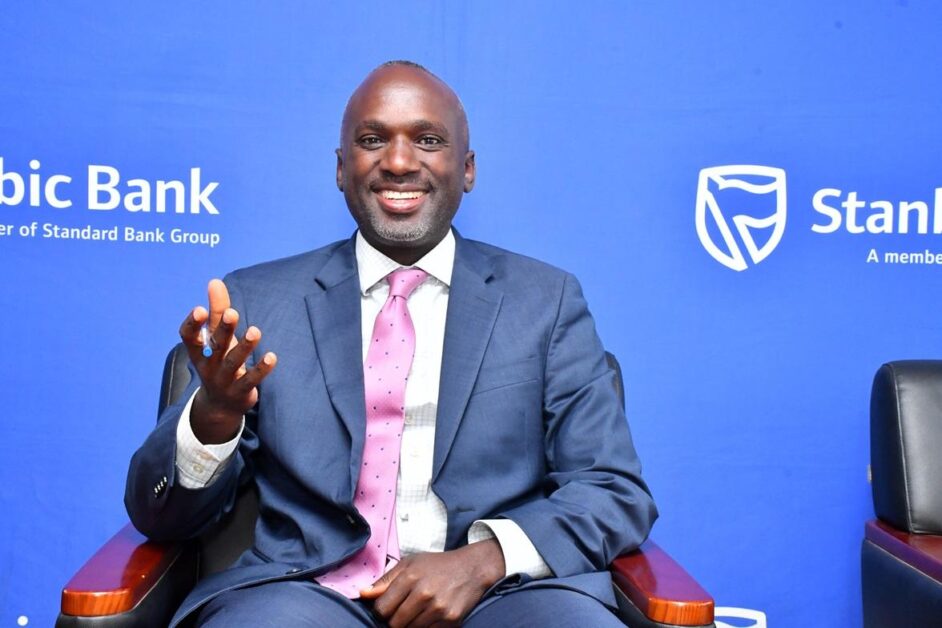
Arthur Kiwanuka, Head of Private Banking, leads this segment, which caters to clients ranging from mid-career executives to ultra-high-net-worth individuals.
“Some clients don’t know they can buy property in the UK with a salary earned here, or that they can invest in bonds and borrow against them. We educate them and make it happen,” Kiwanuka says.
Private Banking is structured into three tiers — Executive Banking, Private Banking, and Affluent Express. Executive Banking serves upwardly mobile professionals with monthly incomes starting at UGX 4 million, providing personalised attention and preferential services.
Private Banking caters to seasoned executives and thriving entrepreneurs earning UGX 8 million and above, offering more complex solutions, from structured lending to international investments.
Affluent Express, a digital-first service born during COVID-19, is designed for clients who want the benefits of premium banking with the convenience of fully virtual engagement.
Through Stanbic’s partnerships, Private Banking clients can access offshore investment vehicles via SBG Securities, as well as bespoke insurance solutions through Liberty.
The bank’s lending capacity extends to facilities of up to USD 10 million, while high-limit transfers — up to UGX 200 million — and cross-currency capabilities make it easier for clients to manage both local and international portfolios.
But Kiwanuka emphasises that Stanbic’s value proposition is not limited to financial products.
“We do more than bank your money, we connect you to opportunity,” he explains.
This includes invitations to exclusive forums on investment trends, macroeconomic shifts, and emerging sectors such as energy, plus a dedicated diaspora proposition that enables Ugandans abroad to invest seamlessly back home.
It’s a model designed to anticipate needs, match ambitions, and deliver solutions as seamlessly as the world around clients moves.

Why Stanbic’s Approach Matters
Stanbic Bank’s Personal & Private Banking transformation is built on three interconnected principles — inclusion, personalisation, and partnership — ensuring that wealth creation is not an abstract idea, but a lived reality for its clients.
By combining robust digital platforms with human expertise, the bank is able to serve a boda rider in Kotido with the same care and ambition as an executive in Kampala’s corporate towers.
From FlexPay’s mobile convenience to complex offshore investment structures, the bank meets clients at their starting point and guides them to their goals.
The Standard Bank Group’s regional and global footprint means clients can link local earnings to international opportunities — from property markets in the UK to unit trusts and bonds across Africa — while maintaining a strong home base in Uganda.
Crucially, Stanbic is embedding financial literacy into every interaction.
Whether it’s Israel Arinaitwe showing a young professional how UGX 100,000 can buy a treasury bill, Bernice Mvano demonstrating how to structure a child’s education fund, or Arthur Kiwanuka unlocking cross-border property investments, the aim is the same: to equip clients with the knowledge and confidence to make informed financial decisions.
This is what sets Stanbic apart — not just delivering financial products, but building the capability and confidence for Ugandans to create, grow, and sustain wealth for generations.
From Retail to National Prosperity
Stanbic Bank’s refreshed PPB strategy for 2025–2028 is built to make the division the country’s benchmark for client-centred financial growth.
The vision is to walk with clients through every stage of life — from their first salary, to building businesses, to securing retirement income, and finally, to passing on well-structured legacies.
This is more than a banking agenda; it is an economic multiplier. As more Ugandans gain the tools, knowledge, and access to grow their wealth, the benefits ripple outward — strengthening families, boosting entrepreneurship, and driving national economic resilience.
As Bernice Mvano puts it: “Our goal is to leave clients and their families better than we found them. Better informed, better prepared, and better positioned to build legacies that last”.
In this new era, a bank’s true measure of success will not be in the size of its balance sheet alone, but in the strength of the futures it helps create.
For Stanbic Bank Uganda, that means taking the promise of “Uganda is our home; we drive her growth” from a brand statement to a lived experience — one client, one family, and one generation at a time.