
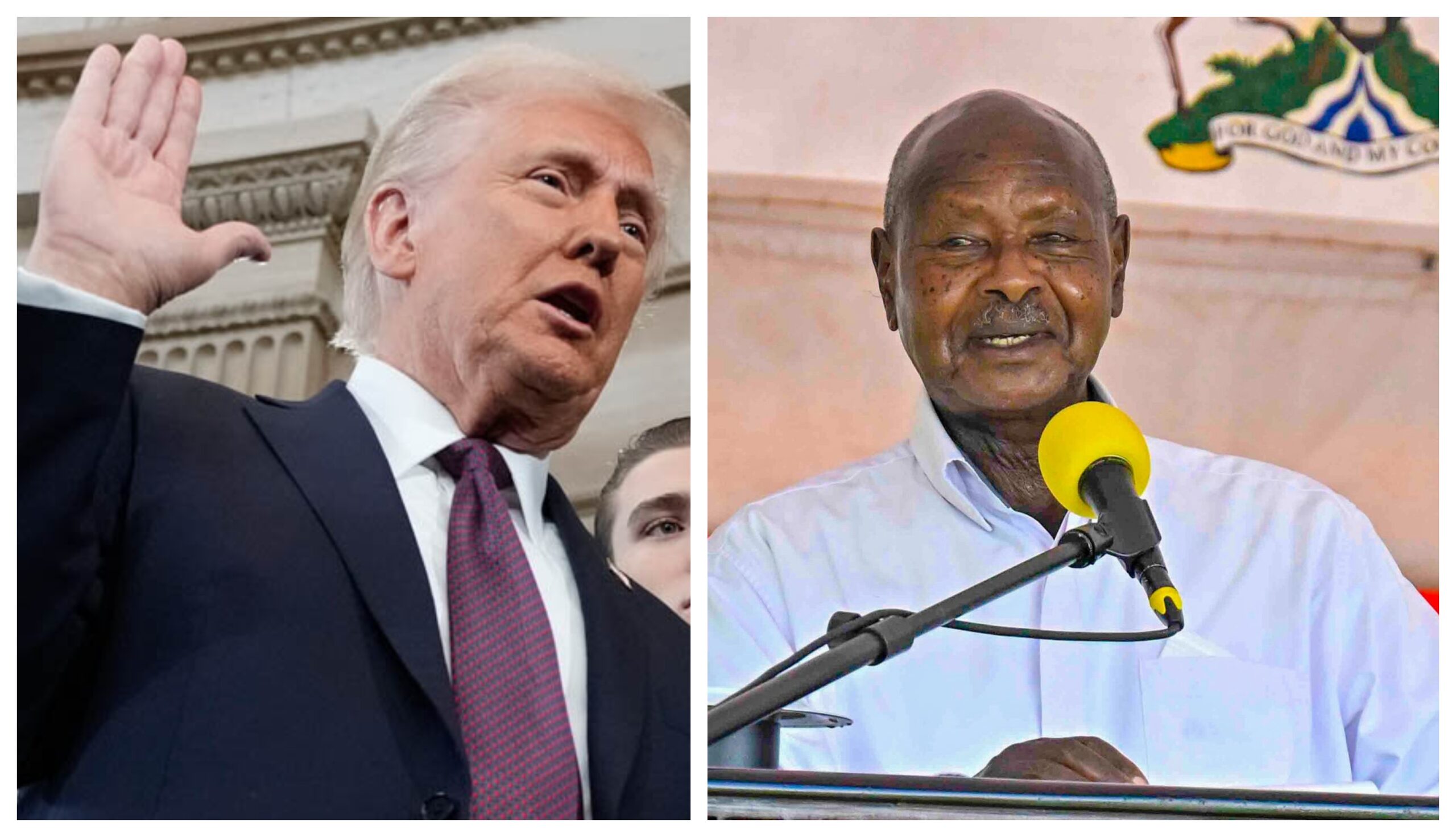
Uganda has agreed to host certain migrants deported from the United States of America who are not Ugandan citizens, according to internal U.S. government documents obtained by CBS News, a U.S.-based media outlet.
The arrangement, framed under a U.S. “safe third country” provision, would apply to deportees from elsewhere in Africa who have no criminal histories. T
he documents do not indicate how many people Uganda could ultimately receive.
The reported deal is part of a broader U.S. diplomatic push to secure deportation arrangements with countries across several regions, especially for migrants who cannot easily be returned to their home states due to diplomatic or other constraints.
The Trump administration argues such agreements are essential to its mass-deportation agenda.
A senior U.S. State Department official, responding generally, said Washington was supporting the President’s policy of removing people who lack a legal basis to remain in the U.S., but declined to discuss “private diplomatic negotiations.”
The U.S. Department of Homeland Security did not comment on the CBS report.
Earlier this summer, the U.S. Supreme Court cleared the administration to deport migrants to third countries with minimal notice and due process, paving the way for more rapid expansion of these transfers, the documents indicate.
Part of a Wider U.S. Push
Uganda is among several countries the U.S. has approached or secured understandings with, according to the internal papers.
Honduras has agreed to accept a limited number of deportees for over two years from other Spanish-speaking Latin American countries, including some families with children, with the option to take more later.
The documents also reference recent arrangements or transfers involving Costa Rica, Panama, El Salvador, South Sudan, and Eswatini, and note that Guatemala, Kosovo and Rwanda have announced readiness to receive third-country deportees.
 Allan Chekwech Steps into Daniel Kalinaki's Big Shoes at NMG Uganda
The State Department said last week it had signed a “safe third country” asylum deal with Paraguay. Mexico, under a pre-existing arrangement, already takes back some Latin American migrants who crossed the U.S. border.
Rights concerns and Uganda’s Record
Human rights organisations have criticised the U.S. campaign, warning that people could be sent to places where they face harm or onward removal.
A recent U.S. State Department report cited “negative developments” in Uganda’s human rights situation, pointing to unlawful killings, arbitrary arrests and disappearances, alongside limited accountability.
The same report acknowledged Uganda’s longstanding cooperation with the U.N. to provide refuge to large numbers of displaced people.
Doris Meissner, a former head of the U.S. Immigration and Naturalization Service and now a senior fellow at the Migration Policy Institute, said third-country deportations were historically used only in exceptional cases.
She suggested the current U.S. approach may be leveraging tools such as visa restrictions and funding to persuade governments to sign on.
While the actual numbers remain relatively small, Meissner argued the broader aim is deterrence—signalling that those without legal status could be sent to distant countries where they have no ties.
What to Watch in Uganda
Kampala has not publicly detailed the terms or implementation plans. However, key questions include how Uganda will assess arrivals, safeguards against refoulement, and coordination with UNHCR.
Uganda already hosts one of the world’s largest refugee populations; any new inflows will test reception systems and local services.
