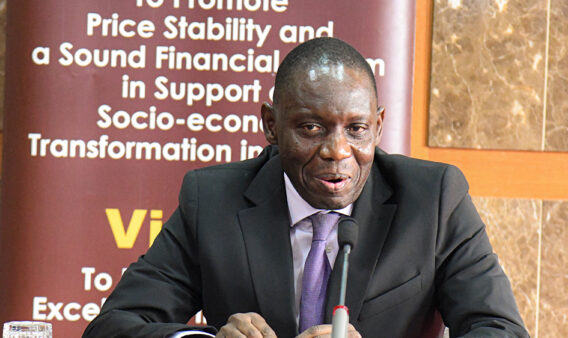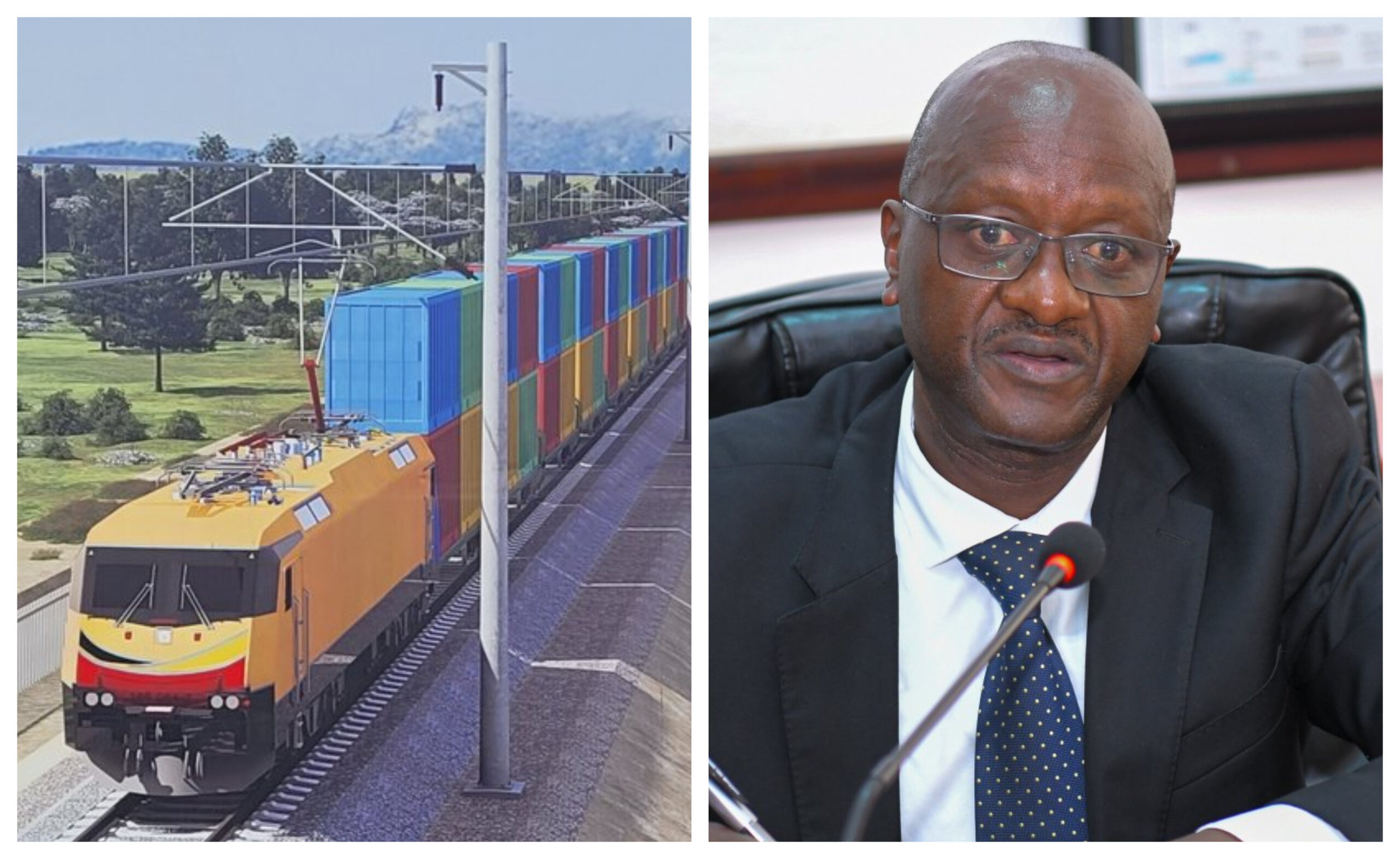
Mr. Benon Kajuna, the Uganda Railways’ new boss is no stranger to the inner workings of government having spent the last decade as Director of Transport at the Ministry of Works and Transport, a position he relinquished this month after handing over instruments of service to Bageya Waiswa, the Permanent Secretary.
The transport economist with over 30 years of experience joins the Uganda Railways Corporation (URC) at a time when some Ugandans are both disappointed and anticipating better services on the country’s rail network.
However, before we delve into the crisis at Uganda Railways, let’s analyse Mr Kajuna’s credentials. His bio describes him as a man with a deeper understanding of transport planning and management operations at the national, regional, and international levels, institutional turnaround, and sustainable development. He also once served as a board member for Uganda Airlines.
His considerable expertise also extends to strategic planning, project management, railway development, operations, and management, cementing his status as a leader in transport management and innovation.
He holds a Master of Business Administration (MBA) from the Eastern and Southern African Management Institute (ESAMI) and a Master of Economic Policy Management from Makerere University. He’s also a Fellow at the Chartered Institute of Logistics and Transport.
The crisis
Mr Kajuna has a huge task ahead, considering that the Uganda Railways has continued to register significant gaps in executing its mandate including incomplete railway restoration, limited passenger service expansion, and inadequate asset protection, according to the latest Auditor General’s report authored by Mr Edward Akol.
For instance, Mr Akol notes in his report that only 269 (21%) of Uganda’s 1,266 km railway network is operational, leading to over-reliance on road transport, increased transport costs, road deterioration, traffic congestion, and safety concerns. The rail network has also been affected by theft, vandalism, and public encroachment on railway land reserves, further hindering operations and requiring costly repairs and compensation.
Additionally, limited investment in the railway network due to high initial costs has left over 90% of the traffic along the northern corridor (Malaba – Kampala railway line) carried by road, with a mere 7% being moved by rail because of poor infrastructure.
Mr Kajuna will also have to devise ways of increasing passenger numbers or even making rail more attractive to Uganda after the Auditor discovered a mismatch between the target number of passengers and what was achieved in the last three Financial Years.
The Auditor notes that whereas the Uganda Railways had set to achieve a target of 3.7 million commuter passengers in a three-year period, only 837,528 passengers were transported in the period under review, resulting in a significant performance gap of 2,340,646 representing a 73.6% shortfall from the target.
“I noted that whereas Uganda Railways had established a process of recording and reporting the actual revenue attributable to passenger services, there was no corresponding process or system in place to track complete actual unit costs related to the management of these services,” Mr Akol reports.
The Auditor also discovered a disparity in actual passenger revenue and estimated passenger costs, revealing that the passenger revenue generated could not cover the estimated operational costs, resulting in revenue losses of approximately UGX1.128 billion in the period audited.
Uganda Railways also has limited capacity to fulfil the entire demand for import and export freight services. Only 255,527 Metric Tonnes (MT) were delivered out of the 411.837 MT of orders, equating to 62% of the confirmed import and export cargo orders.
The Uganda Railways must also deal with the wagons, half of which are reported to be in poor state. The Auditor noted that out of 1,420 wagons, during the wagon census conducted in April 2023, only 646 were fit (in good condition), while 774 were not in good condition, of which 198 were scrap. Out of 51 locomotives owned, only 11 were active. Only 2 ferries/motor vessels out of 5 were in use.
A review of train schedules from January 2022 to June 2023 revealed that only 735 trains (67%) of the 1,100 recorded trips departed on time, 58 trains (5%) departed early, 200 trains (18%) were delayed, and 107 trains (10%) were not deployed as planned. The train delays were mainly due to limited crew, unavailability of fuel, and locomotive failures, among other factors.
The Auditor also couldn’t obtain a complete database of customer complaints as complaints were resolved one-on-one between the client and their relationship manager. However, out of the 8 customer complaints sampled, 5 were related to delayed cargo delivery.
The Uganda Railways also uses a trans logic system based in Kenya to monitor cargo and train movements. This system was inherited after the Rift Valley Railways (RVR) concession, and control officers manually updated train arrival times on manual control charts after phone communications with locomotive drivers.
Additionally, over 404 staffing gaps were identified, of which 297 (73.5%) were in the technical departments of Mechanical and Civil Engineering and Operations, which resulted in inadequate skill sets to run critical components of railway services.
 Stanbic Flags Off 2026 Schools Championship to Drive Innovation and Job Creation
The SGR dream
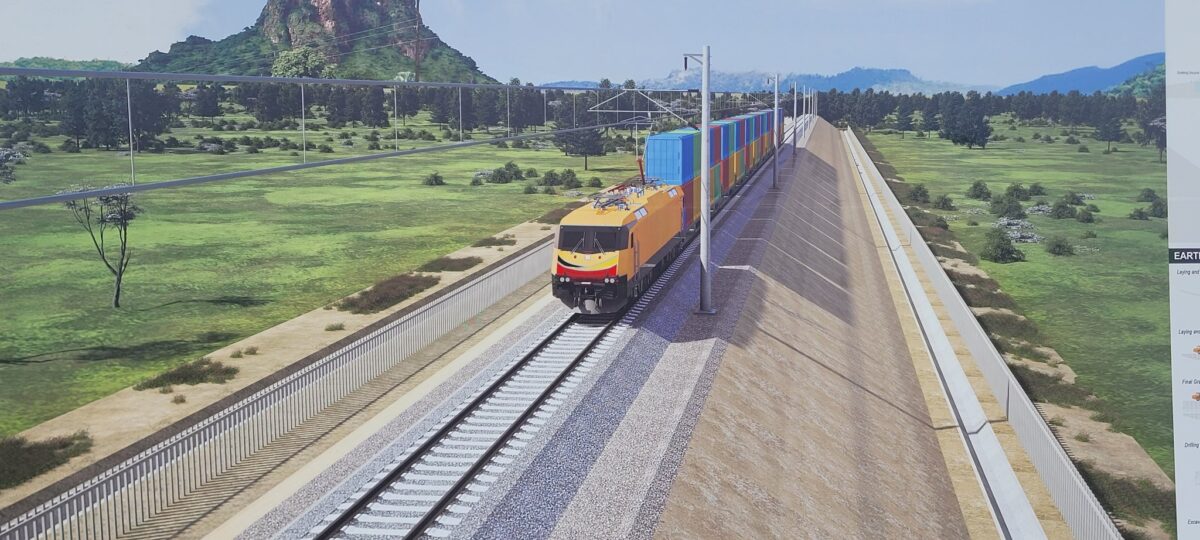
What could be even more urgent for Kajuna to deliver is Uganda’s Standard Gauge Railway (SGR) project, which has been waiting for close to 12 years.
Uganda is still lagging behind, unlike her neighbours, Kenya and Tanzania, which have made considerable success in SGR projects.
In June 2013, the first Infrastructure Summit held in Uganda by the Presidents of Kenya, Rwanda, and Uganda put in place mechanisms for fast-tracking the development of the SGR system linking Rwanda and Uganda to the port of Mombasa to enable faster socio-economic transformation of the East and Central African economies.
These led to the signing of the Tripartite Agreement for the development and operation of a Standard Gauge Railway between Mombasa, Kampala, and Kigali with branch lines to Kisumu (Kenya) and Pakwach/Gul-Nimule (Uganda) between the Republics of Kenya, Rwanda, and Uganda in August 2013. The Republic of South Sudan acceded to the agreement in May 2014, extending the line to Juba.
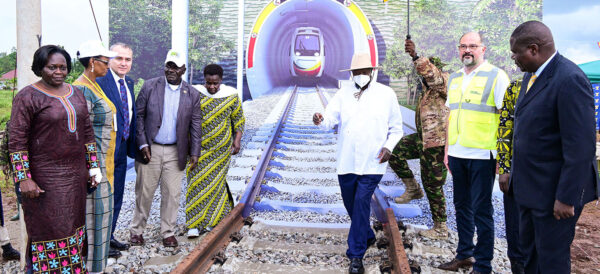
13 years later, some progress has been made. On November 21, 2024, President Museveni officially launched the construction of the Malaba—Kampala SGR line in Uganda.
The UGX 10.8 trillion SGR project was contracted to Turkish firm, Yapi Merkezi and is jointly funded by the Government of Uganda and the African Development Bank.
Museveni has big hopes that infrastructure will lower the cost of doing business, thereby attracting quality investments.
“(When we build the SGR), cargo will remain on the railway and on the water. For petroleum we will make pipelines. Now that the economy is growing, it is high time to remove these irrationalities,” the president explained.
According to Museveni’s financial projection, he explained that a 20-foot container from Mombasa to Kampala costs about USD 3,200 (UGX 11.8 million), but this cost will likely lower to about USD 1,600- almost 50% cheaper.
The planned SGR network in Uganda is approximately 1,700 km and is being developed in a phased manner, starting with the Malaba—Kampala (272 km) route.
Other SGR lines include the Northern Line from Tororo-Gulu-Nimule (at the South Sudan border) (465 km) with a spur from Gulu-Pakwach to Vurra (at the DR Congo border—297 km); the Western Line from Kampala—Bihanga-Kasese—Mpondwe (DR Congo border) with a spur to Hima Cement (383 m); and the Southern Line from Bihanga—Mirama hills (Rwanda border) with a spur to Muko in Rwanda (280 km).
Making progress

However, all is not lost. In 2024, Uganda Railways launched works on the Kampala—Mukono section (26.8km) of the Meter Gauge line, which commenced in April this year. The Uganda Railways noted how a new technology of concrete sleepers was deployed along the Kampala—Mukono stretch.
Uganda Railways also contracted China Road and Bridge Corporation to undertake the rehabilitation works for the Tororo—Gulu section for a two-year period. The 375 km railway line traverses through Mbale, Kumi, Soroti, and Lira before terminating at the Gulu Logistics Hub. The Hub is designed to facilitate transportation, collection, separation, consolidation, and distribution of goods for national and international transit on a commercial basis.
Building on this progress, Mr Kajuna in his inaugural speech laid out 10 areas of critical focus, including but not limited to; mobilizing financial resources for the corporation from the government and the private sector, repairing 9 locomotives and wagons as well as securing spare parts for the rolling stock.
Mr Kajuna has also promised to maintain the line to improve speed and efficiency and put in place mechanisms to ensure better fuel management; strengthen external partnerships, especially with Kenya Railway Corporation and Tanzania Railway Corporation; operationalisation of the Gulu Logistics Hub; strengthening leadership and build staff capacity; improving customer experience; and formulating a 5-year strategic plan capable to moving the Corporation forward.