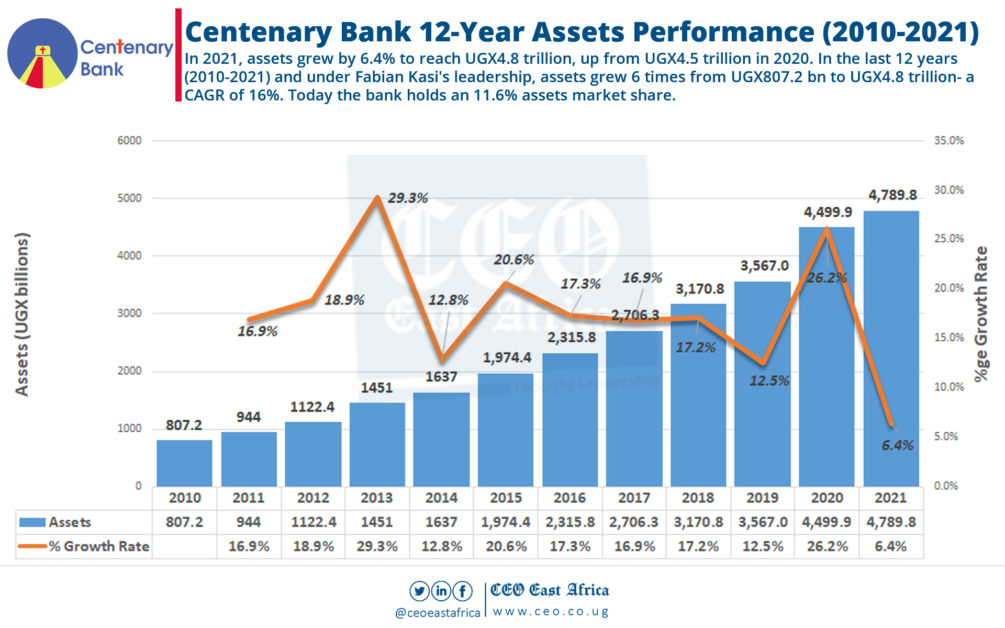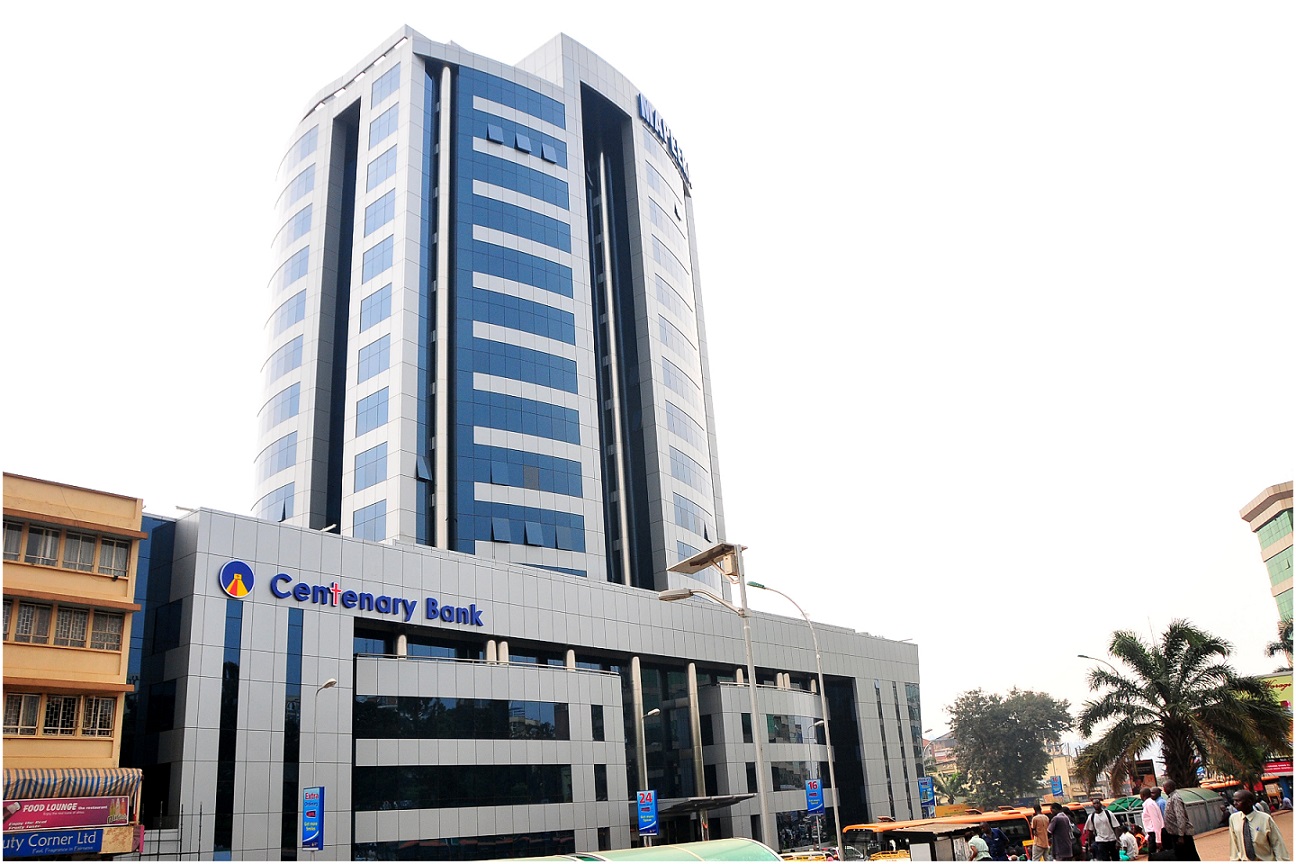
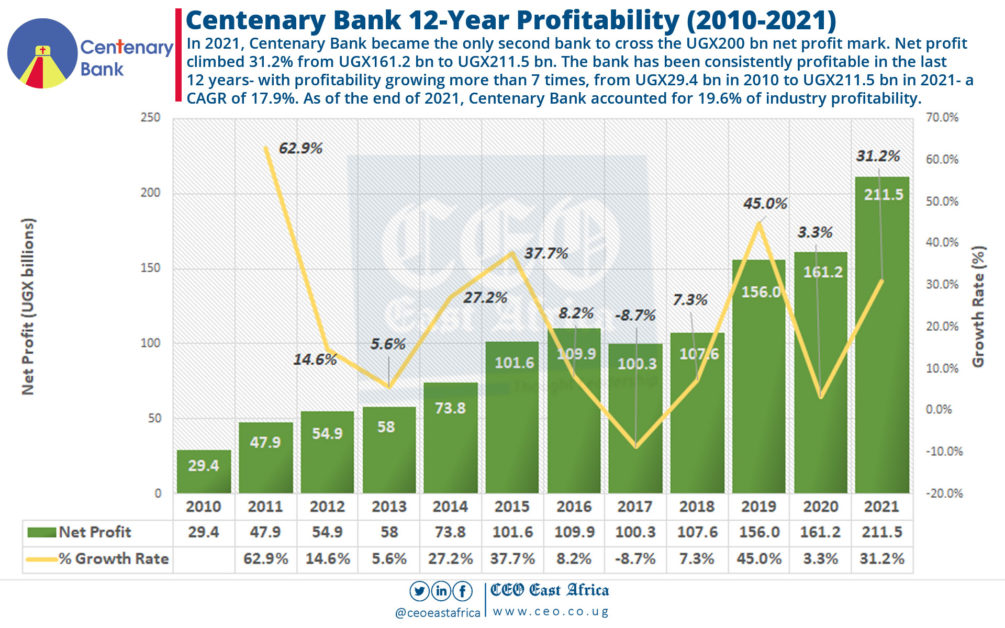
In its typical, do-more-but-shout-less approach, under Fabian Kasi’s leadership, by 2014, Centenary Bank had overtaken Barclays and Crane Bank to become the third-largest bank in the country, behind Standard Chartered Bank and Stanbic. In 2017 upon acquiring Crane Bank, dfcu Bank briefly became the 2nd biggest, displacing Standard Chartered Bank into the third position, but by 2018 Centenary Bank had overtaken both dfcu and Standard Chartered to settle in the second position with UGX2.282 trillion in deposits, UGX1.529 trillion in lending and UGX3.170 trillion in assets. Net profit- reached UGX107.6 billion, having crossed the UGX100 million mark for the first time in 2015 when profit reached UGX101.6 billion!
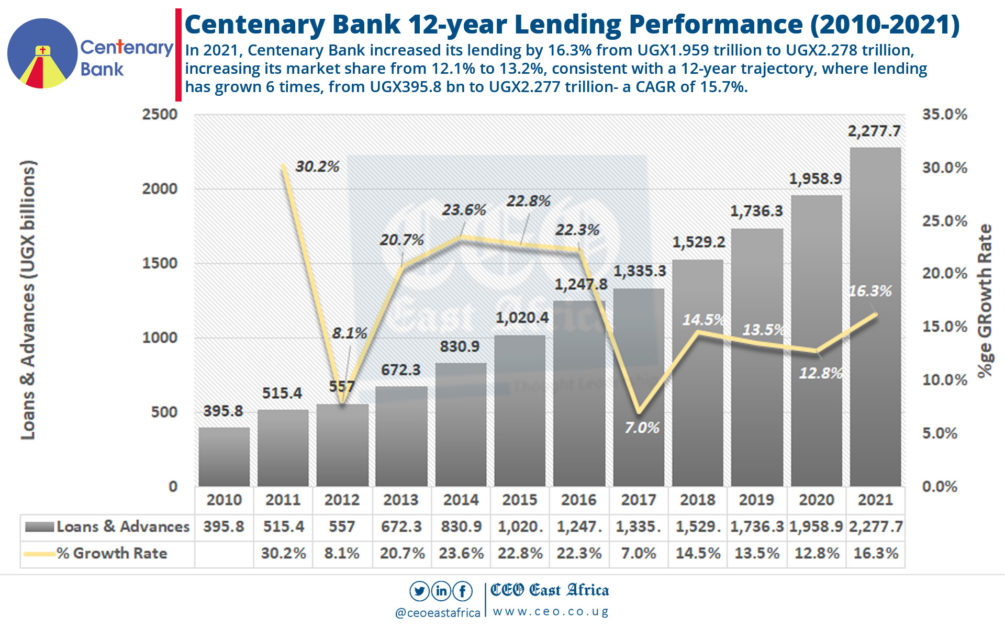
As of the end of 2021, Fabian Kasi had ramped up that growth, with Deposits reaching UGX3.181 trillion, lending reaching UGX2.277 trillion, total income reaching 864 billion and net profit crossing the UGX200 billion mark to reach a record UGX211.5 billion.
As a result, the balance sheet size grew, to touch a record high of UGX4.8 trillion driven by a UGX3.181 trillion deposits base and a UGX2.277 trillion loan book. Total income also touched a record UGX864 billion, and net profit crossed the UGX200 billion mark for the first time, reaching UGX211.5 billion. Thanks to this performance, the bank is today the second largest, by deposits, lending, income, and assets and as such, is the second most profitable. Here below, are the 5 infographics that tell this unstoppable rise of Centenary Bank in the last 12 years, under the leadership of Fabian Kasi!
#1: Customer Deposits
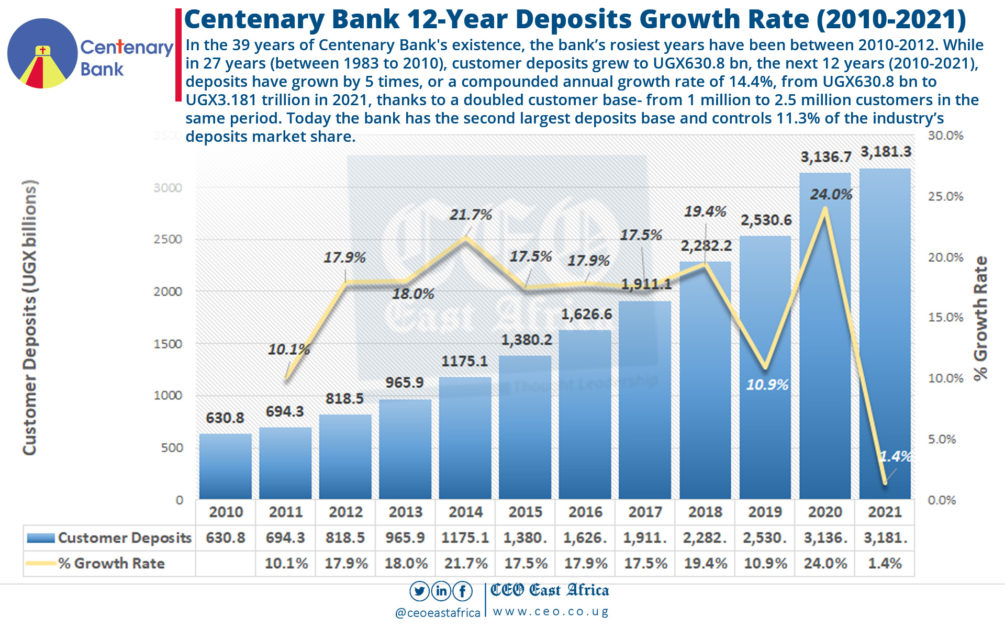 In the 39 years of Centenary Bank’s existence, the bank has witnessed its biggest growth in the last 12 years. Between 1983 to 1993 when it got a bank license and then to 2010, customer deposits grew to UGX630.8 billion. But between then and 2021, deposits, the lifeblood of the business have since grown by 5 times, or 404%, from the UGX630.8 billion that Fabian Kasi inherited, to UGX3.181 trillion, thanks to a doubled customer base- from 1 million to 2.5 million customers in the same period. On average the bank has grown by 14.4% annually and today controls 11.3% of all industry deposits.
#2: Customer Lending
#3: Total Income

#4: Net Profitability
#5: Assets