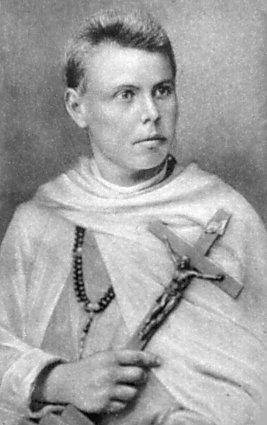
At ten minutes past 1:00pm on the 12th of May 1890, Reverend Father Siméon Lourdel breathed his last, aged just 37 years. Fr. Lourdel and Amans Delmas, an auxiliary brother who arrived in Uganda on February 17th, 1789 marked the birth of Catholic Christianity in Uganda.
So in 1979, as the Catholic Church in Uganda was preparing to celebrate 100 years of Catholicism in Uganda, Catholic leaders at the time wanted a lasting project that would mark the 100 years of evangelization.
In an interview with His Eminence Cardinal Emmanuel Wamala, in 2012, he said that many ideas came around, for example, the late Cardinal Emmanuel Nsubuga decided to open a home for disabled people in Nalukolongo, in commemoration of the missionaries. The laypeople under their organisation, their organization, the Uganda National Catholic Lay Association (UNCLA). on the other hand, wanted to do something to benefit more Catholics but at the same time commemorate the coming of the church and that is how the idea of forming a financial institution started and its name would be Centenary to connote the 100 years of Catholicism. “They came up with the idea of a financial institution and named it Centenary to help uplift the poor people of our country. That is the background of the name of Centenary Bank,” revealed Cardinal Wamala.
But it was not until 1983 that the idea came to fruition, but even then, it did not start as the bank that we know today. It started as the Centenary Rural Development Trust- a microfinance under the Uganda National Apostolate. It was founded by a team of six professionals including; Advocate Simeon Lutaakome as its first board chairman, Mr Hugh Francis Pulle, Mr John Ogutu, Mr Emmanuel Mpande, Mr Paul Kateregga and Mr Vincent Kirabo Kyamaria.
In 1985, the founders sought and obtained a government license to operate a credit trust named Centenary Rural Development Trust with shareholder capital of less than UGX200 million. Its first branch was on Nkrumah Road, near the Uganda Railway offices. The first product was a savings account that was aimed at cultivating a savings culture among Ugandans for a better future. As the institution attracted customers, the need for bigger premises arose. Management then moved the head office to Talenta House, which remained the headquarters of the institution until 2012.
In 1993, Centenary Rural Development Trust was licensed and registered as a full commercial bank and became Centenary Rural Development Bank (CERUDEB) joining the big league of bankers in Uganda. With this growth, the institution moved outwards setting up branches like Kabale outside Kampala to take financial services closer to the rural people. For a long time, people living in rural Uganda had never known or experienced formal banking financial services. Centenary Bank took on the mantle of ensuring that all Ugandans have not only access to quality but also affordable financial services within their reach.
The legacy of Dirk Van Hook
In 1993, Centenary Bank using the support of the German Savings Banks Foundation and other donors and with technical assistance from IPC – a German Consultant, the finance institution evolved into a bank. BY 1998, IPC was out of the way after the impressive performance of Centenary Bank during that period. With IPC, Centenary Bank was able to transform from just being a Trust to lending to micro-enterprises, small businesses, and agriculture in a more effective way. Importantly, Centenary Bank was performing better than well-established Uganda government-backed banks, like the Uganda Cooperative Bank of the time.
Centenary had also developed credibility with donors, which allowed it to mobilize funds that enabled it to reach out to rural Uganda and become the banker of the farmer and the incredibly small business. It, therefore, came as no surprise in 1999 when BoU closed the Uganda Cooperative Bank, that Centenary Bank took-over 15 of the closed bank’s branches along with some customers as well. Centenary Bank was able to collect interest payments and extend loans to these same customers without going through the same issues as Uganda Cooperative Bank. The reforms that built the foundation Centenary Bank commercial banking were led by the then CEO, Dirk Van Hook. He led the bank until 2001 when he died after falling off the second floor of the bank offices at the time. By then, Centenary Bank had assets of UGX87 billion and had managed to attract some credible shareholders such as the Hivos-Triodos Fund and SIDI- International Solidarity for Development and Investment from France, who are still shareholders up to today.
Assets grow, Mapeera House rises
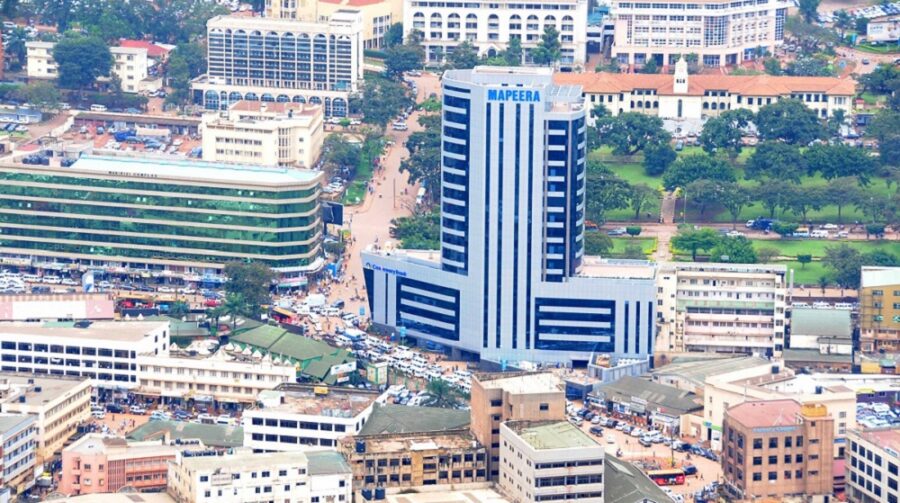
The period between 2001 and 2009 was also characterized by further asset building as the bank continued to shore up more reserves that enabled the bank to start work on the construction of its headquarters, Mapeera House along Kampala Road. Between 2001 and 2009, assets rose by an annual average of 59% to UGX583 billion by the end of 2019. It is in between that period that the bank introduced its first ATM in 2003.

By this time, Centenary had proved a point that locals too could own a flourishing bank. At the time, the Uganda Catholic Secretariat and a combination of Catholic Dioceses in Uganda, owned 61 per cent of the bank. The Development Finance Company of Uganda (now dfcu) also owned 19% shares in Centenary Bank. The Dfcu shares were eventually sold to the indigenous shareholders – increasing their stake to 70.1%, Stitching Hivos-Triodos Fonds 18.3%, and SIDI (a French investment bank) 11.6%.
Related
 MTN vs Airtel: Balance Sheet Strength Meets Earnings Momentum in the Race to Win the Telecom Market
Overseeing the Centenary Bank’s growth between 2005 and 2009 was with John Giles, an American banker. Even when in 2007 as the BoU lifted the moratorium on licensing new commercial banks, Centenary Bank had become unstoppable, but never at any one time lost sight of its focus towards lending to micro borrowers and a banker for rural Uganda.
Consolidation and Fabian Kasi’s arrival
In August 2010, the Centenary Bank board approved the appointment of Fabian Kasi as the Managing Director and CEO. He oversaw the eventual completion and commissioning of the $30 million Mapeera House, the Centenary Bank headquarters in 2012.
The name Mapeera House was suggested by the Late Cardinal Emmanuel Nsubuga in remembrance of Rev. Simeon Lourdel who was known to the locals as Mapeera. According to Mapeera’s biography book “Obulamu Bwa Mapeera”, the name was given to him by the Baganda who could not pronounce ‘Mon Pere’ (French for “My Father), as he was referred to by his colleague Brother Amans.
Kasi’s background in microfinance made him the right choice for Centenary Bank- he brought in the best of two worlds. Before his appointment, he had been Managing Director FINCA, a microfinance institution for at least 8 years. Kasi ushered Centenary Bank into further expansion of its branch network, additional adoption of technology, and growing the balance sheet of the bank.
Quietly, Centenary Bank continued to compete against the big multinational banks like Stanbic Bank, Standard Chartered Bank, and Barclays with ease. These multinational banks have the strong backing of their shareholders with deep pockets that can afford to provide the money and expertise to grow their bank balance sheet and profitability.
Centenary didn’t have the deep pockets and multinational shareholders with huge cash reserves but continued to tap into affordable long-term funds from entities like the World Bank and European Investment Bank that enabled it to continue to lend to the private sector. It also successfully runs the Government of Uganda backed Agricultural Credit Facility (ACF) that provides low-interest loans to the agricultural sector. The bank continues to tap Ugandan talented executives to head the various sections within the bank without having to bring expertise from outside Uganda. This combination of factors has seen the bank rise to become the number 2 bank in Uganda, a position it can consolidate and also continue to chase Stanbic Bank.
Improved numbers and the future
In 2010, when Fabian Kasi became the Managing Director, the bank’s assets were UGX807 billion and by end of 2019, that figure had grown to UGX3.6trillion – 34.5% annual growth rate – in 2019. Deposits have since grown from UGX630.8 billion in 2010 to UGX2.53 trillion at the end of 2020 – 33.4% annual average growth. Lending to customers was UGX395.8 billion in 2010 and has grown at an annual average of 37.4% to reach UGX1.73 trillion at the end of 2019. After tax profit since 2010 has grown at an annual rate of 47.6% to reach a record high of UGX156 billion in 2019.
The fundamentals for Centenary Bank are looking good and now it is about the future. Already, Centenary Bank is into agency banking and has adopted electronic and mobile banking. It has also become a banker of banks that don’t have a large branch network. These banks include NC Bank and Standard Chartered Bank. With its rural focus and retail banking focus, Centenary knows well that it has to continue adopting technology to enable efficiency and not to lose its core customer.