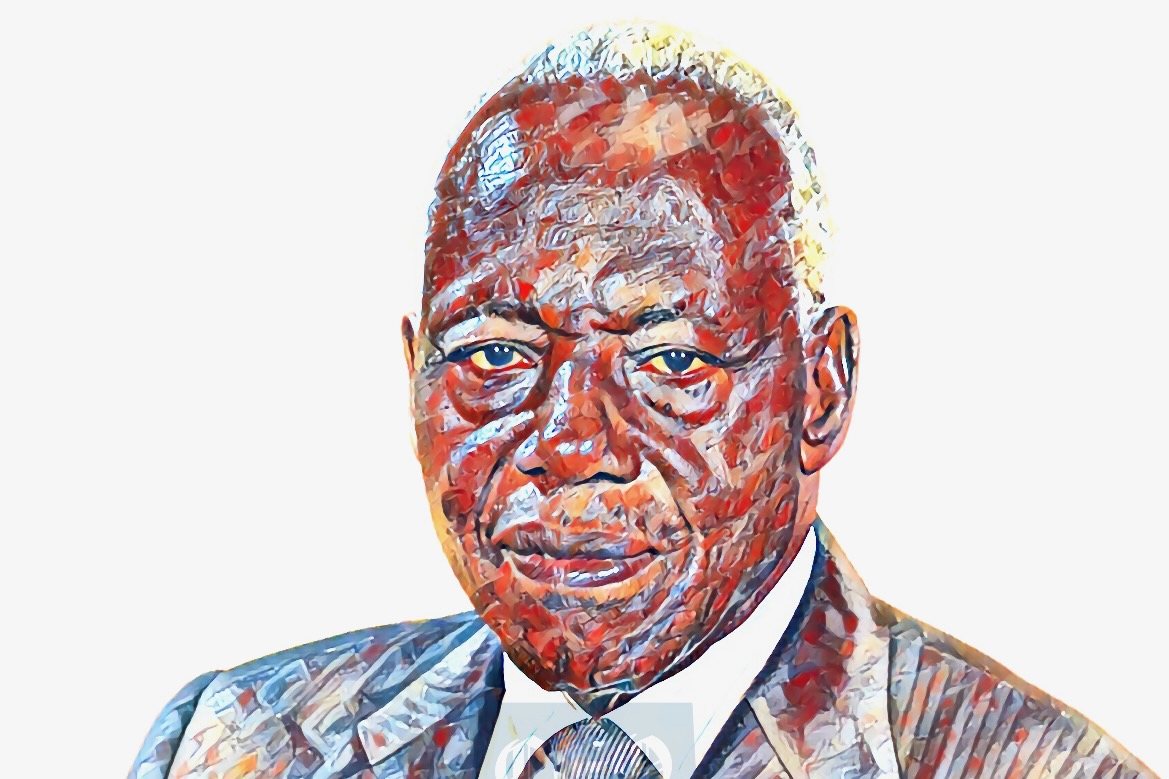
Unlike many of his contemporaries who have since passed on, and their business empires quickly followed them to the grave, Mulwana Group has not only survived but has grown and is thriving.
His family is not fighting. There are no court battles over properties and inheritance, but rather, his children, Geoffrey Mulwana, Barbara Mulwana and Primrose Mulwana, have united behind their mother, who has since become the Group Chairman, to run the family business.
Geoffrey is the Chief Executive Director of Jesa Farm Dairy. He also runs Uganda Batteries Limited. Barbara is the Executive Director of Nice House of Plastics- since 1991. Primrose is a Sales Director at Jesa. All three siblings sit on the boards of the three companies.
And they are doing a fine job.
Take Uganda Batteries Limited (UBL) for example.
UBL was founded in 1967 as a partnership between 31-year-old James, and Chloride (UK) Limited. In 1990, Mulwana Group gained full ownership of the company. By the time of his death in 2013, the company was the leading manufacturer of automotive batteries and related consumables.
Upon his death, Geoffrey took over the leadership of the business. By 2014 UBL had added the manufacture of solar batteries to their portfolio, becoming the first local manufacturer of solar batteries. In 2016, the company introduced and started selling maintenance-free batteries. In 2020, the business further expanded, with the addition of a recycling plant.

Today, at 56 years old, Uganda Batteries is still Uganda’s leading one-stop-shop maker of batteries- low-maintenance batteries, sealed maintenance-free batteries and solar batteries. It is also a leader in the manufacture of batteries consumables i.e. de-ionised water and mixed acid.
Thanks to these additions to the portfolio, figures that CEO East Africa Magazine has seen, show that UBL’s turnover has grown by nearly 3 times or 155% from UGX19.5 billion in 2013 when James Mulwana passed on to UGX49.7 billion at the end of 2021. The company has been profitable for each of the 9 years to 2021.
Nice House Plastics, founded in 1970, was originally known as Ship Toothbrush Factory. It adopted its current name, Nice House of Plastics in 1995 when it diversified into writing instruments, plastic tableware and jerrycans. It has since added plastic furniture and packaging and currently employs more than 250 people.
Turnover too has grown by 73% from UGX27.9 billion in 2013 when the founder passed on to UGX48.1 billion at the end of 2021. Profitability has been growing at a compounded annual growth rate (CAGR) of 14% from UGX1.2 billion in 2013 to UGX3.9 billion at the end of 2021. Nice House of Plastics has been profitable since Mulwana passed on, except in 2018 and 2020.
Jesa- the making of Uganda’s largest dairy group
Jesa Farm Dairy is perhaps the most successful Mulwana Group story.
The company was founded in 1987 by James Mulwana and his wife Sarah. The name Jesa was drawn from the first two letter sounds of each one of their names. Fresh milk from their first heard of 50 cows would be transported in milk cans and delivered on a pickup truck at EAGEN House. Customers would line up with all sorts of containers would snap up the milk on a cash basis. Driven by the demand for the Mulwana’s high-quality, unadulterated milk, the couple, in 1988 invested in a herd of Friesian cows, which were imported from the Netherlands. With the increased milk supply from the exotic cattle, the processing of milk started in 1989. At the time, only full cream fresh milk, fresh cream and butter were being made at the Busunju Farm, on Hoima Road.
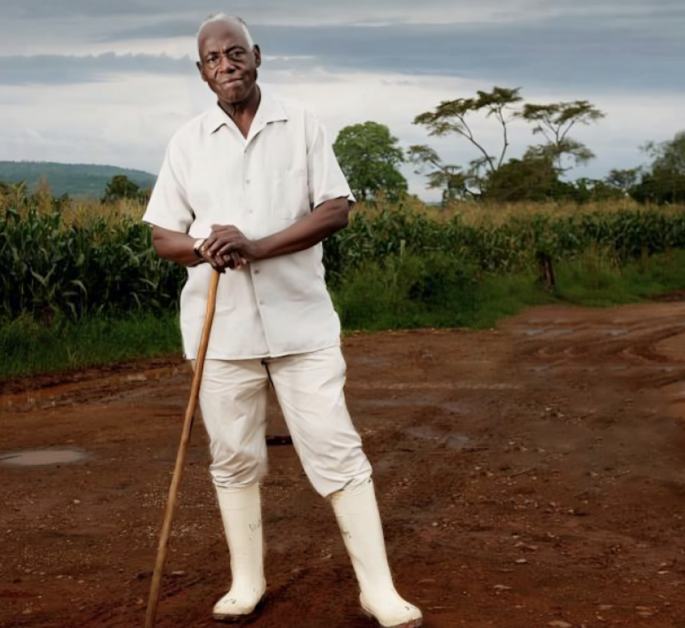
In 1992 the company imported the first automated milk parlour from Denmark capable of milking 12 cows every 10-20 minutes. In 1995, with growing demand, Jesa started taking milk from other farms and by 2005, the processing of yoghurt commenced. In 2011 production of UHT milk started.
In 2013, upon the passing of the founder, Geoffrey who had been working in the business earlier, assumed the Chief Executive role.
In 2014, he led the introduction of flavoured milk and in 2017, introduced dairy blend- a smooth blend of juice and milk, in mango, peach and cocktail flavours.
In 2019, the company underwent a major expansion and in March 2022, the company commissioned a new factory as well as went into the production of Probiotic Fruit Yoghurts. Probiotic yoghurts are low-fat fruit yoghurts made with real, fresh fruit.
Jesa’s probiotic yoghurts come in strawberry, peach and passion, fruit salad, and blueberry and are available in convenient 175g and family sized 500g cups.
It is therefore no surprise that Jesa’s turnover has between 2013 and today, grown by more than 2.3 times or 132%, and at a compounded annual growth rate of 100% from UGX49.7 billion in 2013 to UGX115.7 billion at the end of 2021. Profits have also grown as healthy- by 40 times, from UGX310.4 million to UGX12.3 billion in 2021- a CAGR of 51%.
Related
 Dutch Development Bank FMO Extends USD 20 Million Facility to I&M Bank Uganda to Boost SME Financing
Tough times never last- Mulwana’s never give up ethos
We reached out to both Geoffrey and Barbara to share with us some insights into how the family has managed to keep their act together, but the duo declined the interview.

“Thanks for your interest in our Group. We are generally very low-key and so we’d probably shy away from such publicity but I’ll check with the Board and let you know,” Geoffrey told this reporter on phone.
Days later, he would come back to say, “Sorry, we shall pass this on (the interview opportunity)”
However, it is not difficult to trace the success of the Mulwana Group back to the character and person of James Mulwana. For starters, he was a man of integrity and a good man- in all senses of the word.
In one of the interviews with CEO East Africa Magazine, he in 2008 told this reporter that one of his biggest drivers in life was the success of mankind.
“Most people would like to think that we businessmen are inspired by money but money is no longer an issue because, for example, there is a limit to how many meals I can take and how many cars I can drive. I am inspired by success, not my own alone, but by the success of all Ugandans,” he said.
True to his word, he devoted time to the success of other businesses beyond his own. He was for example one of the architects and later Chairman of the Uganda Manufacturers Association (UMA), an umbrella body of Uganda’s manufacturers. He also chaired, among others the boards of Standard Chartered Bank, Umeme, Airtel Uganda, Nile Breweries Limited, and British American Tobacco.
He was also a philanthropist and sat on several boards of non-profits such as SOS Children’s Village, Hospice Uganda Patron, Mengo Hospital, Interplast Uganda and St John’s Ambulance.
One wouldn’t be far from the truth to say the market has given back to the man that we all grew to love in form of loyalty to his products. Suffice to say is that his integrity has lived on in form of the high-quality products his Group continues to bring to market.
He also prepared his children enough- by taking them to good schools and involving them in business, early in life. For Example, Barbara, has been the Executive Director of Nice House of Plastics Ltd since 1991. She started working with Nice House of Plastics after working as an Applications Engineer with Good Year Tyre and Rubber Company (Akron, Ohio). An electrical engineer and computer scientist, from the Northwest University in the United States of America, she has amongst other roles in the business worked as the Head Sales and Marketing Department in Nice House of Plastics before assuming her current role as Executive Director. She also sits on the boards of Jesa Farm Dairy and Uganda Batteries Ltd.
According to his wife’s speech at the funeral, Mulwana, also confided in his wife most of his business secrets which made it easy for the family to pick up after him.

“James was my friend. He loved me very much. He trusted me so much. He told me most of his secrets,” Sarah, eulogised the husband.
Eddie Ssenkumba, a Director of Nice House of Plastics boils down the success of Mulwana Group to its “never give up” ethos that he inculcated in his people.
“He always kept using the slogan, tough times never last, but tough people do. That kept us going. Even when things were really really bad, we would always remember that the times would not last, but if we weathered the storm, we, the tough people would sail through,” he says in a recorded video, commemorating 10 years of James Mulwana’s passing.
“Even when he passed on, in these 10 years, one of the things that have actually driven us to this very day is that slogan. We have met so many challenges, it has not been a smooth road all the way, but because we always believed that the times will change, the fruits that you see now, are because of that slogan, that tough times never last, but tough people do,” Ssenkumba recalls.
Mr Ssenkumba also says Mulwana was optimistic all the time and never gave up on people and taught his staff to do the same.
“He always told us that in business, there are no enemies. Regardless of the fact that you are not seeing eye to eye with a business partner, today, it doesn’t mean that 3-4 years down the line you would not be, able to be partners again. He kept on repeating it, every time we would have a difference or an issue with a partner, he would say you take it easy because, in business, there are no enemies. Today it may look like it is the end of the story, but 2-3 years down the line, you will find that that very person will find that you are the right partner or you will find that they were the right partner,” he adds.