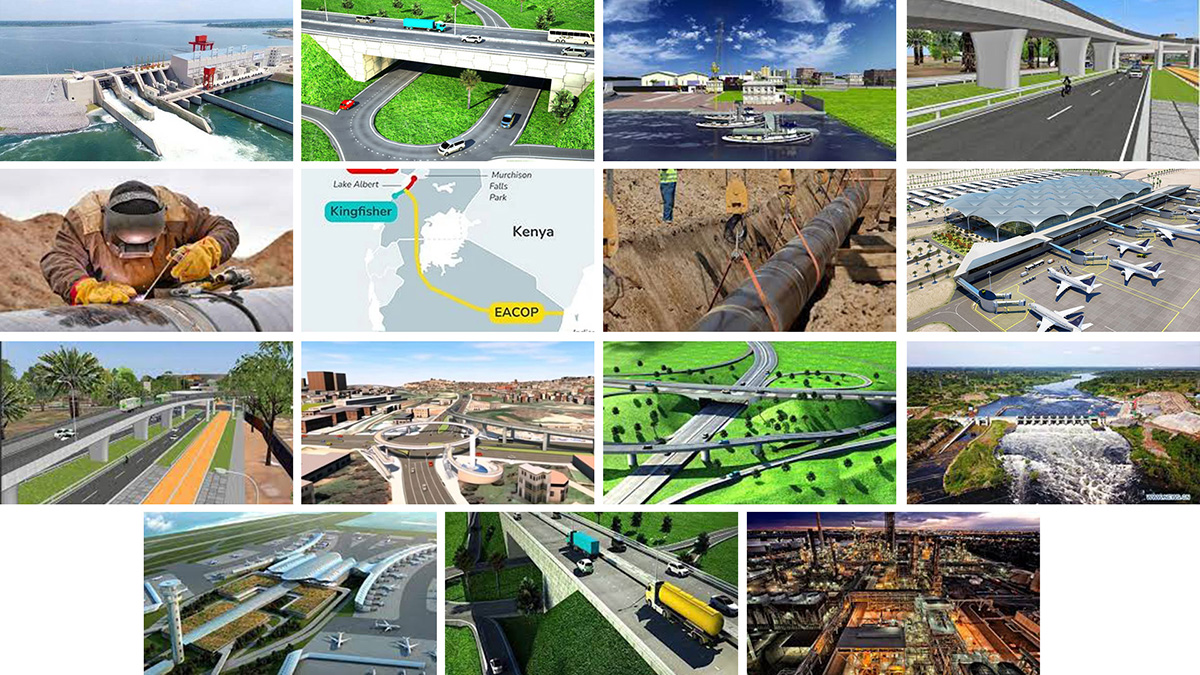
Under the NDP III, a total of 69 core projects have been identified, 16 of which are on-going and reflect the need to complete unfinished work during the NDPII period. 51 are new NDPIII project ideas that are at different levels of preparedness.
These projects have been identified along the NDPIII programmes. Preparation of these projects must be fast-tracked and utmost finalized in the first year of NDPIII, for effective implementation.
Here are the 10 key projects that are expected to transform Uganda in the next 5-10 years
Kabaale International Airport
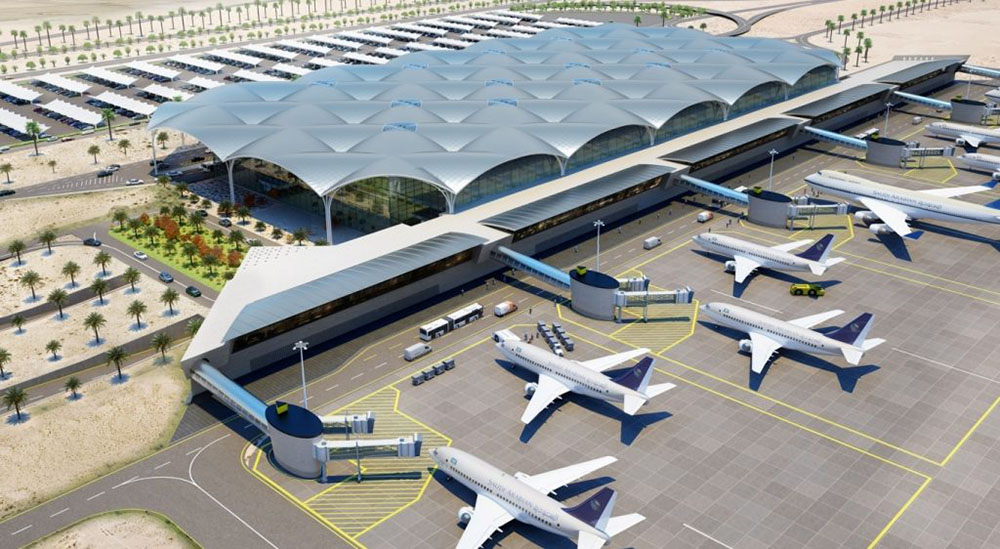
Kabaale International Airport is located in Hoima. It is Uganda’s second international airport, currently undergoing construction. According to the contractors -SBC Uganda Ltd – this new international airfield will be due for completion within a period of nine months.
After completion, the airport will be vital in transporting equipment that will be shipped in for oil processing as well as other related transport assignments.
It’s strategic location and close proximity to Hoima city is only 33 kilometers by road which is conducive for effective transportation of resources to the oil processing projects.
Entebbe International Airport and Kabaale Airport are only separated by 200 aerial kilometers.
SBC Uganda Ltd the contractor handling the construction works commenced in 2018, and had projected to finish the first phase by April 2022 to enable flight of cargo planes at the new airport, but the global covid pandemic coupled with topography issues hindered operations.
The Petroleum Authority of Uganda (PAU) the sector regulator subsequently proposed a fresh deadline of February 2023.
The project’s first phase will pave way for oil companies to import machinery, materials and heavy duty equipment. Some of these companies are already in the initial stages of project development at the Kabaale industrial park, the East African Crude Oil Pipeline and the refinery plus equipment for linked businesses that complement the oil industry.
The second phase will include an expanded passenger terminal that will be expected to boost tourism and other activities by driving increased number of passengers.
Amos Muriisa, the spokesperson of SBC Uganda says that most of the construction works are at 78 percent completion ; this includes the cargo terminal building, the limited-capacity passenger terminal building, the air rescue firefighting house, power substation house and the air ground lighting system are all 78 percent complete.
Construction of the runway, which is 3.5 kilometres long and 45 meters wide is 95 percent complete.
Kabaale International airport is designed to handle the largest cargo planes in the aviation industry. SBC confirms that, the apron can host four of those huge aircrafts at ago.
The control tower and accommodation facilities for airport operators will all be built by SBC within the next nine months.
The construction project has created employment for over 1,000 workers, 95% of them are Ugandan citizens majorly from nearby local communities.
Kampala-Jinja Expressway
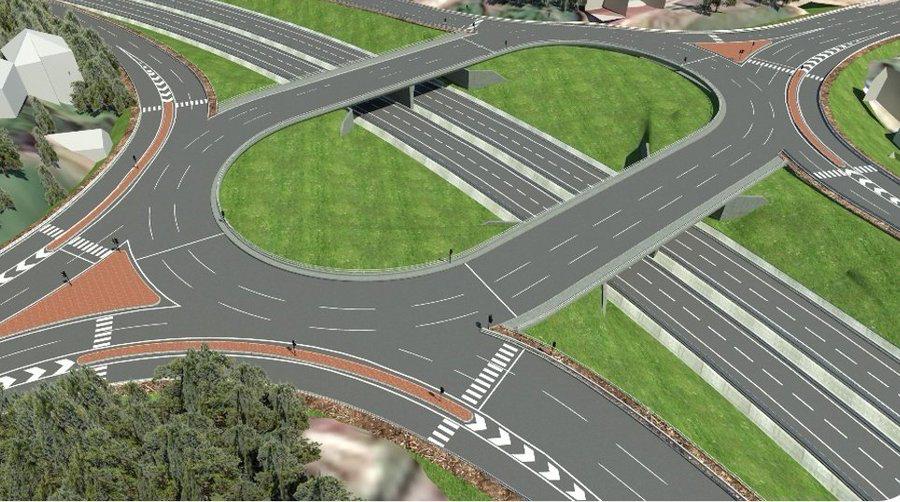
The Kampala-Jinja Expressway (KJE) is an infrastructure project to develop a limited access tolled expressway in the central and eastern region of Uganda.
The project is financed by multiple funders, including; the Government of Uganda, the European Union, plus the African Development Bank (AfDB) and Agence Francaise de Developpement.
After completion, the Expressway will create massive benefits for East Africa, Uganda and the local economies and surrounding communities.
It will also help ease the flow of goods and services to everyone’s benefit.Constructing an expressway through an urban community settlement comes with associated risks and contrary societal, economic and environmental impacts.
Safeguards are mitigation measures meant to ensure that no environmental and social harm is done because of a project.
The Uganda National Roads Authority (UNRA), with the support from Atacama and Earth Systems Consultants, developed a safeguard analysis and mitigation measures for the project.
For people that will be displaced by the project, a full Resettlement Action Plan is mandatory under national law and international guidelines.
A Resettlement and Livelihood Restoration Plan (RLPRP) was also prepared outlining procedures and methodologies to ensure that the project meets requirements set by the International Financial Corporation (IFC) Performance standards and AfDB Operational Safeguards.
After completing the programme, the Right of Way (ROW) of the Jinja Expressway will be cleared for construction while all affected households and small and micro enterprises in targeted areas will have received support services to enable improved livelihoods, housing for the longer-term market, security of tenure and upgrading the neighbourhood.
Expected outcomes from this project
Households and businesses to be affected by this project will be relocated and re-integrated into the broader city and within communities with secure occupancy. This comes with plans for long-term incremental upgrading of their housing.
In addition, most vulnerable households will be identified and empowered to adapt to the newly created situation caused by the impact of the construction of the Expressway.
There will be sustainable rehabilitation of the Kinawataka wetland by transforming neighbouring communities into champions of the wetland.
All the households that are currently dependent on the informal economy for their livelihood which will be impacted by the Right Of Way shall be empowered with new skills, space and finance to either continue their enterprise or adapt to a new opportunity.
EACOP East African Crude Oil Pipeline Project
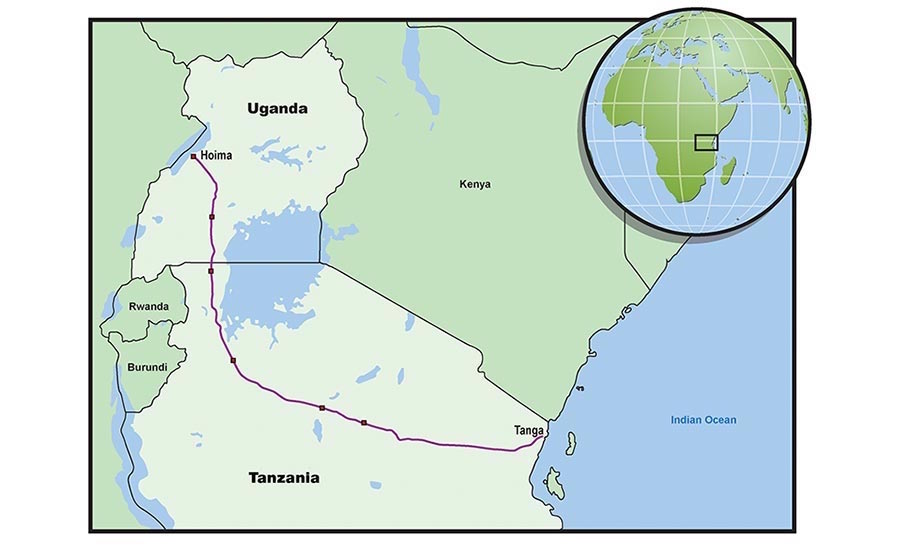
The Uganda National Oil Company (UNOC), the Tanzania Petroleum Development Corporation (TPDC) and the three oil companies, CNOOC, TotalEnergies and TULLOW PLC will be the shareholders of The East African Crude Oil Pipeline Project.
The key figures for this regional project spanning several years includes; 1,443 kilometres of crude oil export pipeline, 216 Kbd of export flow rate barrels per day at plateau production and over 60 % increase in FDI of Uganda and Tanzania during the construction phase. The project will cost 3.5 Billion US dollars as total investment with over 500,000 tonnes of imported equipment.
The EACOP project schedule has several stages which include pre-project studies that commenced in 2016. The next stage after that is development studies that cover geological studies, geophysical and geotechnical surveys which include front end engineering studies, optimization and feed approval plus call for tender for execution which period was scheduled for 2017 until 2021. During this period inter-government and host government agreements were signed. Which involves land access in priority areas.
The next stage of the process is scheduled to run between2022 to 2025, this stage entails land access process for right of way (ROW), and enabling the legislation process to be completed this ideally is the project execution that demands detailed engineering, procurement construction and commissioning.
- The final stage of the EACOP project will be the production process which is scheduled to commence in 2025 and beyond. It is during this ultimate stage that all operations will take place.
- The EACOP project is committed to ensuring that all landowners and users living along the pipeline corridor will be treated with respect and compensated fairly.
- Ensuring that all landowners and users living along the pipeline corridor will be treated with respect and compensated fairly.
- Land required for temporary basis will be leased for approximately 1- 4 years and returned to owners in a fully reinstated condition.
Hoima Oil Refinery
The operations of the oil refinery will start in 2027.
The refinery is scheduled to start operating within two years after Uganda has attained her first oil expected in 2025. According to Ruth Nankabirwa, Uganda’s Minister of Energy, the oil refinery will produce approximately 60,000 barrels of oil per day and is intended to be built in Buseruka sub county, Hoima district.
In April 2018, government selected the AGRC as the private sector investors to fund, develop, build and operate the Greenfield oil refinery that is estimated to cost 4 billion US dollars.
The line minister, Ruth Nankabirwa says the government plans to announce the final investment decision for the refinery in 2023.
The Minister recently met AGRC officials in Italy in February this year to discuss the implementation status of the project framework agreement.
AGRC is a private grouping that consists of Baker Hughes General Electric – transacting through its subsidiary – Nouvo Pignone International, US based Africa focused infrastructure investor, Yaatra Africa, LionWorks Group, an Africa focused infrastructure investor that will provide additional financing, expertise and investment and Italian EPC contractor Saipem p.A that will design and construct the refinery.
Uganda has proven crude oil reserves of 6.5 billion barrels, about 2.2 billion barrels of which are recoverable. The International Monetary Fund (IMF) in 2013 stated that these reserves are the fourth –largest in sub-Saharan Africa behind Nigeria, Angola and South Sudan. Some of the largest oil fields are located in Kaiso-Tonya area within Hoima district – which has been earmarked for oil refinery.
In 2009, the Ugandan government contracted Foster Wheeler Energy from the United Kingdom (UK) to help conduct a feasibility study for development of the refinery.
For two years; 2010 to 2012 the feasibility study was carried out to outline crucial features of developing a refinery in Uganda. These aspects include size, location and configuration plus market for the produced products and the amount of funds required.
This study confirmed the economic viability of refining petroleum in Uganda aimed to be beneficial to the East African and Ugandan market.
Reliable data from the Uganda Bureau of Statistics (UBOS) reveals that Uganda’s consumption of petroleum has grown incrementally by 7% per day with a daily consumption rate of 37,000 barrels per day.
Anticipated benefits of the oil refinery
Upon completion, the refinery is projected to generate about 50,000 jobs, it will also enhance transfer of skills and technology and is a regionally beneficial venture for East Africa as the rest of the oil will be exported.
The 2008 East African Community Refineries Strategy recommended the development of a second refinery within East Africa particularly in Uganda to support the first refinery which is located in Mombasa, Kenya that ceased operations.
Kampala Flyover Project
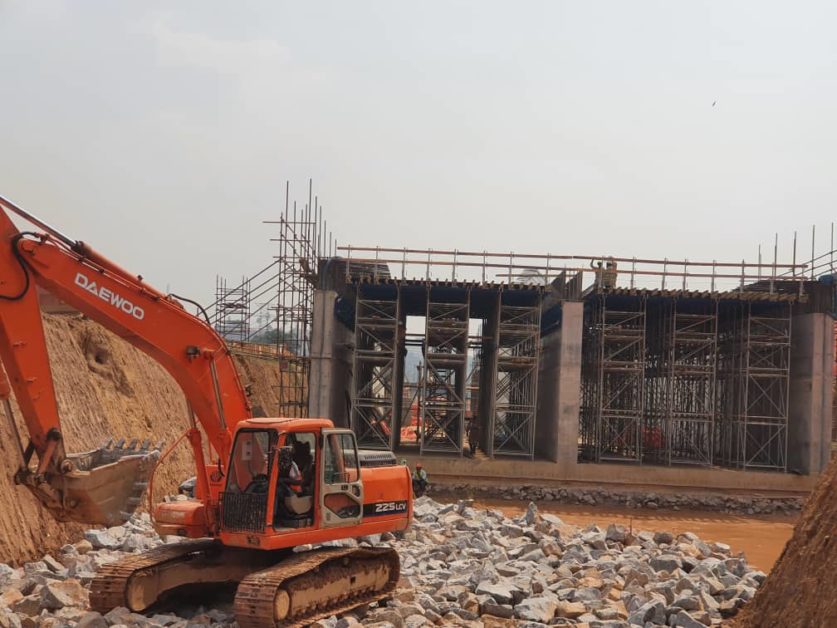
The Kampala Flyover Road Project, also known as a Kampala Flyover Project is a road-improvement project in the Central division of Kampala.
The project involves the construction of flyovers at the “Clock Tower”, and at “Kitgum House”, the widening of Nsambya Road and of Mukwano Road, including the improvements of interfacing roads and junctions.
The massive road project stretches over an estimated 3.5 kilometres ( about 2 miles).
This road project is intended to decongest the city by separating through-traffic from the city-street-traffic. This project focuses on traffic entering the city, mainly from Entebbe along the old Kampala-Entebbe Road and from Mpigi, along the Kampala-Mpigi Expressway.
Traffic from these routes, destined to Lugogo, Nakawa and points along the Kampala-Jinja Highway will find this new route faster and more user-friendly, reducing travel times and leading to less carbon emissions from exhaust fumes installed traffic on the city streets. Also, by removing the pass-through traffic, off the city streets, the congestion will be lessened significantly.
In an attempt to reduce gridlock within the city of Kampala, the Japan International Cooperation Agency (JICA) commissioned a study in 2010 which was updated in 2013 and 2014 to examine available options for alleviating chronic traffic jams in the Greater Kampala Metropolitan Area.[3]
 Ruparelia Group Wins Key Entebbe Land Case, Clearing Path for the New Mega Speke Resort and Convention Centre, Entebbe
The Government of Uganda accepted the recommendation of the study and through the Uganda National Roads Authority (UNRA), engaged Nippon Koei in a joint venture with Eighth Japan Engineering Company (EJEC) and Infra Consulting Services Limited (ICS) to carry out the detailed design and tender assistance of the Kampala Flyover Project. The project (Jinja Road – Mukwano Road – Queen’s Way) is funded by the Ugandan government, with financing from JICA.
On 19th December 2018, construction of this project was flagged off by H.E Yoweri Museveni, Uganda’s president. The first phase is budgeted to cost Ugx 300 billion (US$82 million) with the works budgeted to cost 148 million US dollars. It will be financed by the Japanese government through Japan International Cooperation Agency (JICA).
Karuma Hydroelectric Power Station
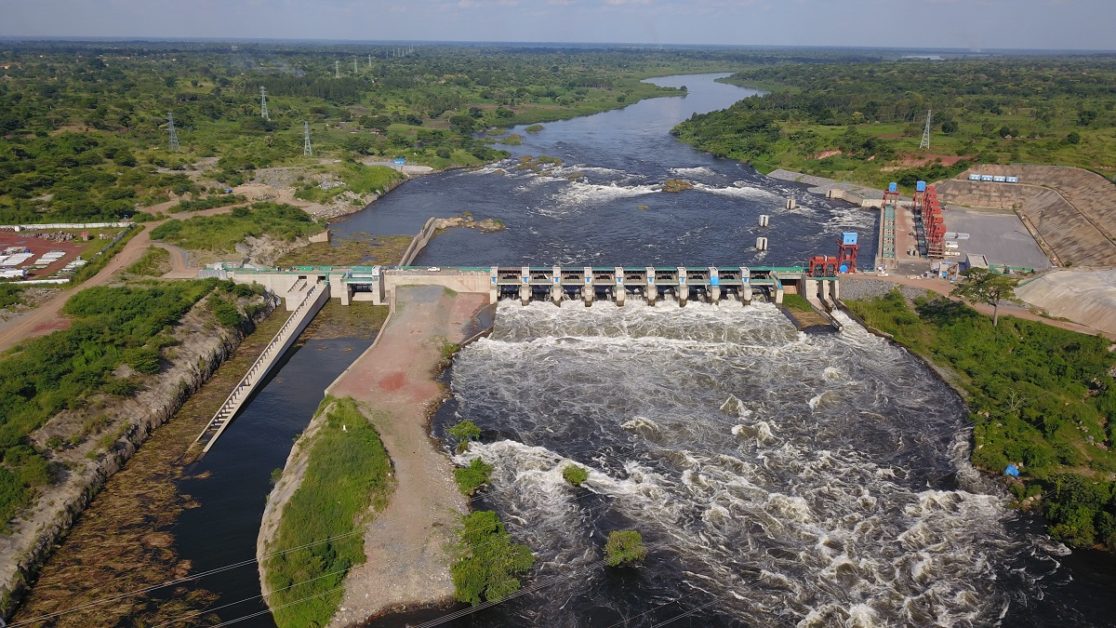
The Karuma Hydroelectric Power Station is a 600 MW hydroelectric power project under construction in Uganda. When completed, it will be the largest power-generating installation in the country.
Construction began in 2013 and was commissioned in November 2020 is still currently on-going. The 1.7 billion US dollar project was originally expected to be completed by 22 June 2022. It will be operated by the Uganda Electricity Generation Company Limited (UEGCL) and is fully owned by the Ugandan government.
The power station is located at Karuma falls on the Victoria Nile at the former location of the Karuma falls. It is located 2.5 kilometres (1.6 miles) upstream of where the Masindi-Gulu highway crosses the Nile.
By road it is approximately 99 kilometres (62 miles) north east of Masindi and 75 km (47 miles) south of Gulu.
The electrical-mechanical installations of the power station are located approximately 100 metres (328 ft) underground, with 26.5 kilometres (16 miles) of underground access roads, making Karuma, the 14th largest underground power station in the whole world
Kibuye – Busega- Mpigi Expressway

The Kampala–Mpigi Expressway, also known as Busega–Mpigi Expressway, is a four-lane, dual carriage highway under construction in the Central Region of Uganda, connecting, Kampala, the capital city, and Mpigi, the headquarters of Mpigi District. The road starts at Busega, a neighborhood in Makindye division within Kampala.
It continues in a south-westerly direction, through Kyengera, Nabbingo and Nsangi to end at Mpigi, a distance of approximately 28.5 kilometres (18 miles). The expressway is a component of the Kampala–Masaka Road.
The current road is a two-lane single carriageway in good condition. The government of Uganda plans to widen the road to a four-lane dual carriage highway, as part of its efforts to decongest Kampala. The road construction is planned to be funded under a public-private partnership arrangement.
The road’s design includes four major interchanges at Nabbingo, Nsangi, Maya and Lugala. These interchanges will allow connection with the Kampala Northern Bypass Highway and the Entebbe–Kampala Expressway.
The government of Uganda secured funding of US$91 million (Ugx322 billion) to fund the 23 kilometres (14 miles) section between Busega and Mpigi. The 9.5 kilometres (6 mi) section between Kibuye and Busega is to be expanded by China Communications Construction Company (CCCC), with funding from the Exim Bank of China.
In July 2019, following delays, the construction contract was awarded to a consortium of Chinese companies, that includes China Civil Engineering Construction Corporation (CCECC) and China Railway 19th Bureau Group Company Limited. Construction is expected to last 36 months, with commission planned in the second half of 2022.[8] Construction began in May 2020 and completion is expected sometime in 2023.[9]
Due to delays occasioned by the COVID-19 pandemic, compensation disputes and other challenges, only 15 percent of the work had been completed as of March 2022. A new completion date was set for 2025.
The Daily Monitor newspaper in July 2019, quoted the contract price at Ugx 547 billion (approx. US$150 million), partly borrowed from the African Development Bank (AfDB). While the New Vision newspaper reported that the entire construction cost was funded by an AfDB loan.
Bukasa Inland Port
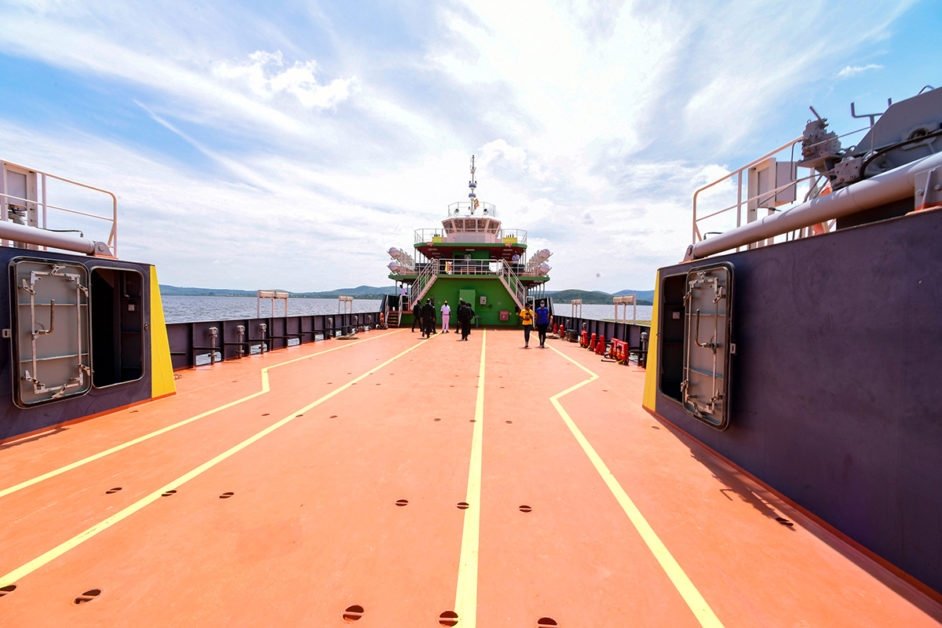
Bukasa Inland Port is a planned inland water transport point meantto connect Uganda to Kisumu and Mwanza ports through Victoria.
The port will be located along the northern shores of Lake Victoria, on approximately 500 acres (202 ha) in the neighborhood of Bukasa in Wakiso District, approximately 16 kilometres (10 miles), by road, south-east of the central business district of Kampala.
After completion, the port is expected to occupy a wider land area. Efforts to secure more land are underway.
The Daily Monitor reported in February 2019 that the project area had been increased to 465 hectares (1,149 acres).
Two German financial institutions agreed to lend US$48 million towards the construction of this port. The Uganda government will contribute US$8.5 million to this project.
After construction, the inland port is slated to handle up to 5.2 million tonnes of freight annually. The port will facilitate movement of goods from the Tanzanian ports of Dar-es-Salaam and Tanga, via rail to the port of Mwanza on Lake Victoria. Barges would then bring the cargo over the lake to Bukasa.
The inland port will greatly reduce Uganda’s extreme dependence on the port of Mombasa, Kenya.
In February 2019, the National Environment Management Authority of Uganda (NEMA), approved the construction of this inland port. Construction will be phased as follows;
The first phase will involve construction of the port, administration jetty, free trade zone, shunting yard, a two-berth multipurpose terminal and a two berth Roro terminal.
The second phase, expected to be complete by 2030, will extend the multipurpose terminal by additional two berths to a total quay length of 540 metres (1,772 ft).
The third and final phase, to be completed by 2040, will extend the quay length of the multipurpose terminal to 960 metres (3,150 ft). All three phases will be carried out on Lake Victoria.
Ayago Hydroelectric Power Station (840MW)/ Oriang HPP (392MW)/ Kiba HPP (330MW)
Ayago Hydroelectric Power Station, also Ayago Power Station, is a planned 840 megawatt hydroelectric power project to be constructed in Uganda. If built, Ayago would be the largest power station in Uganda, based on generating capacity.
The power station will be located at Ayago, on the Victoria Nile, in Nwoya District, in the Acholi sub-region, in the Northern Region of Uganda. This location is close to the point where the Ayago River enters the Victoria Nile, within the confines of Murchison Falls National Park.
Ayago Power Station is a proposed 840-megawatt (1,130,000 hp) hydroelectric power plant that will be constructed on the Victoria Nile, downstream of Karuma Power Station, but upstream of Murchison Falls. The project will be developed in two simultaneous phases, known as Ayago North (estimated capacity:450 MW) and Ayago South (estimated capacity:390 MW).
The Ayago Power Station is one of three hydropower projects that have been earmarked for immediate development, together with Karuma Power Station (600 MW) and Isimba Power Station (183 MW), to mitigate the chronic, recalcitrant power shortages that have plagued Uganda since the 1990s, and to meet the projected national requirement of 1,130 MW by 2023.
The Indian state-owned energy and manufacturing company, BHEL, had estimated the cost of the project at about US$350 in 2007. But that was for a project with planned capacity of 200 MW to 300 MW, back in 2007.[6]
In 2008, the Government of Japan, through the Japan International Cooperation Agency (JICA), in collaboration with the Government of Uganda, began new preparations for fresh environmental impact assessments, International bidding for a contractor and commitment as a lead funding source for the project.
In April 2013, the Government of Uganda awarded the US$1.9 billion construction contract to Mapa Construction and Trading Company Incorporated, a Turkish infrastructure construction company. However, in August 2013, that award was rescinded and the construction contract was awarded to China Gezhouba Construction Company. It was anticipated that construction would begin in 2020, and last approximately 66 months.
By 2019, the size of Ayago Power Station had been increased from 600 to 840 megawatts. The government of Uganda has publicly indicated that it would like the power station built, but it lacks the financial muscle to do so itself.
Both Mapa Construction and Trade Company of Turkey and the Gezhouba Group of China have since lost interest in the project, partly due to failure to raise the necessary capital.
In February 2020, Power Construction Corporation of China (PowerChina), a Chinese government-owned engineering and construction conglomerate made formal application to the Electricity Regulatory Authority (ERA), to design, fund, build, operate and maintain Ayago Power Station. ERA’s response to that application has not been made public as of September 2020.
The cost of constructing Ayago has also increased to over US$2 billion, on account of the increase in wattage capacity, from the original 600 MW to the current 840 MW.
Standard – Gauge Railway
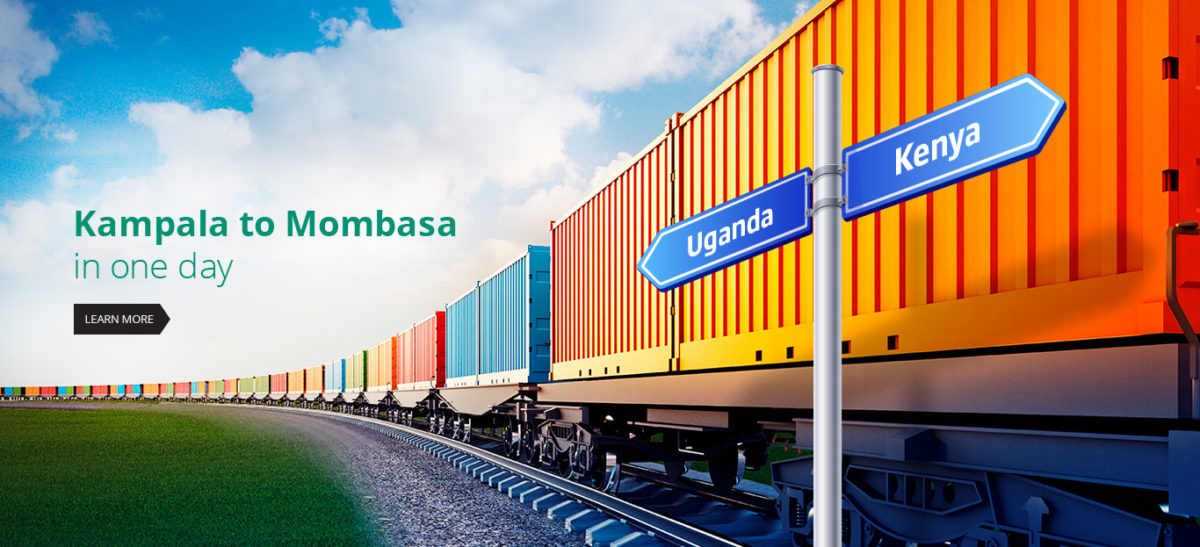
The Uganda Standard Gauge Railway is a planned railway system linking the country to the neighboring countries of Kenya, Rwanda, Democratic Republic of the Congo and South Sudan, as part of East African Railway Master Plan.
The new Standard Gauge Railway (SGR), is intended to replace the old, inefficient metre-gauge railway system.
The construction, is expected to be financed by the government of Uganda, using borrowed money from the Exim Bank of China. However, the loan cannot be approved by the lender until Kenya finalizes the funding arrangement for the Naivasha–Kisumu–Malaba section of its SGR.
The Malaba-Kampala section, with associated train stations and railway yards, measuring 273 kilometres (170 mi), is budgeted to cost US$2.3 billion.
Once funding is secured, the construction of the Eastern Line is expected to last 42 months. The entire 1,724 kilometres (1,071 mi) SGR in Uganda will cost an estimated $12.8 billion.
In May 2018, The EastAfrican (a regional newspaper) reported that Uganda may scale back on starting major infrastructure projects, in an effort to reduce its fiscal deficit in the run-up to joining the East African Monetary Union in 2024.
In December 2020, the same regional publication reported that the government of Uganda would start construction of its SGR in the 2022/2023 financial year, with the expectation that Kenya would have figured out how to fund the Naivasha to Malaba section when the Uganda SGR reaches Malaba, “by the end of the projected construction period.”
The railway system would consist of four major sections;
Malaba–Kampala Section
Also referred as the Eastern Line, would stretch from the border with Kenya at Malaba, through Tororo and Jinja, to end at Kampala, the capital and largest city in Uganda. The total distance of this section is approximately 215 kilometres (134 miles).
Tororo–Gulu Section
Also referred to as the Northern Line, would extend from Tororo, and go through Mbale and Lira to Gulu, a distance of approximately 400 kilometres (249 miles). From Gulu, one spur will continue north to Elegu and on to Nimule and Juba in South Sudan. The section in Uganda, measures approximately 107 kilometres (66 miles). Another extension stretches from Gulu southwestwards through Pakwach to end at Goli at the Border with the Democratic Republic of the Congo, a distance of approximately 190 kilometres (118 miles).
Kampala–Mpondwe Section
This is referred to as the Western Line. It starts in Kampala and passes through Bihanga in Ibanda District, continuing on to Mpondwe at the border with the Democratic Republic of the Congo, a distance of about 430 kilometres (267 miles).
Bihanga–Mirama Hills Section
This is also referred to as the Southwestern Line. It stretches from Bihanga, through Ibanda and Mbarara to end at Mirama Hills, at the border with Rwanda, a distance of about 205 kilometres (127 miles).